
Removing vinyl plank flooring is simple if you know your installation type. Start by clearing
the area, removing baseboards, and lifting planks gently. For glued vinyl, use a heat gun to
soften the adhesive before scraping. Finish by cleaning the subfloor for a smooth,
damage-free surface.
When I first started pulling up my vinyl plank flooring, I thought it would be a quick weekend
job. Just lift a few boards and be done. But a few hours in, I was staring at glued edges,
stuck corners, and a floor that refused to move. That’s when I realized it takes more than just
effort, it takes the right approach.
Vinyl floors might look easy to handle, but taking them out the wrong way can leave behind
torn planks, stubborn glue, and a damaged subfloor. I’ve been through all of it once, and
that’s why I now follow a step-by-step method that works clean, fast, and safe.
In this guide, I’ll show you exactly how to remove vinyl planks no damage no wasted time.
You’ll learn what tools you actually need, how to handle glued floors, and how to leave the
surface ready for whatever new flooring you have planned next.
If you’ve been putting it off because it seems hard or messy, trust me, it’s much easier when
you know the right way to start.
Need Professional Help?
Removing vinyl floors can be a dusty, tiring job, especially if it’s glued down.
If you’d rather let the experts handle it
Understanding How Vinyl Plank Flooring Is Installed
Before you start pulling up planks, it’s important to know how your vinyl floor was installed.
That one detail changes everything about the removal process.
There are mainly two kinds of vinyl plank flooring.
Click-Lock or Floating Vinyl Plank Flooring
This type isn’t glued down. Each plank locks into the next one and “floats” above the
subfloor. It’s usually the easiest kind to remove because you can lift one plank and the rest
follow. You just need patience and the right angle.
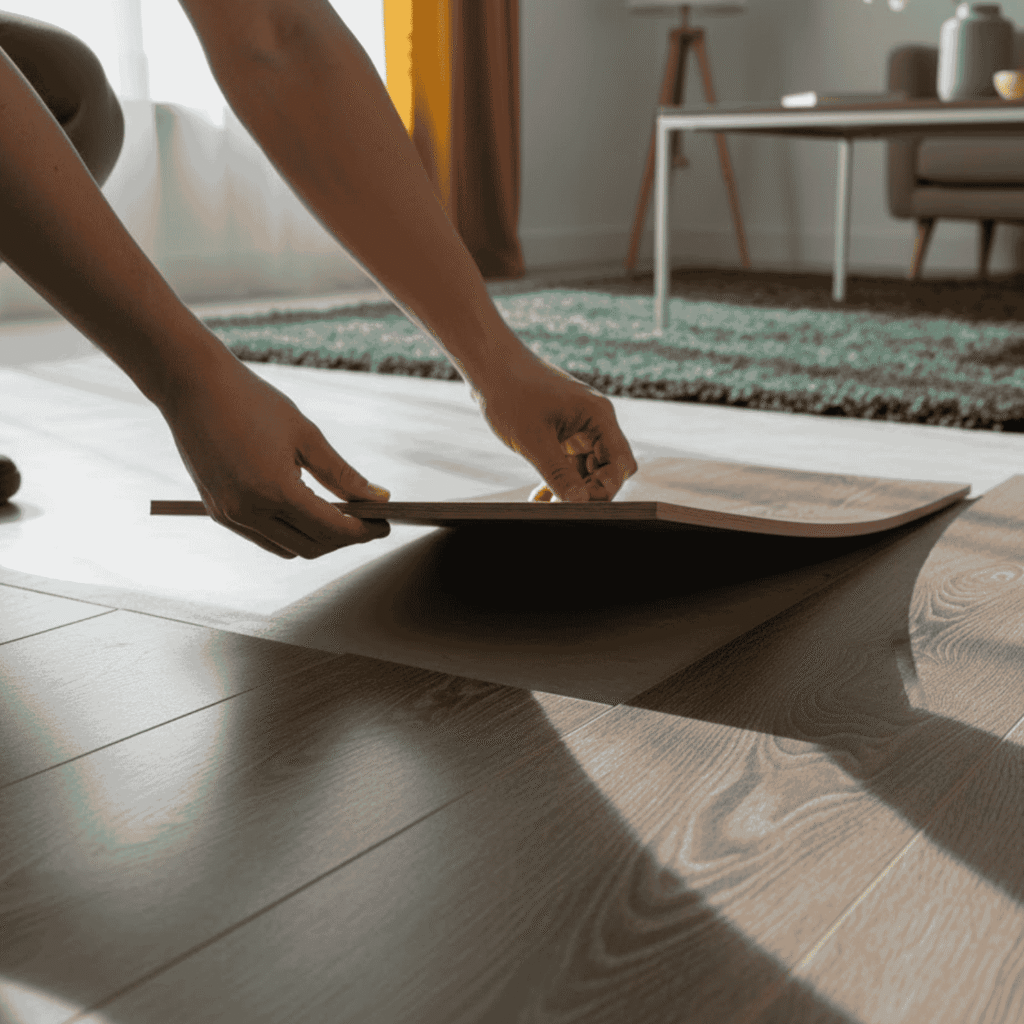
I’ve removed this type before, and once you get the hang of it, the planks come up clean
without tools or heat.
Glue-Down Vinyl Plank Flooring
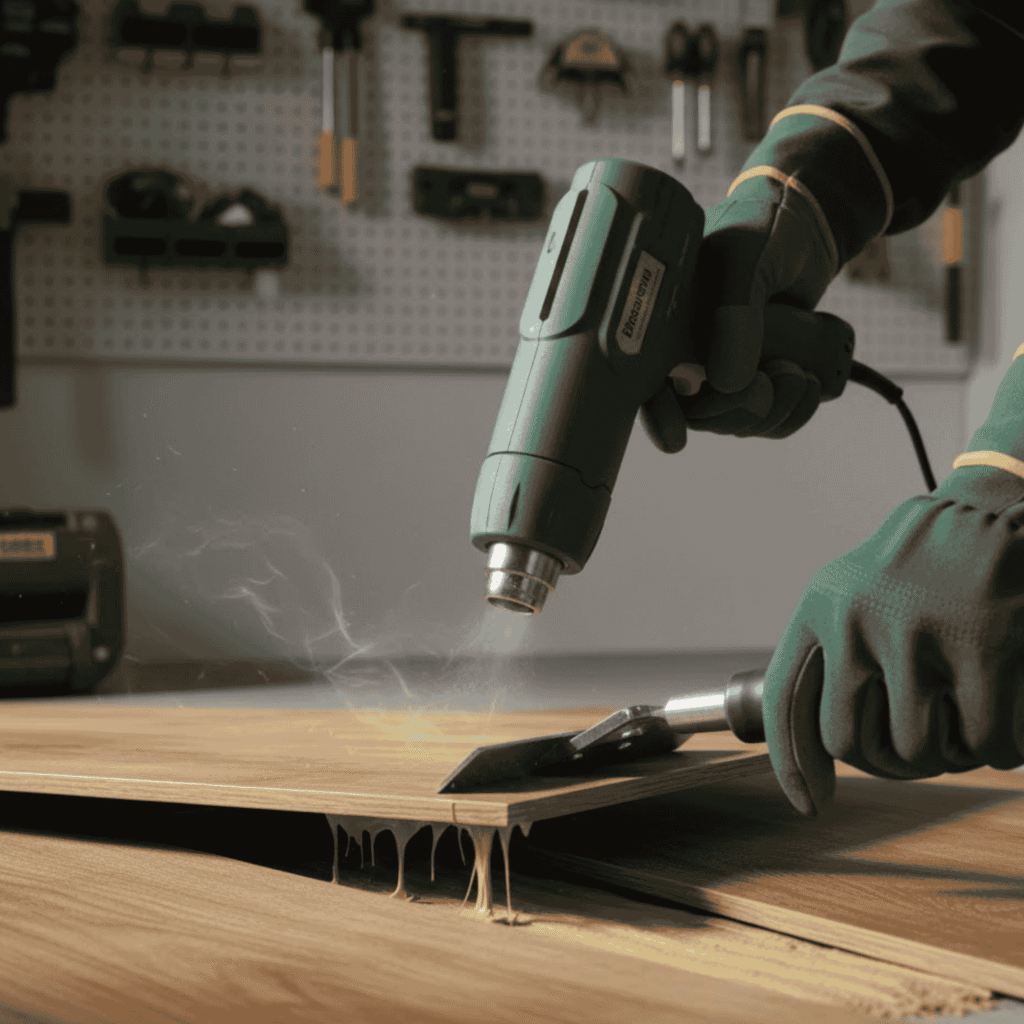
This one takes more effort. The planks are fixed directly to the subfloor with adhesive. You’ll
need to cut them into sections, apply heat to soften the glue, and then scrape carefully to
avoid damage.
If you’re not sure which type you have, try lifting one corner. If it lifts easily, it’s click-lock. If it
resists, it’s glued down. Knowing this before you start saves time and keeps you from using
the wrong method.
Tools and Supplies You’ll Need
Before you start removing vinyl planks, having the right tools makes the job smoother and a
lot safer. You don’t need anything fancy, just simple, reliable tools that get the job done
without damaging the floor underneath.
Here’s what I usually keep ready before starting:
These few tools make a big difference. Even something as simple as a sharp utility knife
saves hours of work when you’re cutting through old vinyl.
Important Note
Before starting, I also lay out all tools nearby so I don’t have to stop
mid-way, it keeps the process clean and quick.
Removing Vinyl Plank Flooring: The Right Way to Do It
After removing a few floors myself, I learned one simple thing The cleaner you start, the
easier everything goes. Here’s the step-by-step process that always works for me.
Step 1: Prepare the Area
Start by clearing everything from the room furniture, rugs, and even floor vents if you can. It
gives you full access and saves time later.
Next, remove the baseboards carefully with a pry bar. They usually pop off easily, and you
can reuse them later if you’re gentle.
Finally, give the floor a quick sweep to get rid of dust or grit. You’ll be kneeling and scraping,
and a clean surface helps avoid scratches.
Step 2: Identify the Flooring Type
Tap one corner or edge of a plank.
If it lifts freely, you’ve got click-lock flooring.
If it feels stuck or glued, it’s a glue-down installation.
Knowing which type you’re working with helps you use the right method and avoid
unnecessary damage.
Step 3: Removing Click-Lock Vinyl Planks
Start from one side of the room, usually the edge or a doorway.
Lift the first plank gently at an angle, then pull it out of the locking groove.
Once one plank is up, the rest usually come out in a line.
If you’re planning to reuse them, stack them flat to avoid bending or warping.
Step 4: Removing Glue-Down Vinyl Plank Flooring
This part takes more time but it’s not difficult once you get into a rhythm.
Use a utility knife to cut the vinyl into 12-inch strips smaller pieces come up easier.
Then, slide your scraper or putty knife under a strip and lift slowly.
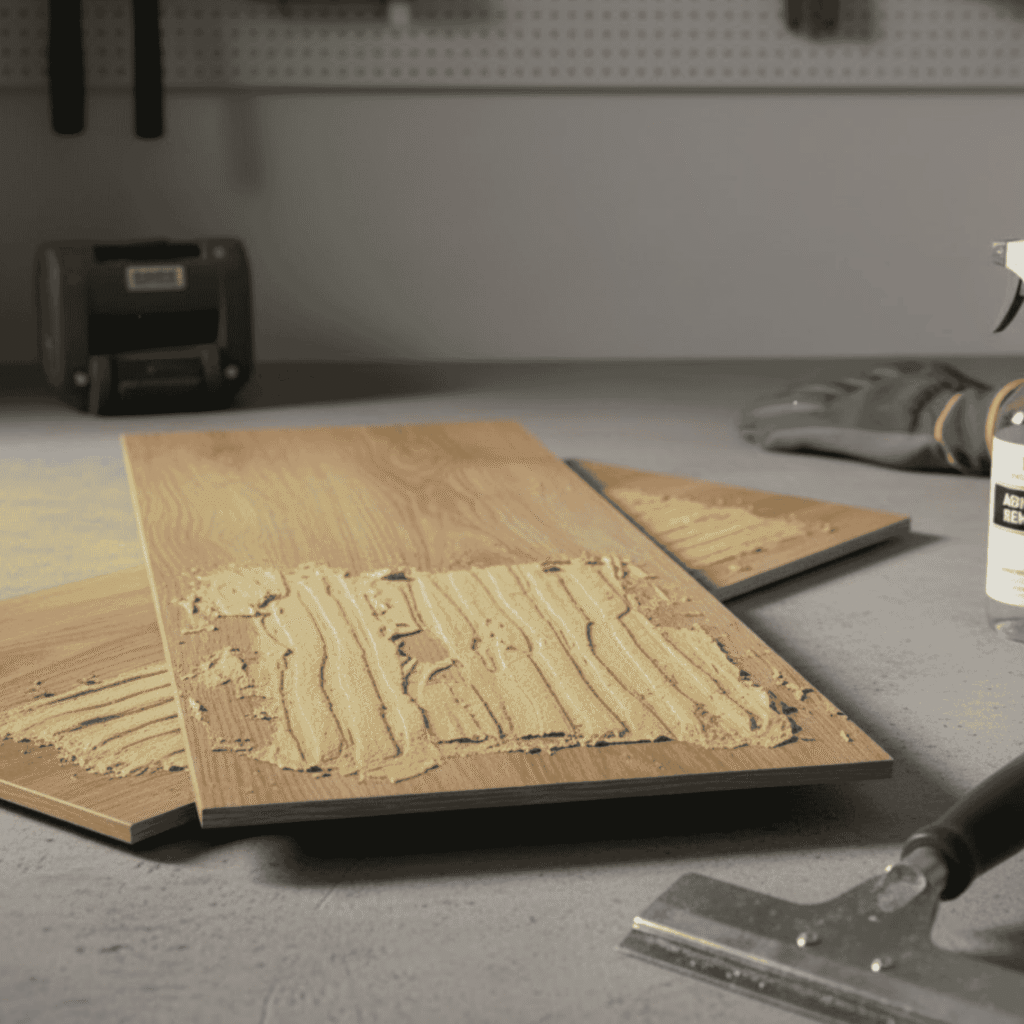
If the adhesive resists, warm it up with a heat gun or hair dryer for a few seconds. The glue
softens and the plank will peel off cleanly.
Step 5: Remove Adhesive Residue from the Subfloor
Once all planks are removed, check for leftover glue.
For concrete subfloors, apply a small amount of adhesive remover and scrape gently.
For wood subfloors, avoid chemicals a little heat and a plastic scraper work better.
This step is important because leftover glue can cause unevenness when you install new
flooring.
Step 6: Clean and Inspect the Subfloor
After everything is cleared, vacuum or sweep the area again.
Run your hand over the surface, it should feel smooth and dry.
Check for any damage or uneven spots that may need patching before your next flooring
goes in.
Here’s a quick recap of the process for easy reference:
Removing vinyl flooring isn’t about speed, it’s about doing it carefully so you don’t end up
repairing what’s underneath. Once you find your rhythm, it becomes almost effortless.
How to Remove Vinyl Plank Flooring from Different Surfaces
Not every floor is built the same way. The method you use to remove vinyl planks depends a
lot on what’s underneath. I’ve worked on both concrete and wooden subfloors, and each
needs a slightly different approach.
Removing Vinyl Plank Flooring from Concrete
Concrete subfloors are tough and stable, but the glue usually sticks harder. The trick is to
loosen it, not fight it.
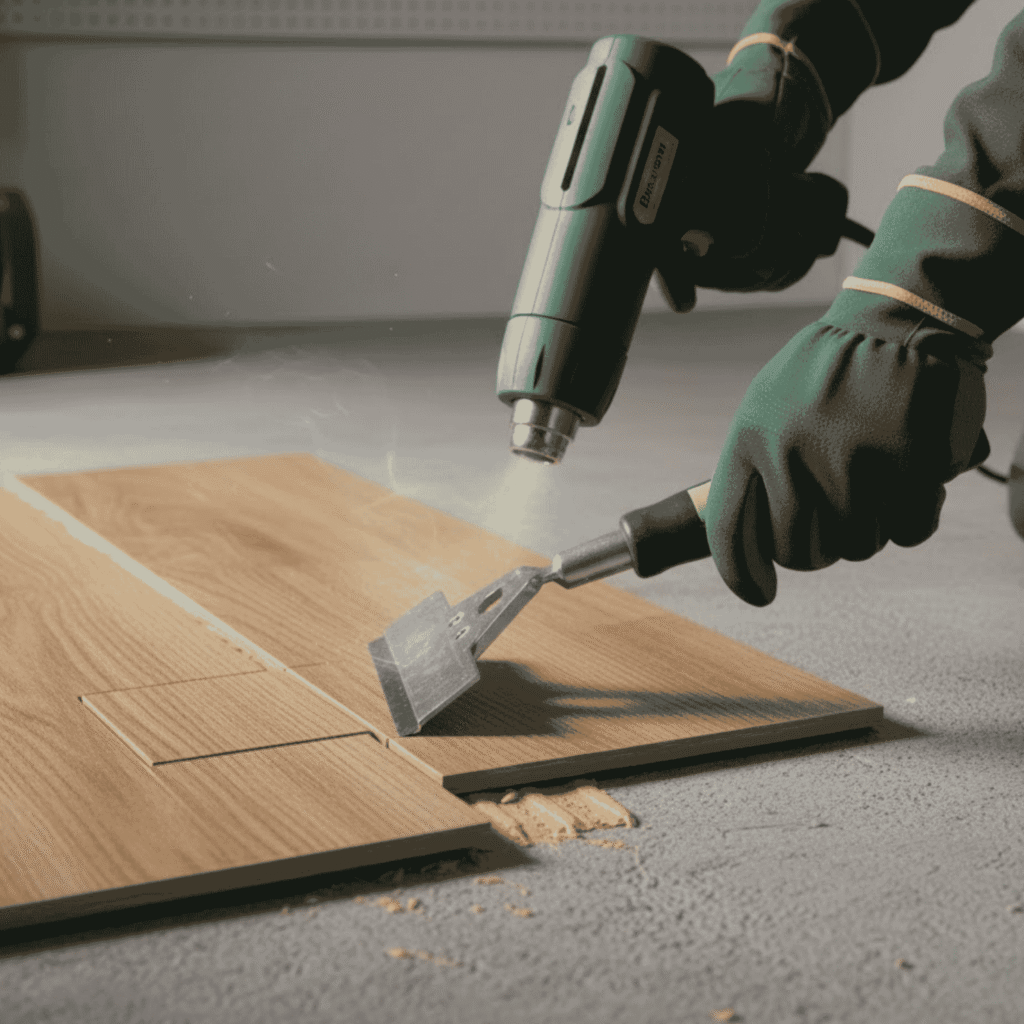
1. Start by cutting the vinyl into small sections with a utility knife.
2. Use a scraper to lift each section slowly from the edge.
3. When the glue feels stiff, apply a little heat with a heat gun or hair dryer. 4. Once the adhesive softens, scrape again to remove both vinyl and glue.
5. For leftover spots, use a small amount of adhesive remover and clean the surface
with a damp cloth.
Pro Tip
Avoid using too much water. It doesn’t help with glue removal and can lead to moisture problems if trapped underneath.
Removing Vinyl Plank Flooring from Wood or Plywood
Wooden subfloors need a gentler touch because they can scratch or dent easily.
1. Cut the vinyl into manageable pieces with a sharp utility knife.
2. Slide a scraper under each piece and lift slowly.
3. If the vinyl is glued, warm it slightly to soften the adhesive.
4. Never overheat the wood; use short bursts of heat and move the gun constantly.
5. For any remaining glue, use a plastic scraper or a wood-safe adhesive remover.
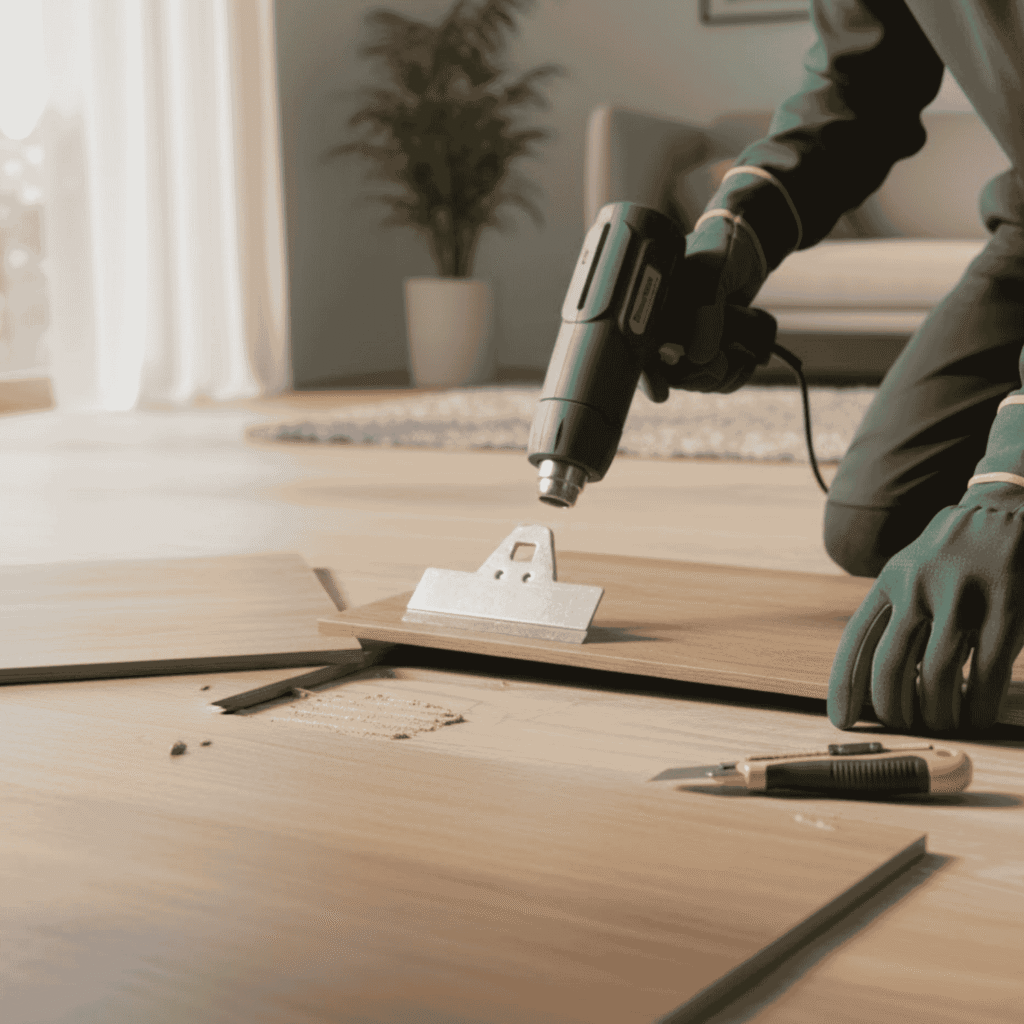
Once finished, check the wood surface. It should feel smooth, clean, and ready for the next
layer of flooring. If any glue remains, sand lightly with fine-grit paper instead of using strong chemicals.
You know what?
Removing vinyl flooring is about control, not force. Concrete needs
steady scraping, while wood needs gentle care. Once you understand that balance, every removal job feels simple.
Can You Reuse Removed Vinyl Planks
Once you’ve lifted your flooring, the first thought most people have is, “Can I reuse these planks?”
The short answer is sometimes yes, but it depends on how they were installed and how carefully they were removed.
Click-Lock Vinyl Planks
Click-lock vinyl planks are usually reusable if you take them out gently. Since they aren’t
glued down, each piece can be lifted and relocked.
I’ve reused click-lock planks in small rooms, and they looked just as good as before. Just
make sure to:
- Clean off any dust or debris stuck between the edges.
- Wipe them with a slightly damp microfiber cloth.
- Stack them flat to prevent bending or warping.
- Let them dry completely before reinstalling.
If a few locking edges get damaged, don’t force them back in it’s better to replace those
pieces than risk a loose fit later.
Glue-Down Vinyl Planks
Glued-down planks are much harder to reuse. Once removed, the adhesive on the back
usually tears the plank or leaves it uneven. Even if they come off in one piece, reapplying
them rarely gives the same grip or finish.
You can reuse them only for small repair projects or craft ideas, not for reinstalling across a
full room.
Vinyl Plank Flooring Removal Pricing Breakdown
The total price of removing vinyl plank flooring depends on a few simple things: the
installation method, the room size, and how much cleanup is needed afterward. I’ve broken it
down so you can see what really affects cost.
If you’re handling a small space and using basic tools, the DIY cost usually stays under
$20–$35 total. For full home projects or older glued floors, professional help may be the
better investment it saves time and ensures the subfloor is ready for new installation.
In short, your total cost depends on how easy the planks come off and how clean you want
the surface afterward.
Common Mistakes to Avoid When Removing Vinyl Plank Flooring
When I removed my first vinyl floor, I made a few mistakes that cost me extra time and effort.
Most of them were small things, but they made the job harder than it needed to be.
Avoiding these mistakes will save your subfloor, your tools, and your energy.
Skipping the Prep Work
Many people jump straight into prying up the planks without clearing the area. This leads to
scratches, broken baseboards, or damaged corners.
Always start by removing furniture, baseboards, and any trim before you lift a single plank.
Using Too Much Force
Vinyl flooring doesn’t respond well to brute strength. If you pull or scrape too hard, you’ll end
up breaking the locking edges or tearing the planks.
Instead, use slow, steady pressure and the right angle the planks will release naturally.
Ignoring the Subfloor Type
Concrete and wood need different handling. Using chemicals or too much heat on wood can
cause permanent marks. Always check what’s under your floor before deciding how to
remove it.
Overheating the Adhesive
A little heat helps, but too much can damage the subfloor or release strong odors. Warm the
glue just enough to soften it, then scrape right away.
Leaving Glue Behind
Rushing the cleanup leaves small patches of adhesive that become a problem later when
installing new flooring.
Take a few minutes to scrape everything clean, it makes the new installation smoother.
Forgetting Safety Gear
It might seem unnecessary, but gloves and safety glasses make a big difference. Adhesive
dust or sharp edges can easily cause small injuries.
Here’s a quick table you can use for reference:
Pro Tip
Small details make a big difference. Once you avoid these common mistakes,
removing vinyl plank flooring becomes faster, cleaner, and far less stressful.
How Much Does It Cost to Remove Vinyl Plank Flooring
If you’re planning to remove vinyl flooring yourself, the first question that usually comes up is
cost: how much will it actually take?
The good news is, it doesn’t have to be expensive. The total cost mostly depends on your
floor size, the type of vinyl you have, and if it’s glued down or click-lock.
DIY Vinyl Plank Removal
Doing it yourself mainly costs time and effort, not money. You’ll need basic tools like a
scraper, utility knife, and gloves, which most people already have.
If you don’t, you can find a good tool set for under a few thousand rupees.
Average DIY cost estimate:
For small rooms, a weekend’s work and basic supplies are usually enough.
Professional Vinyl Plank Removal
If your vinyl floor is heavily glued or covers a large area, hiring a professional can save you
time and prevent subfloor damage.
Average service-based cost range:
Professionals often include adhesive cleanup, subfloor inspection, and disposal, which
makes sense for larger or older installations.
If you’re removing floors in multiple rooms or dealing with stubborn glue, it’s worth getting a
quote first.
When to Call a Professional
Some vinyl floors come up easily, others fight back from the very first plank. I’ve seen both. If
The floor is glued down tightly or covers a large area, calling a professional can save you aA
lot of time, effort, and possible damage.
Here are a few situations where expert help makes sense:
Heavy Glue or Adhesive Layers
If the planks don’t lift even after heat and scraping, the adhesive might be industrial-grade.
Forcing it up can damage the subfloor. Professionals use special tools and safe solvents that
lift the glue cleanly.
Large or Commercial Spaces
Removing vinyl in big rooms takes a lot of time, and renting all the right equipment can cost
almost the same as hiring a team. A flooring service can remove everything faster and
handle disposal too.
Old Floors with Hidden Problems
In older houses, you might run into flooring layers stacked on top of each other, or even
traces of asbestos adhesive in very old installations. It’s better to let trained workers handle
that safely.
Uneven or Damaged Subfloor
If the subfloor already has cracks, bubbles, or soft spots, a professional will repair or level it
during removal. That way, your next floor sits perfectly flat.
If you’ve already spent hours scraping with little progress, it’s probably time to get help. You’ll
save your back, your tools, and a lot of frustration.
Quick Answers on Removing Vinyl Plank Flooring
It depends on how it was installed. Click-lock planks come up easily with a little patience and
the right angle. Glued-down planks take more time, but with heat and a scraper, the job is
still very manageable.
Yes, if you go slow and use gentle pressure. The key is to lift, not pry, and always soften the
glue before scraping. Keeping your tools flat helps prevent scratches or dents on the surface
underneath.
Try lifting one corner gently. If it pops up easily, it’s a floating or click-lock floor. If it feels
stuck and doesn’t budge, it’s glued down. You can also check the manufacturer’s label or
leftover boxes for installation type.
You can reuse click-lock planks if they come off clean and the locking edges are intact. Just
wipe them down, let them dry, and store them flat. Glued-down planks usually can’t be
reused because the adhesive damages the back.
You’ll need a utility knife, scraper or putty knife, pry bar, gloves, and possibly a heat gun or
hair dryer. These few tools are enough to remove most vinyl floors safely without damaging
the subfloor.
Warm the glue with a heat gun or hair dryer and scrape it off while it’s soft. For stubborn
spots, use a small amount of adhesive remover on concrete. On wood, avoid chemicals and
use light sanding or gentle heat instead.
A single room usually takes a few hours if it’s click-lock. Glued-down flooring can take a full
day depending on the size and thickness of the adhesive. Having the right tools ready
makes the process much faster.
Yes, but use it carefully. Keep the gun moving and avoid holding it too close for too long. You
only need enough heat to soften the glue overheating can damage the subfloor or release a
strong smell.
Yes, it’s always best to remove them first. It gives you room to lift the planks cleanly and
keeps the edges from chipping. You can reinstall the same baseboards once the new floor is
in place.
If your floor is small or click-lock, DIY is simple and cost-effective. But if it’s a large space,
heavily glued, or an older floor, hiring a pro saves time and avoids damage. It’s often worth it
for the cleanup alone.
Conclusion
Removing vinyl plank flooring isn’t as hard as it looks once you understand how it’s built and
what tools to use. With a little patience and the right approach, you can lift old planks, clear the adhesive, and prep your subfloor for a brand-new look without damaging anything
underneath. I’ve learned that every good flooring project starts with a clean base. So, if you’re upgrading
your home, fixing water damage, or replacing worn planks, taking the time to remove vinyl
flooring properly pays off in the long run.
If the job feels too time-consuming or your flooring is heavily glued, there’s no harm in calling
A professional saves effort and ensures your new floor starts on the right foundation.
Ready to Give Your Floors a Fresh Start?
We don’t just share floor care tips, we bring them to life.
Whether you’re removing old vinyl planks, installing a new design, or just want expert guidance, our team is here to help you
every step of the way.