
Installing vinyl plank flooring over tile is simple if the surface is clean, level, and dry.
Start by cleaning and filling grout lines, then let the vinyl planks adjust to room temperature
for at least 48 hours. Lay the planks in the direction of the main light source, leave expansion gaps around the walls, and finish by trimming edges neatly for a smooth, lasting result.
If your old tile floors look dull, cold, or just outdated, you’re not alone.
Most homeowners think the only way to fix them is to tear everything out and start from
scratch, but that’s not true.
You can lay vinyl plank flooring right on top of your tiles and get a clean, modern look without
all the noise and dust.
It’s simple, cost-friendly, and a great DIY option if you want to give your floor a quick upgrade.
Still, there’s one thing you should know before starting.
Vinyl flooring needs a smooth, even surface to last.
If you skip small prep steps, like cleaning or leveling the tiles, you could end up with loose
planks, bumps, or hollow spots underfoot.
In this guide, you’ll learn how to prepare your tiles, plan your layout, install each plank, and
Finish the job neatly so your new floor looks perfect and feels solid under your feet for years.
Can You Install Vinyl Plank Flooring Over Tile
Yes, you can install vinyl plank flooring over tile but only if your tiles are solid and level.
The key is to make sure the existing floor is clean, dry, and smooth enough to hold the new planks firmly.
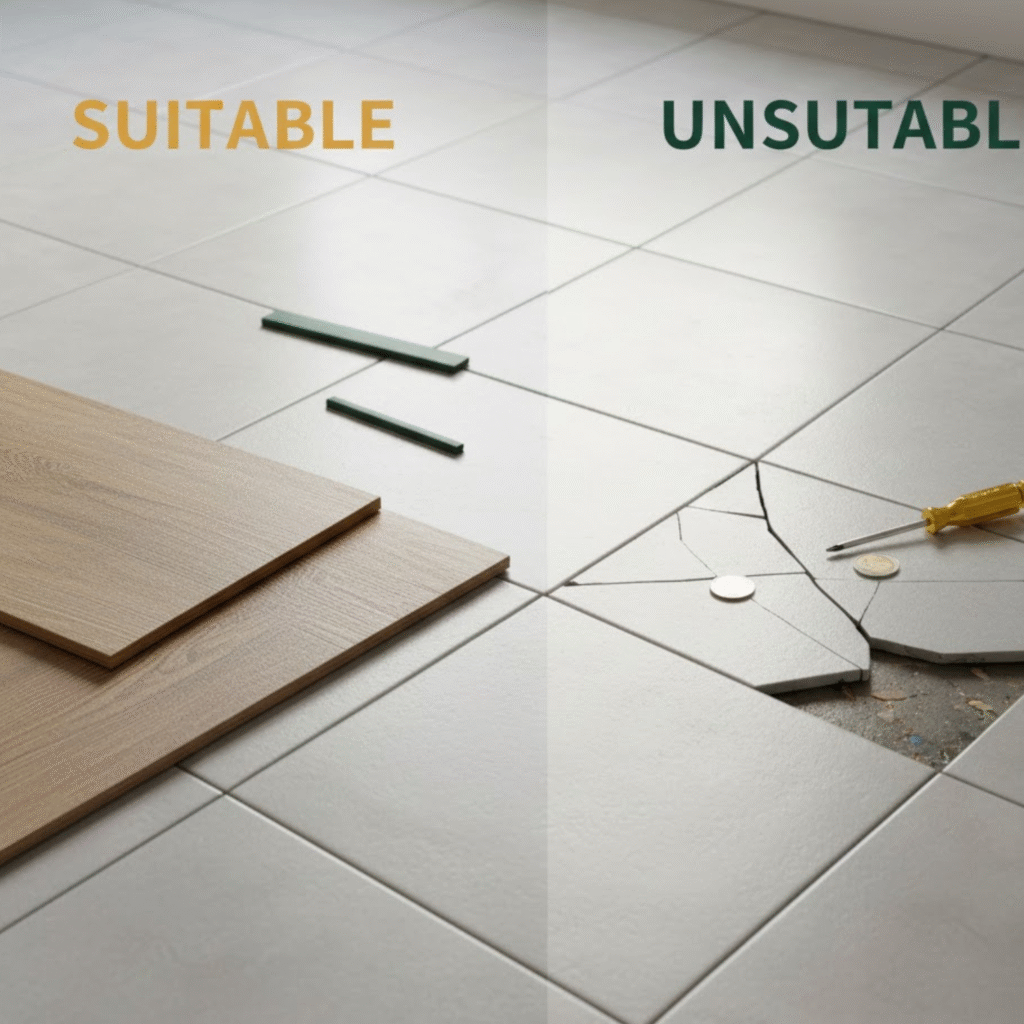
Here’s a quick way to know if your tile is ready:
You can install over tile if
● The tiles are tightly fixed with no loose or hollow sounds.
● The surface is even and free from cracks.
● The grout lines are shallow and not deep.
● There’s no moisture or dampness under the tiles.
You should not install over tile if
● The tiles are broken or moving when stepped on.
● The surface is uneven or slopes in some areas.
● The grout lines are too deep.
● There’s any sign of water leakage or mold underneath.
Benefits of Installing Vinyl Plank Flooring Over Tile
If your tiles still feel solid but look tired or outdated, covering them with vinyl plank flooring
can be a smart move.
It saves time, reduces mess, and gives your room a completely new look without removing
the old floor.
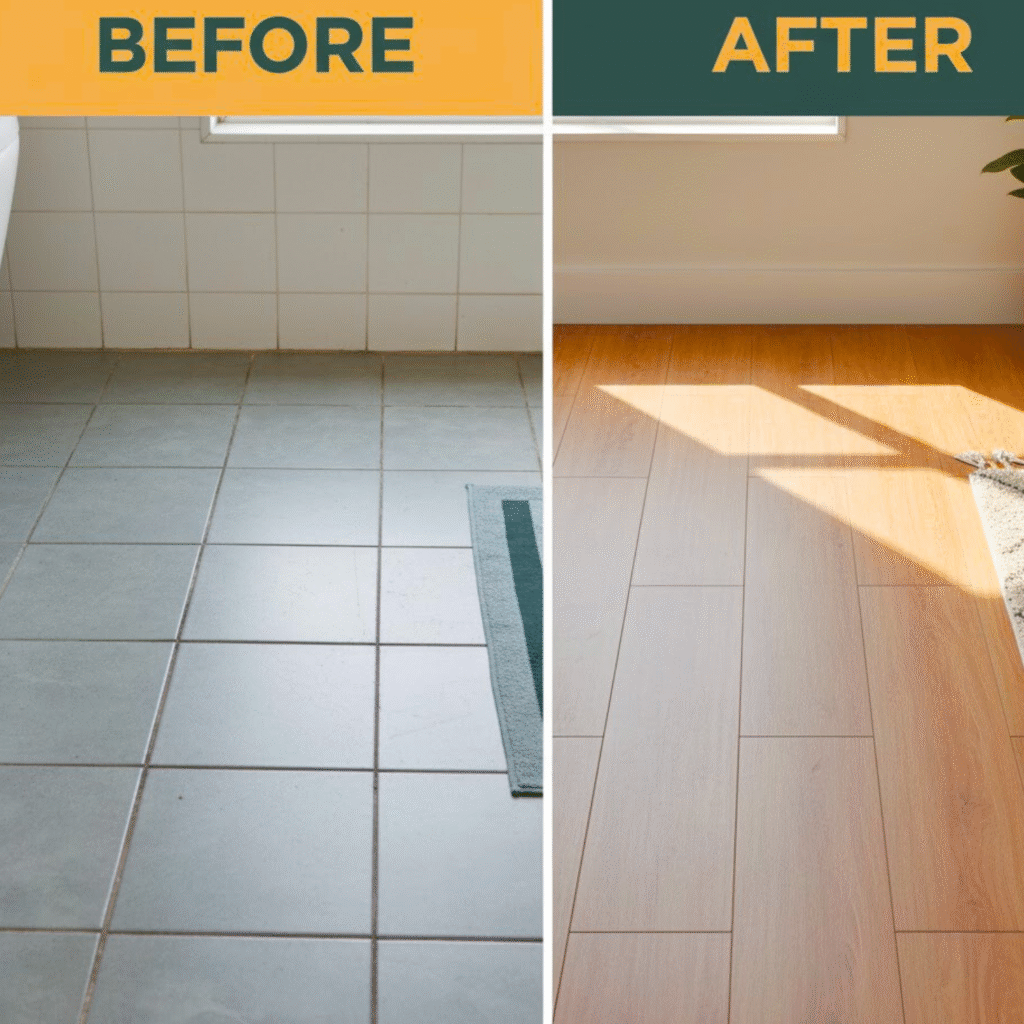
Here are the main reasons people choose to install vinyl over tile:
● No demolition needed: You don’t have to remove tiles or deal with dust and debris.
● Quicker installation: Most projects can be done in a day or two.
● Budget-friendly update: It costs far less than removing and reinstalling new tiles.
● Stylish finish: Vinyl planks come in many designs that look just like real wood or
stone.
● Durable and low-maintenance: Easy to clean, resistant to moisture, and ideal for
busy areas like kitchens or bathrooms.
● Adds warmth and comfort: Softer underfoot than cold ceramic tile.
You know what?
Many homeowners skip the mess of tile removal and still end up with floors that
look completely new. The secret is proper preparation.
Things to Check Before Installation
Before you start laying planks, take a few minutes to check these points.
A little preparation here will save you hours of fixing problems later.
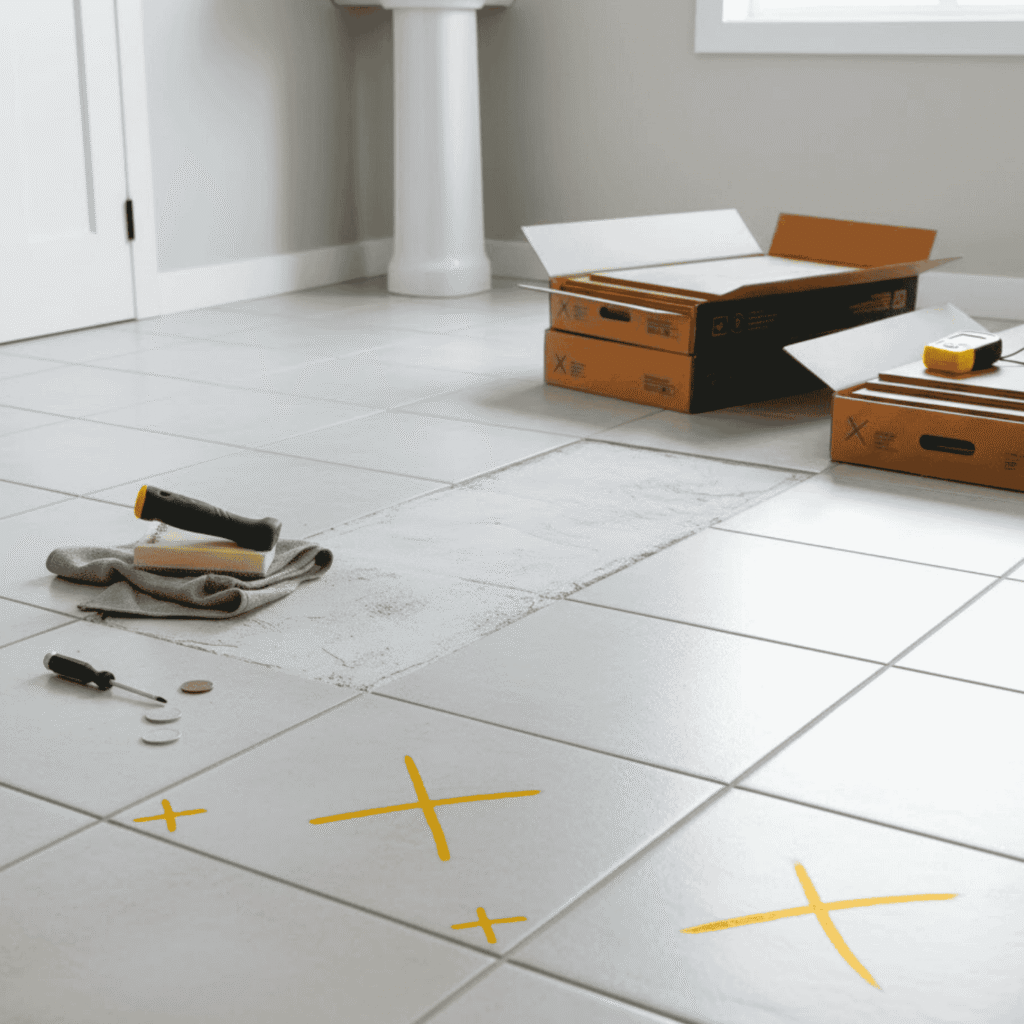
Tile Condition Checklist
● Tap each tile to make sure it’s solid and not loose.
● Replace cracked or hollow tiles.
● Fill deep grout lines with a leveling compound.
● Sand any high spots for a flat surface.
Choose the Right Vinyl Type
● Use Luxury Vinyl Plank (LVP) or SPC flooring both work well over tile.
● Avoid thin peel-and-stick vinyl if your tiles have deep grout lines.
● Pick planks with an attached pad if you want extra comfort and sound reduction.
Prepare the Surface
● Clean tiles with a good degreaser to remove dirt or residue.
● Let the surface dry completely.
● Fill all low spots and smooth out the edges.
Check Room Conditions
● Keep the room temperature steady between 65°F and 85°F.
● Make sure there’s no moisture underneath the tile.
● Acclimate the vinyl planks in the room for at least 48 hours before installation.
Pro Tip
Run your hand flat across the tiles before starting. If you can feel dips or
bumps, your vinyl planks will show them too. Smoothness is key to a
professional finish.
Step-by-Step Guide: How to Install Vinyl Plank Flooring Over Tile
Installing vinyl plank flooring over tile can give your room a completely new look without the
hassle of removing old tiles.
The process is simple, but each step matters. Here’s how to do it right from start to finish.
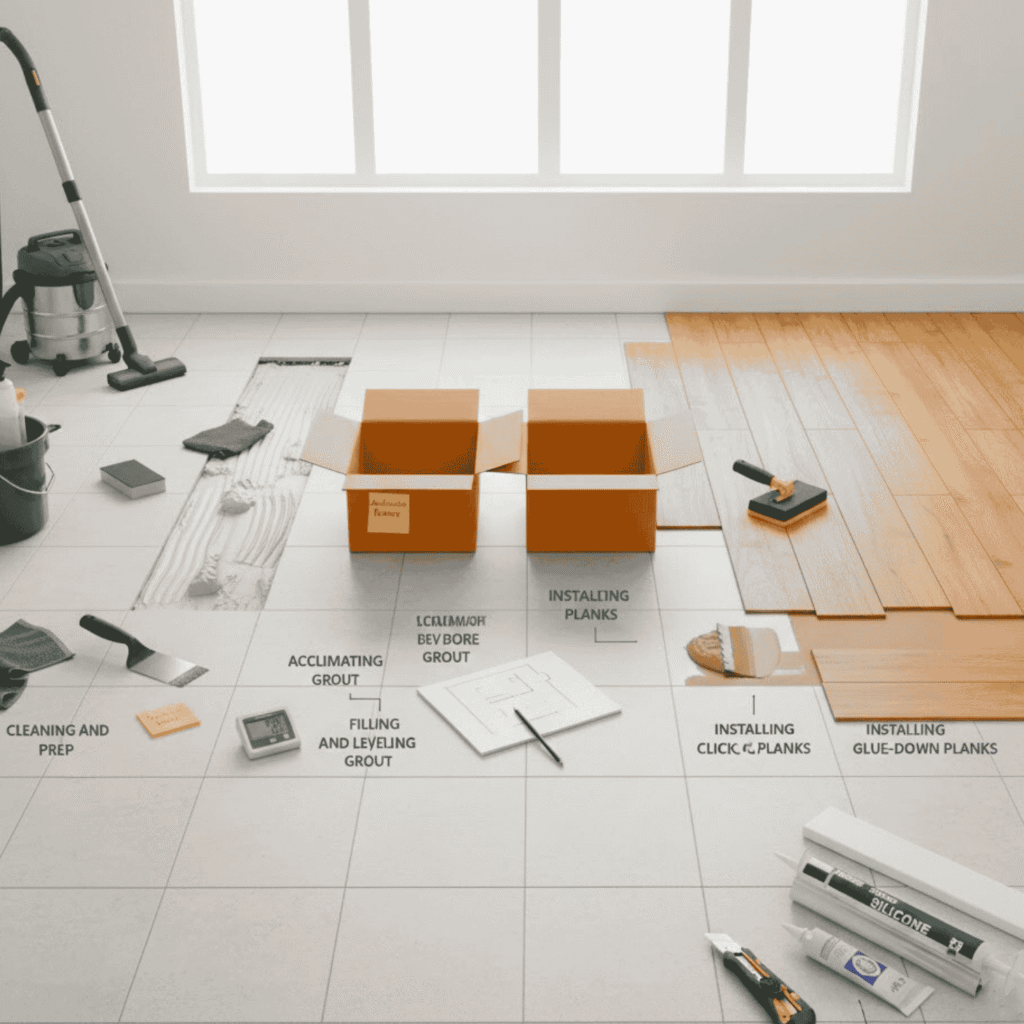
Step 1: Clean and Prepare the Tile
Start by giving your tile floor a deep clean. Any dust, grease, or leftover soap can stop the
planks from locking properly or sticking to the surface.
Vacuum the floor thoroughly, then wash it with a mild cleaner or degreaser.
Let it dry completely before moving on, as even small amounts of moisture can affect
adhesion.
Step 2: Fill and Level the Grout Lines
Vinyl planks need a flat surface to look and feel even. If your grout lines are deep, they’ll
create dips that show through later.
Apply a floor-leveling compound to fill in all grout lines and uneven spots. Once it’s dry, sand
down any high areas until the surface feels completely smooth.
Step 3: Acclimate the Vinyl Planks
Vinyl adjusts to the room’s temperature and humidity, so it’s important to let it settle before
installation.
Place the boxes of planks flat in the room for at least 48 hours. This step prevents the vinyl
from expanding or shrinking after you’ve laid it down.
Step 4: Plan Your Layout
Good planning saves time and makes the finished floor look balanced.
Start from the longest wall or follow the main light source in the room. Lay out a few planks
first to see how they’ll fit, and adjust so your seams are staggered evenly. This gives your
floor a more natural look and a stronger fit.
Step 5: Install the Planks
Now you can start laying your vinyl planks. For click-lock systems, begin in a corner and
gently snap each piece together.
If you’re using glue-down vinyl, spread adhesive in small sections and press the planks
firmly in place.
For peel-and-stick planks, align each piece carefully before sticking it down to avoid gaps or
overlaps.
Take your time here; precision matters more than speed.
Step 6: Trim and Finish
Once all planks are in place, focus on the finishing touches.
Cut the edges neatly to fit around corners and door frames using a sharp utility knife.
Reinstall your baseboards and add a thin line of caulk where needed.
Finally, clean the surface gently with a damp mop to remove dust and admire your new
floor.
Pro Tip
If a plank doesn’t lock easily, don’t force it. Check for debris or
misalignment and fix it right away to keep your floor tight and even.
Common Mistakes to Avoid
Even a simple flooring job can go wrong if a few small details are missed.
Here are the most common mistakes people make when installing vinyl plank flooring over
tile, and how to avoid them.
Do not Level the Tile Surface
Uneven tiles or deep grout lines can cause the planks to shift or lift over time.
If you skip leveling, you’ll see gaps or hollow sounds under your floor later.
Always make sure your surface is smooth and flat before you begin.
Skipping the Cleaning Step
Dust or grease left behind on the tile prevents vinyl planks from sticking or locking properly.
Take time to clean the floor thoroughly and let it dry completely.
A clean start always leads to a stronger finish.
Not Letting Planks Acclimate
Installing cold or warm planks right away is a common beginner mistake.
Vinyl needs time to adjust to your room’s temperature and humidity.
If you skip acclimation, your floor can expand or contract after installation.
Forgetting Expansion Gaps
Vinyl planks expand and contract slightly with temperature changes.
Without a small gap around the walls, your floor might buckle or lift.
Always leave a quarter-inch space at the edges before reinstalling baseboards.
Poor Cutting and Fitting
Rushing cuts or forcing planks into tight spots can cause visible seams or cracks.
Use a sharp knife and take your time around corners and door frames.
A little patience here makes a big difference in how your floor looks.
Rushing the Job
Many DIYers try to finish the floor in one go.
Working too fast leads to uneven seams and missed details.
It’s better to work steadily and check each section as you go.
Mistakes After Installation
Even after the vinyl planks are in place, a few small mistakes can still damage your new floor.
Here’s what to watch out for once the installation is done.
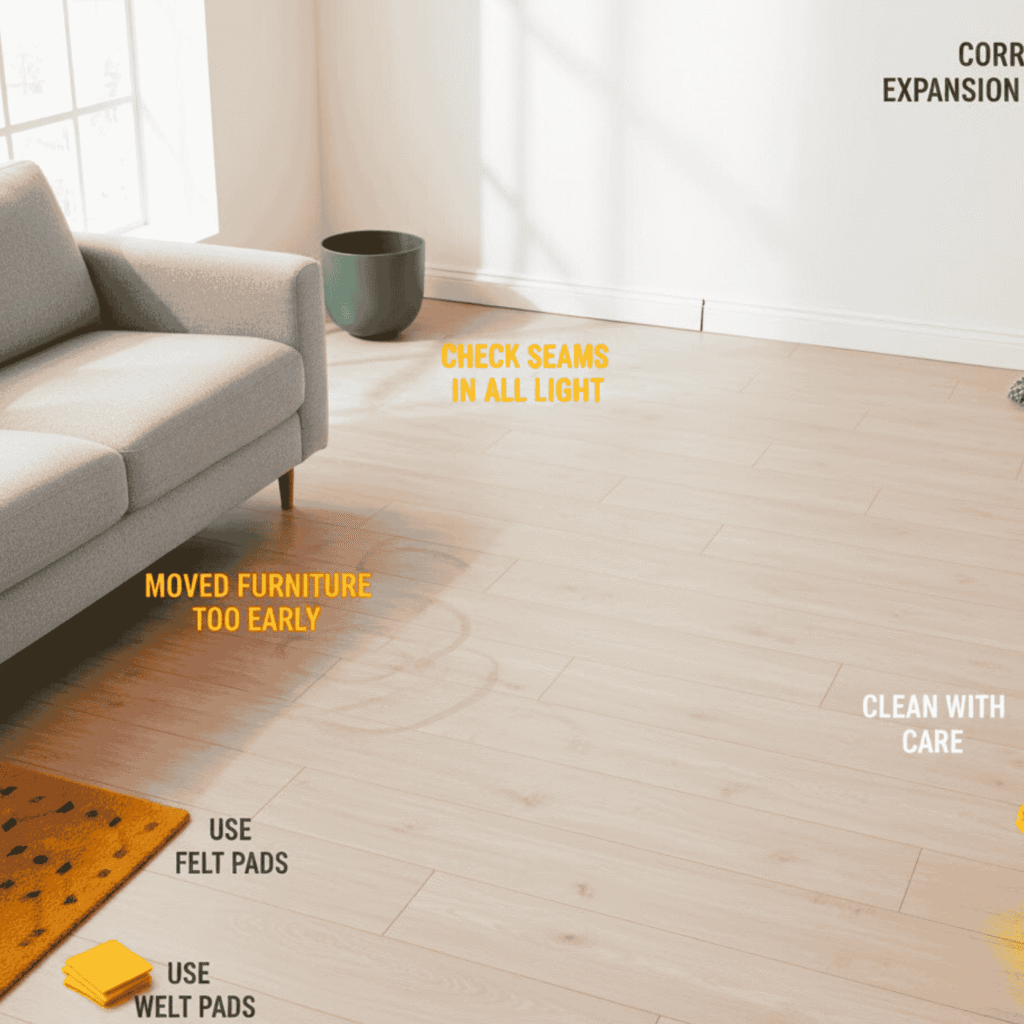
Moving Furniture Too Soon
Vinyl needs time to settle, especially if adhesive was used.
Placing heavy furniture right away can shift the planks or leave dents.
Wait at least 24 to 48 hours before setting anything on your new floor.
Skipping the First Cleaning
Many people forget to clean the surface after installation.
Dust, small debris, or adhesive residue can dull the shine and weaken the joints.
Use a soft mop and mild cleaner to remove leftover dust and keep your floor fresh.
Ignoring Expansion Gaps and Baseboards
If you sealed your floor too tightly against the wall, it won’t have room to expand.
Double-check your edges and baseboards to make sure there’s still a little breathing space.
Not Checking the Floor Under Different Light
Natural light reveals small gaps or seams you might not notice at first.
Walk around the room during the day and check from different angles.
Catching small issues early helps you fix them before they get worse.
Skipping Protective Pads and Mats
Dragging furniture or leaving heavy items in one spot can scratch the vinyl surface.
Attach felt pads under chairs and tables, and place mats near doors to catch dirt.
You know what?
The first two days after installation decide how your floor will look for years.
Treat it gently, keep it clean, and let it settle before regular use.
Room-Specific Mistakes to Avoid
Each room in your home brings its own challenges when installing vinyl plank flooring.
What works well in the living room might not last in the bathroom or kitchen.
Here’s how to handle the most common mistakes in each space.
Bathroom
Moisture is the biggest problem in bathrooms.
If the edges or seams aren’t sealed properly, water can sneak underneath the planks and
cause swelling or mould.
Common Mistakes:
● Not sealing around the toilet or bathtub.
● Using a non-waterproof adhesive or underlayment. ● Leaving open gaps where water can collect.
Better Approach:
Use vinyl planks labeled as waterproof.
Apply a thin bead of silicone around the edges, and seal the corners where water exposure is constant.
Kitchen
The kitchen floor faces heavy use and frequent spills.
If the planks are installed too tightly or under appliances, movement and temperature
changes can cause lifting.
Watch Out For:
● Forgetting expansion space near cabinets or island bases.
● Locking planks under heavy appliances.
● Ignoring heat from ovens or dishwashers.
Better Approach:
Leave small expansion gaps that stay hidden under baseboards or toe kicks.
Avoid fitting planks directly under built-in units, and try to keep the room temperature stable.
Living Room
In living areas, the biggest goal is to keep the floor visually smooth and balanced.
Wrong plank direction or poor light planning can make even good flooring look uneven.
Common Mistakes:
● Laying planks opposite the main light source.
● Ignoring open space layout or door flow.
● Forgetting to protect against direct sunlight.
Better Approach:
Lay planks in the direction of natural light so seams blend smoothly.
Use curtains or UV-protective film on large windows to prevent colour fading.
Plan your layout from the centre of the room outward for a balanced look.
How to Fix Common Installation Mistakes
Even with careful work, things don’t always go perfectly the first time.
The good news is that most vinyl flooring problems can be fixed without redoing the whole
floor.
Here’s how to handle the most common issues you might face.
Gaps Between Planks
Small gaps usually happen when the floor wasn’t level properly or the planks weren’t locked
tightly.
To fix this, warm the area slightly with a hair dryer to make the vinyl more flexible, then tap
the planks gently together with a tapping block.
If the gap doesn’t close, you can lift the plank, clean the edge, and re-lock it or apply a small
drop of vinyl adhesive.
Lifted or Buckled Planks
Buckling happens when there’s no room for the vinyl to expand.
Carefully remove the baseboard around the lifted area and trim a small section of the edge
(around a quarter inch) to create space.
Once you’ve done that, press the planks back down and reinstall the baseboard.
Uneven or Soft Spots
If certain spots feel spongy, it usually means the subfloor isn’t level or the grout lines weren’t
filled properly.
Remove the affected planks, level the area with a patching compound, and let it dry fully
before reinstalling.
Once the surface is smooth, your floor should feel solid again.
Crooked or Misaligned Rows
If your rows start to drift or look uneven, it’s best to fix them right away instead of waiting.
Gently unlock the affected section and reinstall it from the centre of the room outward, using
spacers to maintain equal alignment.
Taking time to realign now will prevent worse gaps later.
Scratched or Damaged Planks
Minor scratches can be filled with a vinyl repair kit that matches your floor colour.
For deeper marks, it’s better to replace the damaged plank.
To prevent future damage, use felt pads under furniture legs and avoid dragging heavy
items across the floor.
Cost and Time Estimate
Installing vinyl plank flooring over tile doesn’t take much time or money compared to a full
renovation.
Here’s a quick look at how long it usually takes and what you can expect to spend on
average.
If your existing tiles are level and in good condition, you’ll save both time and money since
There’s no need for demolition.
But if the tiles are cracked or uneven, a bit of prep work can make all the difference in how
smooth and long-lasting your new vinyl floor turns out.
Maintenance Tips After Installation
Once your new vinyl plank flooring is in place, a little care will help it stay clean and last for
years.
Here’s how to look after it properly without much effort.
Wait before moving furniture.
After installation, let your floor settle for at least 24 to 48 hours before placing furniture or appliances.
This gives the planks time to lock firmly and prevents any shifting or dents.
Clean gently
Stick to mild, vinyl-safe cleaners for regular cleaning.
Harsh chemicals can dull the surface and weaken the protective layer over time.
Avoid heat and harsh tools
Never use steam mops, bleach, or abrasive pads.
They can damage the vinyl’s surface and break the seal between planks.
Protect high-traffic areas
Place mats near doorways to catch dirt and grit before it reaches your floor.
This small step keeps the surface looking smooth and prevents scratches.
Regular care pays off
A quick sweep or vacuum each day keeps dust away and protects your floor’s shine.
With gentle cleaning and basic protection, your vinyl flooring will keep looking new for years.
FAQs About Installing Vinyl Over Tile
Yes, you can lay vinyl planks over tile as long as the tiles are solid, clean, and level.
If the tiles are loose, cracked, or uneven, fix or fill them first before starting installation.
Luxury Vinyl Plank (LVP) or Stone Plastic Composite (SPC) flooring works best.
Both are durable, easy to install, and thick enough to hide shallow grout lines.
Not always. Many modern vinyl planks come with a built-in underlayment.
If yours doesn’t, use a thin underlay designed for vinyl to help with sound absorption and
comfort.
If your tiles are damaged or uneven, removing them first is the better choice.
But if the tiles are in good shape, you can safely install vinyl on top and save time and cost.
Yes, you can.
Just make sure the floor is dry and sealed properly around the toilet, tub, and edges to stop
moisture from seeping underneath.
The most common issues are gaps, hollow sounds, and uneven seams.
These usually happen when grout lines aren’t filled or when the planks aren’t given time to
adjust to the room temperature.
Clean the tiles well, fill all grout lines with a leveling compound, and sand any high spots.
This creates a flat, smooth surface that helps the planks fit tightly.
Let the vinyl rest flat in the room for at least 48 hours.
This helps it adjust to the temperature and humidity so it won’t expand or shrink later.
It’s not recommended unless you level the surface first.
Deep grout lines can cause dips or uneven locking, so fill them with a self-leveling
compound before starting.
Make sure your tiles are level, leave proper expansion gaps around walls, and follow the
locking system carefully.
Also, avoid heavy furniture on the edges until the floor has fully settled.
Conclusion
Installing vinyl plank flooring over tile is one of the easiest ways to refresh your space
without removing the old floor.
It saves time, keeps the mess to a minimum, and gives your home a clean, updated look.
The real secret lies in the preparation.
If you clean your tiles properly, level the grout lines, and take time to plan your layout, your
floor will look professional and last for years.
Even a small detail, like giving the planks time to adjust to the room, makes a big difference in the final result.
Vinyl flooring isn’t just about looks; it’s about doing it right the first time. When you take those extra steps, you’ll get a floor that feels solid, looks beautiful, and stays that way for a long time.
Ready to Start Your Project?
If you’re thinking about installing vinyl plank flooring over tile, we can help you get it right from the start.
Our team will guide you through every step from choosing the right planks to making sure the final fit looks perfect.