This blog is a complete step-by-step guide on installing vinyl plank flooring directly over
concrete surfaces such as slabs, basements, stairs, and walls. It covers preparation of the
subfloor, moisture testing, different installation methods (floating, glue-down, peel-and-stick),
and post-installation care. The goal is to help users avoid common mistakes and choose the
right method,
If you’ve ever thought about updating a basement or a room with a concrete floor, you
probably already know the common problems. Concrete is hard, often uneven, and
sometimes it has moisture issues. Many people worry their new floor will end up cold, damp,
or even start peeling if it’s not installed right.
Vinyl plank flooring is a practical solution for these spaces. It can handle moisture, it feels
more comfortable underfoot than bare concrete, and it comes in different installation styles
like floating, glue-down, or peel-and-stick. That means you can match the method to your skill level and the condition of your floor.
In this guide, I’ll walk you through each step of installing flooring on concrete. I’ll
also share some lessons I’ve learned that can save you from the mistakes many beginners
make. By the end, you’ll feel more confident about tackling the project yourself.
Can You Install Vinyl Plank Flooring on Concrete?
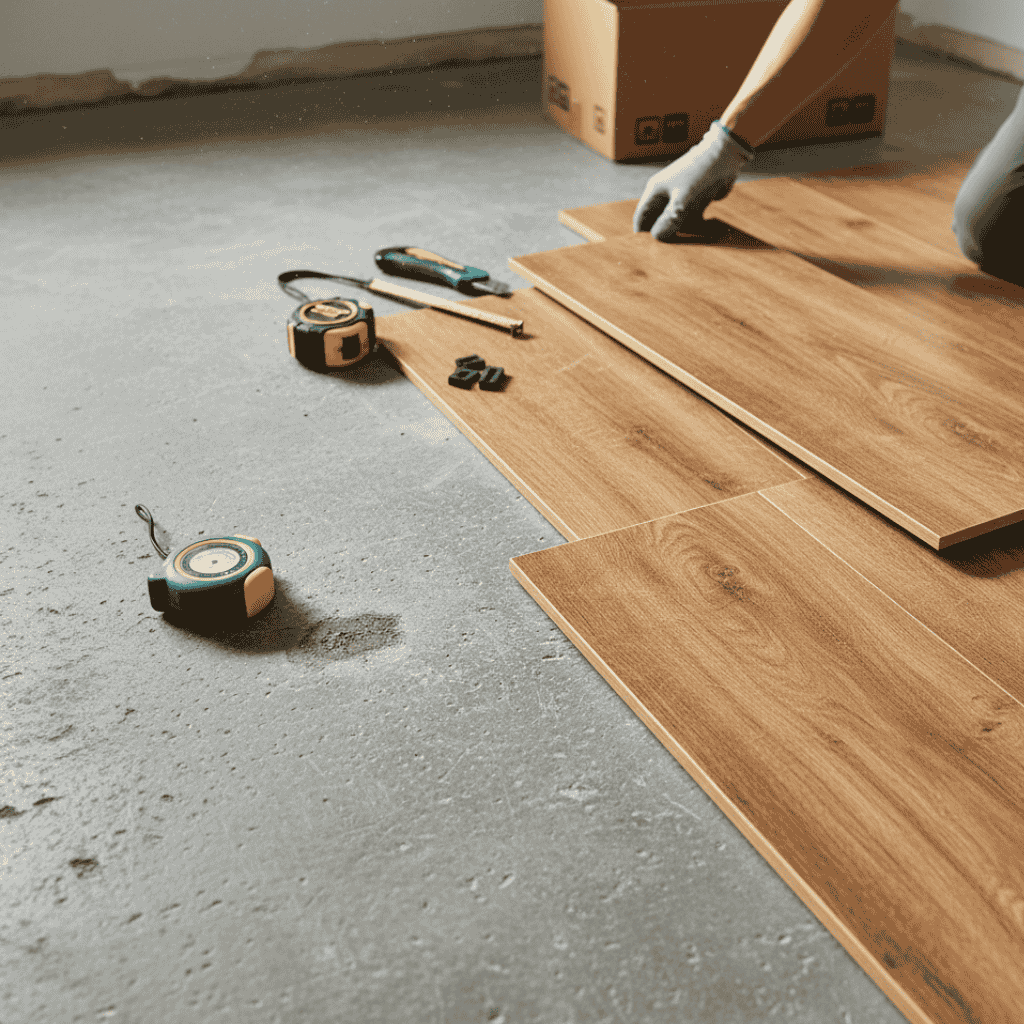
Vinyl plank flooring can be installed on concrete, and in most cases it works really well.
Many homeowners choose it because it gives a modern look at a lower cost than wood or
tile. But like every option, it has strengths and some drawbacks to think about.
Pros
● Very durable and handles everyday wear without trouble
● Naturally waterproof, making it safe for kitchens, basements, and laundry rooms
● Wide range of designs and finishes that give concrete floors a warm, stylish look
Cons
● Concrete that holds moisture can cause damage if not sealed or treated first
● Uneven spots or cracks in the slab need repair before laying planks
● Cold surface without underlayment, vinyl can feel chilly underfoot
When Vinyl Isn’t the Best Choice
If your concrete slab has major moisture problems, such as constant dampness or leaks,
vinyl flooring may not last long. It’s also not the ideal pick for outdoor concrete or spaces that
face extreme temperature swings. In such cases, tile, polished concrete, or other floor types
may perform better.
Tools & Materials Checklist
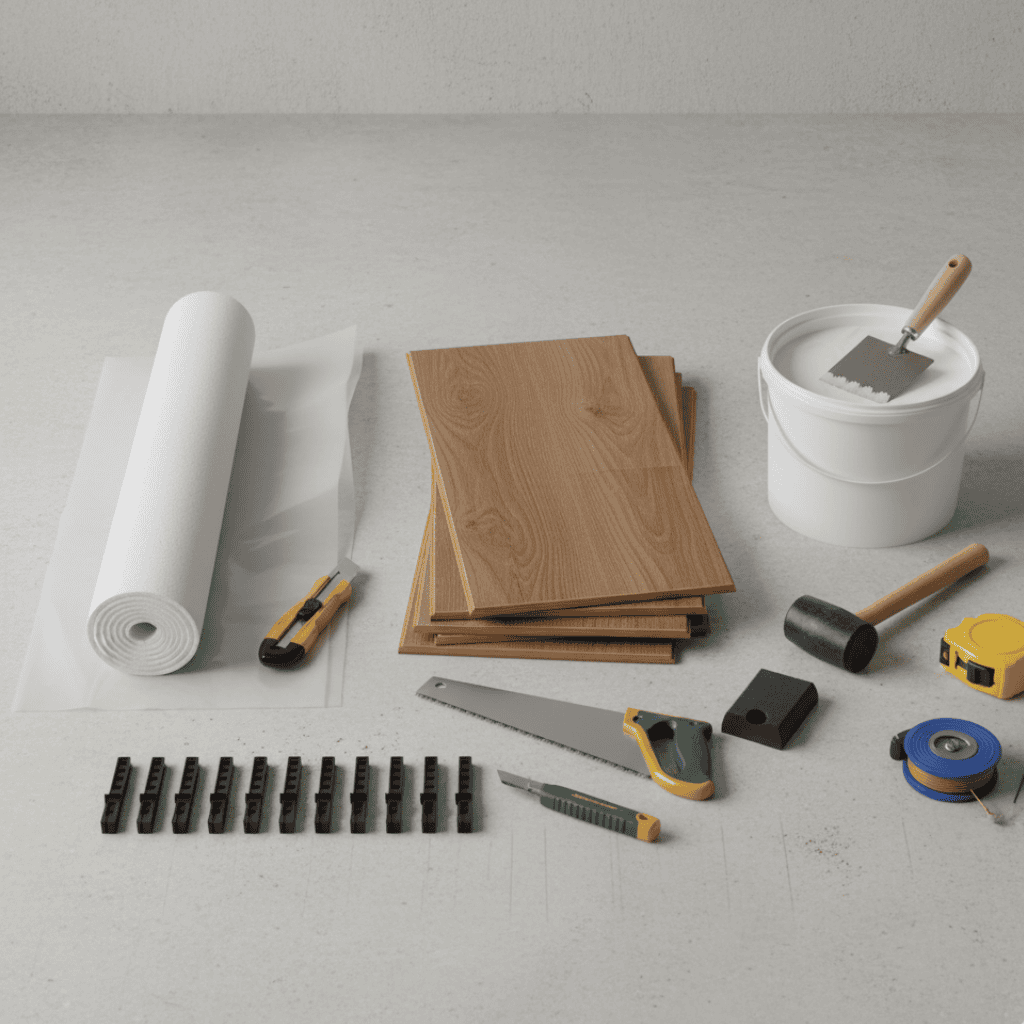
Before you start, it’s important to gather all the necessary tools and materials. Having
everything ready not only saves time but also prevents mistakes during installation. Here’s a
complete list:
Vinyl planks
Available in floating (click-lock), glue-down, or self-adhesive types. Floating
planks are beginner-friendly, while glue-down options give a more permanent
finish.
Underlayment
Not always required, but it helps with sound reduction, comfort underfoot,
and smoothing out small imperfections in the concrete.
Adhesive
For glue-down installation, use a vinyl-specific adhesive that
bonds well with concrete and can withstand moisture.
Moisture barrier
A must if your concrete slab has any history of dampness. It
prevents water vapor from damaging your floor.
Spacers
These small tools ensure you leave a proper expansion gap
along walls, which keeps the floor from buckling later.
Utility knife or saw
A sharp utility knife works for most cuts, but a saw may be needed for
thicker planks or tricky areas.
Tapping block and mallet
Essential for click-lock flooring. They help secure planks
together tightly without chipping the edges.
Chalk line and measuring tape
These help you mark straight reference lines so the first row goes down
perfectly, avoiding crooked layouts.
Pro Tip
Always keep a few extra planks on hand. If one gets damaged during cutting or
installation, you’ll have a perfect match ready without halting your project.
Preparing Your Concrete Subfloor
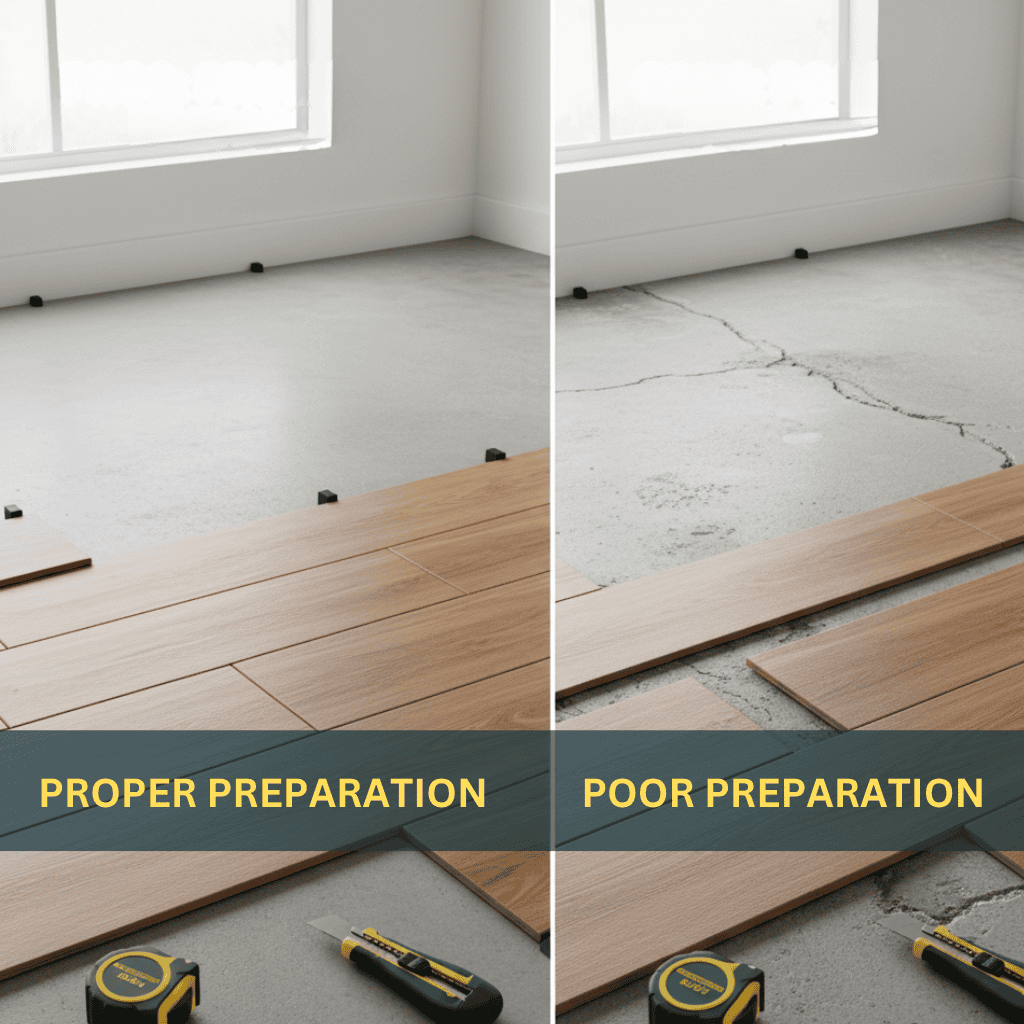
Installing vinyl plank flooring on concrete may look simple, but the success of your project
depends heavily on the condition of the surface underneath. Concrete is strong, but it can
also hide problems like cracks, uneven spots, or hidden moisture. If these issues are
ignored, your planks may shift, separate, or wear out much faster than expected. That’s why
careful preparation is not just recommended, it’s the most important step before you even
open a box of flooring
Clean the Surface
Remove dust, dirt, and any sticky residues like carpet glue or paint. Even small debris can
stop planks from locking tightly together.
Fix Uneven Spots
Concrete floors often have dips or high spots. Use a self-leveling compound to smooth them
out. This prevents gaps or movement in your flooring later.
Repair Cracks
Hairline cracks can be sealed with filler, while larger cracks need proper patching. Leaving
them open can allow moisture to sneak in and damage the vinyl.
Test for Moisture
Basements and ground-level slabs often hold moisture. Place a plastic sheet overnight or
use a moisture meter to be sure. If moisture is present, use a barrier or sealant.
Decide on Underlayment
Underlayment isn’t always required, but it can add comfort, reduce sound, and act as extra
protection against cold concrete.
A properly prepared subfloor is like insurance for your flooring project it guarantees that your
vinyl planks will stay in place, look neat, and last for years without unexpected issues.
Why know what?
Many DIY installers skip moisture testing, but it’s the hidden reason why
floors lift, bubble, or smell musty later. Spending 10 minutes on this step can save you hundreds in repairs.
Ready to transform your concrete floor with vinyl planks?
Start by gathering the right tools
and checking your subfloor today. The sooner you prepare, the smoother your installation
will be.
Choosing the Right Installation Method
Not every vinyl plank is installed the same way. Concrete allows you to use floating,
glue-down, or peel-and-stick planks, but the right choice depends on your space, moisture
levels, and how permanent you want the floor to be.
Floating / Click-Lock Vinyl Planks
Floating vinyl planks are the most beginner-friendly option. Instead of being glued down,
each plank locks into the next with a tongue-and-groove system and “floats” over the
concrete. This makes it one of the fastest ways to cover a concrete floor without dealing with
messy adhesives. Many homeowners prefer this method for living rooms, bedrooms, and
rental spaces because it’s easy to install, replace, or even remove later if needed.
● Pros: Easy for beginners, quick to install, easy to replace if a plank gets damaged.
● Cons: Needs a very level subfloor; may not feel as firm as glue-down.
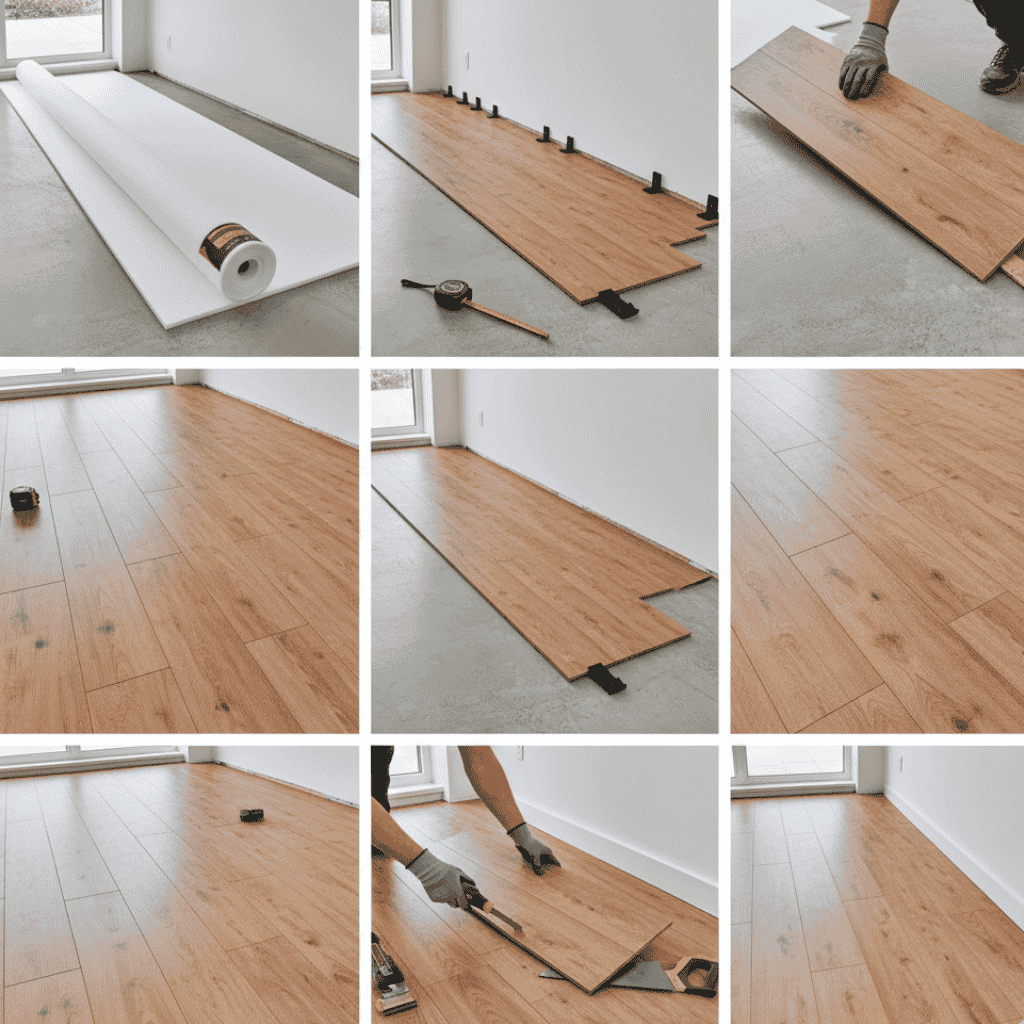
Floating / Click-Lock Vinyl Planks
1. Lay an underlayment if required (this helps with comfort and sound).
2. Start at the longest and straightest wall in the room.
3. Place spacers along the wall to leave a small expansion gap.
4. Connect the planks by clicking the tongue-and-groove edges together.
5. Continue row by row, staggering the joints for a natural look.
6. Cut the last pieces to fit using a utility knife or saw.
7. Remove spacers and install baseboards or trim to cover the gaps.
Glue-Down Vinyl Planks
Glue-down vinyl planks give a solid, permanent feel underfoot, making them ideal for busy
households and commercial spaces. Since each plank is secured directly to the concrete,
there’s no risk of shifting, but the prep work and installation require more effort compared to
floating floors.
● Pros: Feels solid underfoot, excellent for high-traffic areas, won’t shift.
● Cons: Harder to remove later; requires more prep work.
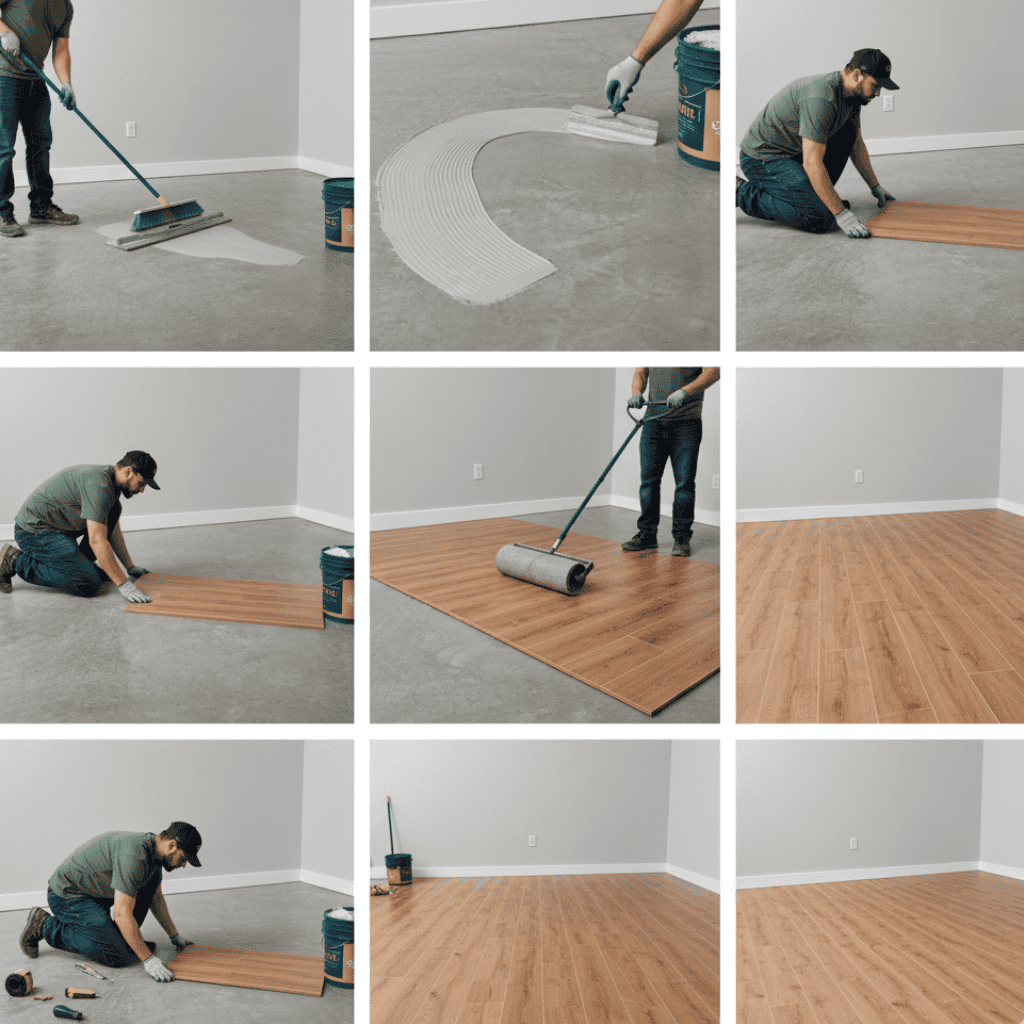
Steps to Install Glue-Down Planks:
1. Clean and dry the concrete; make sure it is smooth and level.
2. Apply a thin, even layer of adhesive using a notched trowel.
3. Start laying planks in one corner, pressing each piece firmly into the adhesive.
4. Work in small sections so the glue doesn’t dry before you place the planks. 5. Use a 100-lb roller across the floor to press the planks down evenly.
6. Allow the adhesive to cure fully (usually 24 hours) before walking heavily on the floor.
Peel-and-Stick / Self-Adhesive Vinyl Planks
Peel-and-stick planks are the quickest and most affordable option, perfect for small rooms or
temporary updates. They come with adhesive backing, so installation is as simple as peeling
and pressing but they don’t hold up as well in damp areas like basements.
● Pros: Budget-friendly, fast to apply, no extra tools required.
● Cons: Adhesive may weaken in humid areas, and it is not ideal for basements.
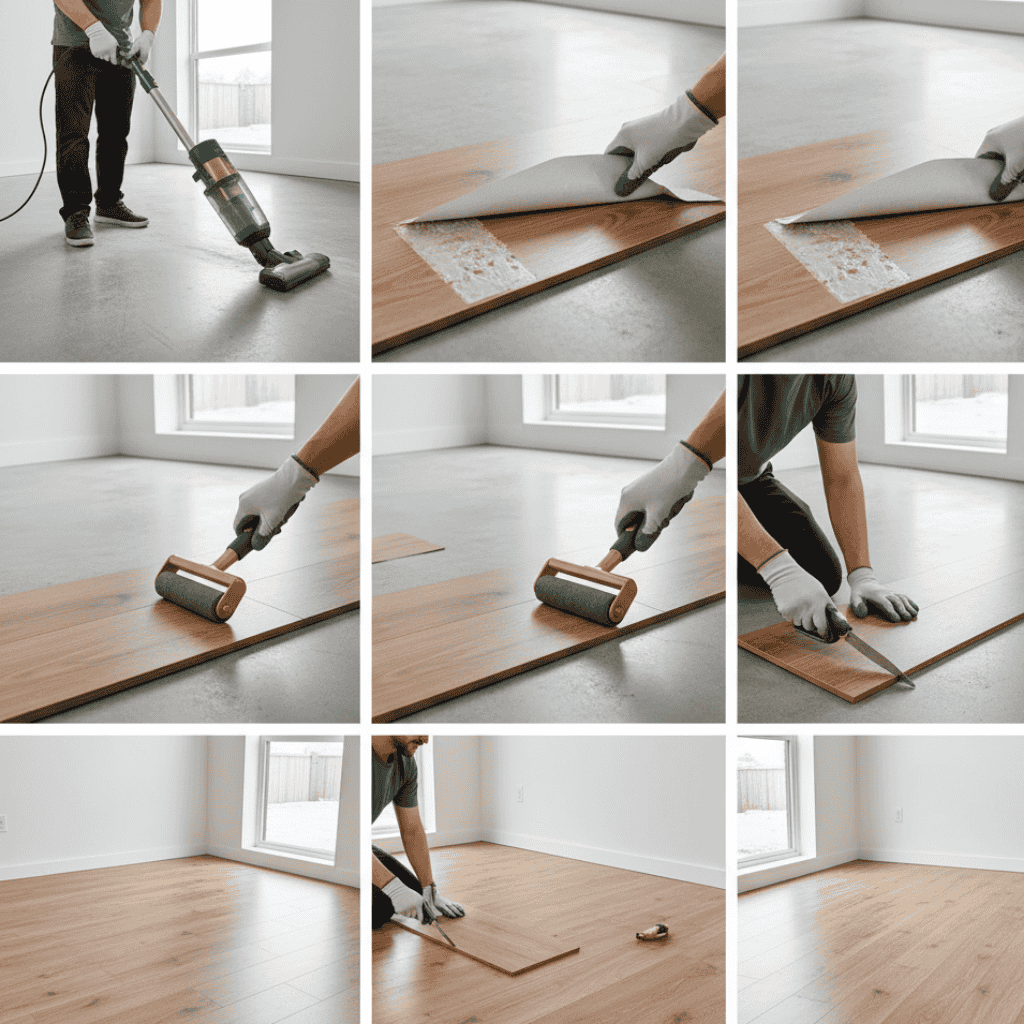
Steps to Install Peel-and-Stick Planks:
1. Clean and dry the concrete thoroughly dust or moisture will ruin adhesion. 2. Peel the backing off the plank carefully.
3. Place the plank starting from one corner, and press it firmly onto the floor.
4. Smooth out each piece with a hand roller or pressing tool to remove air bubbles.
5. Continue row by row, trimming pieces as needed.
6. Once finished, avoid mopping or heavy use for 24 hours to let the adhesive bond
fully.
Quick Comparison: Vinyl Plank Installation Methods on Concrete
Why know what?
If you want a quick DIY project, go for floating planks. If durability is a priority,
glue down is the smarter choice. Peel-and-stick should be reserved for light use rooms.
Step-by-Step Installation Guide for Vinyl Plank on Concrete
Installing vinyl planks on concrete may look straightforward, but following a proper sequence
is what makes the difference between a professional finish and a floor that lifts, gaps, or
looks uneven. Here’s a complete breakdown:
1. Layout Planning
Before you cut a single plank, map out your room. Snap a chalk line or use a laser guide
along your starting wall. Decide whether you’ll run the planks parallel to the longest wall or
towards the main source of natural light. Both approaches create a more natural visual flow.
Always calculate the plank widths in advance so you don’t end up with a thin, awkward strip
on the final row.
2. Allow for Expansion Gaps
Vinyl expands and contracts with temperature changes. Leave at least a 1/4-inch gap along
all walls, pillars, and fixed objects. Use spacers to maintain this distance throughout the
install you’ll cover it later with baseboards or trim.
3. Installing the First Row
The first row determines the alignment of your entire floor. Start at your marked line,
ensuring the planks are perfectly straight. If using click-lock planks, angle the tongue into the
groove and lock them tight. For glue-down, spread adhesive in small sections with a notched
trowel and press planks firmly. Always double-check alignment before moving forward.
4. Staggering Seams for a Natural Look
Rows should never end with seams that align directly across. Stagger end joints by at least 6
inches between rows. This not only strengthens the structure but also mimics the natural
variation of real hardwood. Use off-cuts from one row to begin the next where possible, it
saves material and keeps the pattern organic.
5. Trimming Planks for Edges & Corners
When you reach the edges, doorways, or vents, measure carefully and mark your planks
before cutting. A utility knife works for straight cuts, while a jigsaw or oscillating tool is better
for notches and detailed trimming. Slide trimmed planks into place, keeping expansion space
intact.
6. Sealing and Finishing Touches
Once the planks are down, remove the spacers around the walls. Install baseboards, quarter
rounds, or transition strips to cover expansion gaps and create a polished finish. In
bathrooms, kitchens, or basements, consider sealing edges with waterproof silicone caulk
for extra protection against moisture seepage.
Pro Tip
Never rush the final rows. These usually require more trimming and precise fitting,
and a mistake here is the first thing visitors will notice.
Special Situations When Installing Vinyl Plank on Concrete
Most vinyl plank flooring projects are straightforward, but sometimes you’ll face tricky
situations like stairs, basements, or uneven concrete. Each of these requires a slightly
different approach to get long-lasting results.
Installing Vinyl Plank Flooring in a Basement
Basements are naturally prone to dampness, which makes moisture control the top priority.
Always perform a moisture test first, and if needed, install a moisture barrier before laying
planks. Floating or glue-down vinyl both work, but avoid peel-and-stick since humidity can
weaken adhesives.
Installing on Stairs
Stairs demand more precision and durability than flat floors. Each tread and riser should be
measured and cut separately. Glue-down planks work best here because they won’t shift
underfoot. Don’t skip stair nosing it makes the edges safe and professional-looking.
Installing on Uneven or Rough Concrete
Vinyl flooring requires a flat, stable surface. If your concrete has dips, cracks, or high spots,
use a patching compound or self-leveling underlayment. Skipping this step risks gaps, noise,
or broken locking systems later.
Installing Vinyl Plank Flooring on a Concrete Wall
For those creating a feature wall, peel-and-stick or glue-down planks are your best options.
Ensure the wall is clean, smooth, and completely dry. Start at the bottom and work your way
up, pressing each plank firmly so it bonds without slipping.
You know what?
Always match the installation method to the environment. Basements need waterproofing, stairs need adhesive, and walls need lightweight planks for a secure hold.
Not sure if your concrete is ready for vinyl plank flooring?
Get a quick consultation
with a flooring professional before starting your project.
Finishing Touches After Installing Vinyl Plank Flooring on Concrete
Once the planks are in place, a few finishing touches make your floor look polished and help
it last longer. These steps often get overlooked, but they make a big difference in the final
result.
Sealing Edges & Transitions
Seal the edges where your flooring meets walls, cabinets, or doorways with appropriate
caulk or transition strips. This prevents moisture from seeping underneath and gives the floor
a smooth, finished appearance.
Adding Baseboards or Trims
Reinstall or add baseboards and quarter-round trims to cover the expansion gaps you left
around the edges. This not only hides gaps but also gives your floor a clean, professional
look.
Furniture Protection
Heavy furniture can dent or scratch vinyl over time. Use felt pads under chairs, couches, or tables, and avoid dragging furniture across the surface. For rolling chairs, consider a protective floor mat.
Pro Tip
Give your floor at least 24 hours before moving heavy furniture back into the
room. This allows adhesives (if used) to set and planks to settle properly.
Maintenance & Longevity Tips
Once your vinyl plank flooring is installed, proper care will keep it looking new and extend its
life. The good news is that vinyl requires minimal maintenance compared to other flooring
types, but a few smart habits make a big difference.
Regular Cleaning
Sweep or vacuum often to remove dirt and grit that could scratch the surface. A
damp mop with a mild cleaner is usually all you need.
Preventing Water Damage
While most vinyl planks are water-resistant, avoid letting standing water sit on the
floor, especially around edges or seams.
Furniture Protection
Use felt pads under chairs, tables, and heavy furniture to prevent dents or scratches.
Avoid Harsh Cleaners
Skip abrasive scrubbers or strong chemicals, as they can dull the finish.
Long-Term Care
Rotate rugs and furniture occasionally to prevent uneven fading and wear in
high-traffic spots.
Important Note
With these simple steps, your vinyl plank flooring on concrete can stay beautiful and durable for 15–20 years or more.
Common Mistakes to Avoid
Even though vinyl plank flooring is DIY-friendly, a few missteps can lead to costly repairs or a
floor that doesn’t last as long as it should. Here are the most common mistakes to watch out
for:
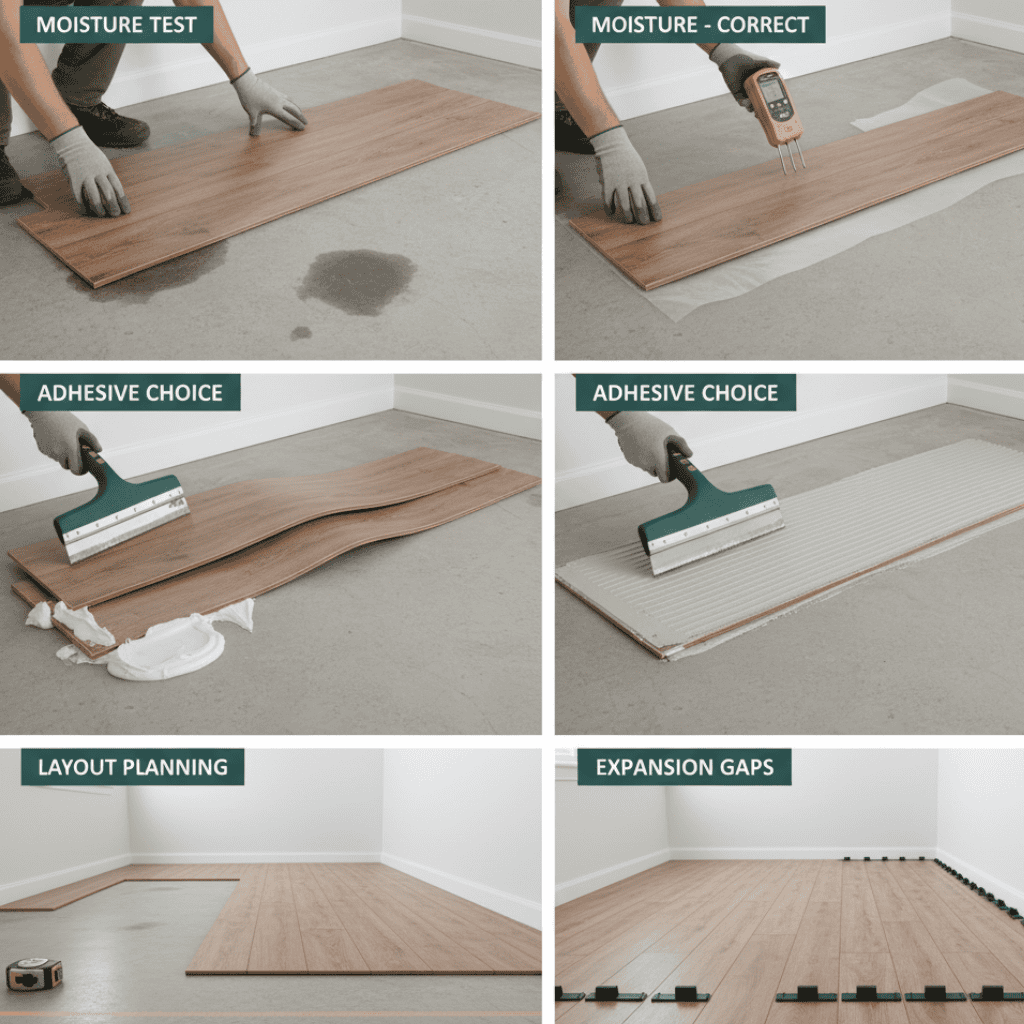
● Skipping the moisture test Concrete can hold hidden moisture that may damage your floor over time. Always test before installing.
● Using the wrong adhesive Not every glue works with vinyl planks on concrete.
Make sure to choose an adhesive designed specifically for vinyl flooring.
● Forgetting expansion gaps Vinyl needs room to expand and contract. Without a
1/4-inch gap around walls and fixed objects, the planks may buckle.
● Rushing the layout Starting without a proper plan can leave you with thin,
awkward strips along the last wall. Take time to measure and plan your layout.
Important Note
A little extra prep goes a long way. Avoid these mistakes, and you’ll
have a smooth, professional-looking floor that lasts for years.
Conclusion: Installing Vinyl Plank Flooring on Concrete the Right Way
Installing vinyl plank flooring on concrete isn’t as hard as it looks. Once your subfloor is
clean, level, and dry, the rest is just choosing the right method floating for ease, glue-down for durability, or peel-and-stick for quick fixes. With a little planning and patience, you can get
a smooth, stylish floor that lasts.
Of course, if your space has tricky spots like stairs or a basement with moisture, it’s perfectly
fine to call in a pro. But for most DIYers, this is one project you can tackle confidently.
Vinyl Plank Flooring on Concrete – FAQs and Expert Answers
Not always. Floating planks often perform better with an underlayment because it adds
comfort underfoot, reduces sound, and provides a moisture barrier. Glue-down planks
usually don’t need underlayment, but in damp areas like basements, adding a thin vapor
barrier can save your floor from long-term damage.
A high-quality pressure-sensitive adhesive is recommended for most glue-down
installations. This type holds the planks firmly but still allows slight flexibility for expansion. In
high-moisture areas, a moisture-resistant adhesive is best. Always check the flooring brand’s
instructions before choosing one.
No, uneven concrete will cause planks to shift, gap, or wear out faster. Before starting, fill
cracks with patching compound and use a self-leveling product to smooth out dips. Taking
this extra step ensures your flooring stays tight and professional-looking for years.
Yes, most modern vinyl plank flooring is 100% waterproof. That’s why it’s popular in
basements, kitchens, and bathrooms. However, water can still seep in through the edges if
not sealed properly, so always use transition strips and silicone caulking where needed.
The timeline depends on your method and room size. A small bedroom can be done in
4–6 hours with floating planks, while glue-down flooring may take a full day due to adhesive
curing time. Preparation, like leveling and cleaning the subfloor, often takes just as long as
laying the planks.
Yes, vinyl planks can go straight on a basement concrete slab, but only if it’s dry and
level. Basements often have hidden moisture issues, so doing a moisture test first is crucial.
For extra protection, install a vapor barrier under the planks.
Floating or click-lock vinyl planks are the best choice for DIYers. They don’t need glue,
special tools, or advanced skills just snap them together like a puzzle. Even if you make a
mistake, you can unlock and reset the planks without wasting material.
Yes, but the process is more detailed. Glue-down planks are recommended because they
stay secure under heavy foot traffic. Each step should be measured, cut, and glued carefully,
and nosings must be properly finished for safety. It’s a bit more advanced than flat surfaces.
Maintenance is simple. Sweep or vacuum regularly to keep grit from scratching the
surface. Use a damp mop with mild cleaner for deeper cleaning, avoiding soaking the floor or
using wax-based products. Adding felt pads under furniture will also prevent dents and scratches.
The most common mistake is skipping the moisture test. Even if your concrete looks dry,
hidden moisture can ruin adhesives and warp the planks over time. Other mistakes include
not leaving expansion gaps, rushing the layout, or failing to level the subfloor.