This complete guide explains how to install vinyl plank flooring in your kitchen from start to
finish. You’ll learn which tools and materials you need, how to prepare the subfloor, and each
installation step to get a flawless finish. It also includes cost comparisons, cleaning tips, and
common mistakes to avoid. Whether you’re a beginner or a DIY enthusiast, this guide will
help you achieve a professional-quality kitchen floor that’s durable, waterproof, and stylish.
Your kitchen floor takes more wear and tear than almost any other surface in your home.
Between cooking spills, dropped utensils, and constant foot traffic, it needs to handle
moisture, mess, and movement without losing its style. That’s where vinyl plank flooring
stands out.
This modern flooring option looks like hardwood or tile but is far easier to maintain. It’s
durable, waterproof, and surprisingly simple to install even if you’re new to DIY projects.
Plus, you don’t need messy adhesives or special tools to get a professional-looking finish.
In this complete guide, you’ll learn how to install vinyl plank flooring in your kitchen
step-by-step, from preparing your space to adding the final touches. You’ll also get practical
tips on choosing the right type of vinyl planks, avoiding common mistakes, and keeping your
new floor in perfect condition for years to come.
By the end, you’ll feel confident enough to handle the job yourself and proud to say, “I did
that!”
Thinking about upgrading your kitchen floor?
We’ll help you choose and install the
right vinyl planks safely, quickly, and beautifully.
Why Vinyl Plank Flooring Is a Smart Choice for Kitchens
If you’re thinking about updating your kitchen floor, vinyl plank flooring gives you the best mix
of style, strength, and simplicity. It’s built to handle busy households, spills, and daily
cleaning all without losing its shine. Here’s why it’s such a smart pick for your kitchen:
1. It’s 100% Waterproof
Kitchens are full of potential spills water, oil, or even coffee. Vinyl plank flooring is completely
waterproof, meaning you don’t have to panic over small accidents. Just wipe it clean and
move on. That’s a big win compared to hardwood, which can warp or stain easily.
2. It’s Durable and Scratch-Resistant
Between kids, pets, and constant foot traffic, your kitchen floor goes through a lot. Vinyl
planks have a strong wear layer that resists scratches, dents, and scuffs keeping your floor
looking new even after years of use.
3. It’s Comfortable and Quiet
Unlike tile, vinyl feels soft under your feet and helps reduce noise. If you spend a lot of time
cooking or walking around the kitchen, this extra comfort really matters.
4. It’s Budget-Friendly
Vinyl plank flooring gives you that high-end wood or stone look without the high price tag. It’s
one of the most cost-effective ways to refresh your kitchen without sacrificing design or
durability.
5. It’s Easy to Install (Even for Beginners)
Most vinyl planks come with a click-lock system, which means you can install them without
glue or nails. You’ll simply click the planks together and lay them over your existing subfloor
no mess, no stress.
6. It’s Low Maintenance
Tools and Materials You’ll Need Before Installation
You won’t need special cleaning products or sealants. A quick sweep and an occasional
damp mop are all it takes to keep your floor spotless. That’s why homeowners love vinyl it
looks good, lasts long, and saves time.
Tools and Materials You’ll Need Before Installation
Before you start, make sure you have the right tools ready. The right setup not only makes
your job faster but also gives your floor that perfect, pro-level finish.
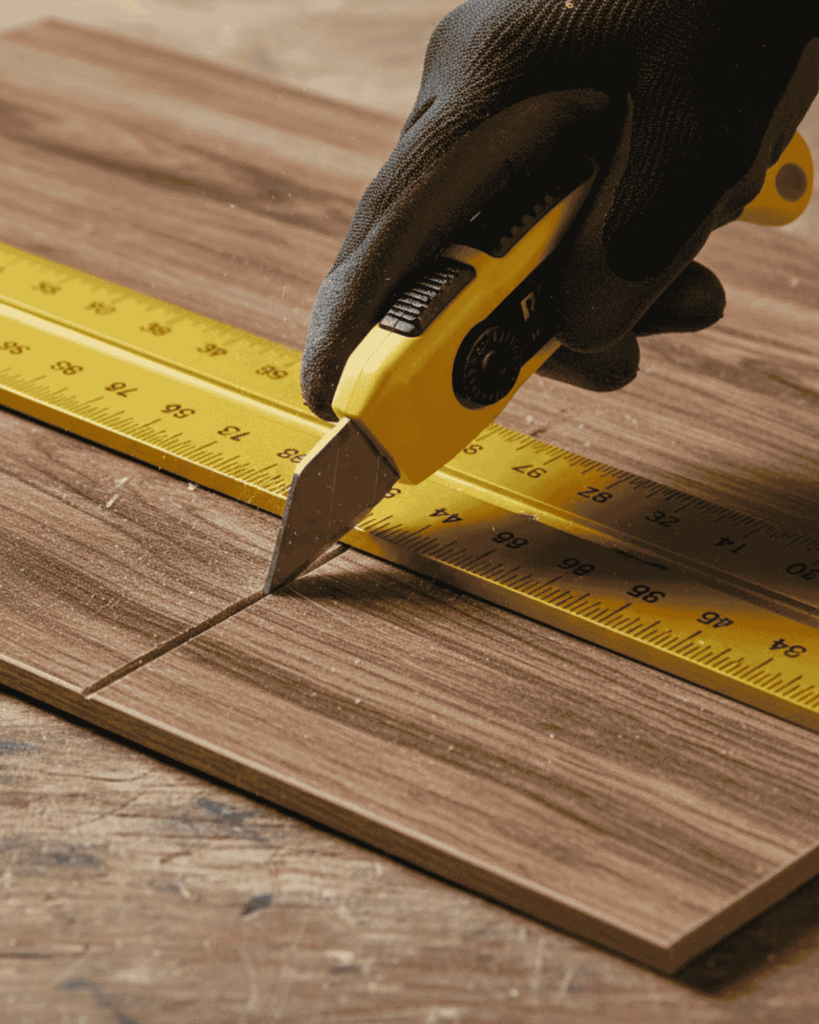
1. Utility Knife
This is the most important tool in your kit. A utility knife with a fresh, sharp blade can handle
most of your cutting work. You’ll use it to score vinyl planks and snap them cleanly along
your marked line. Replace the blade often dull blades can cause jagged cuts or extra effort.
Pro Tip
Use a sturdy cutting surface and make several smooth passes with your knife instead of forcing a deep cut. This method gives you cleaner edges, prevents chipping, and ensures each plank fits tightly during installation.
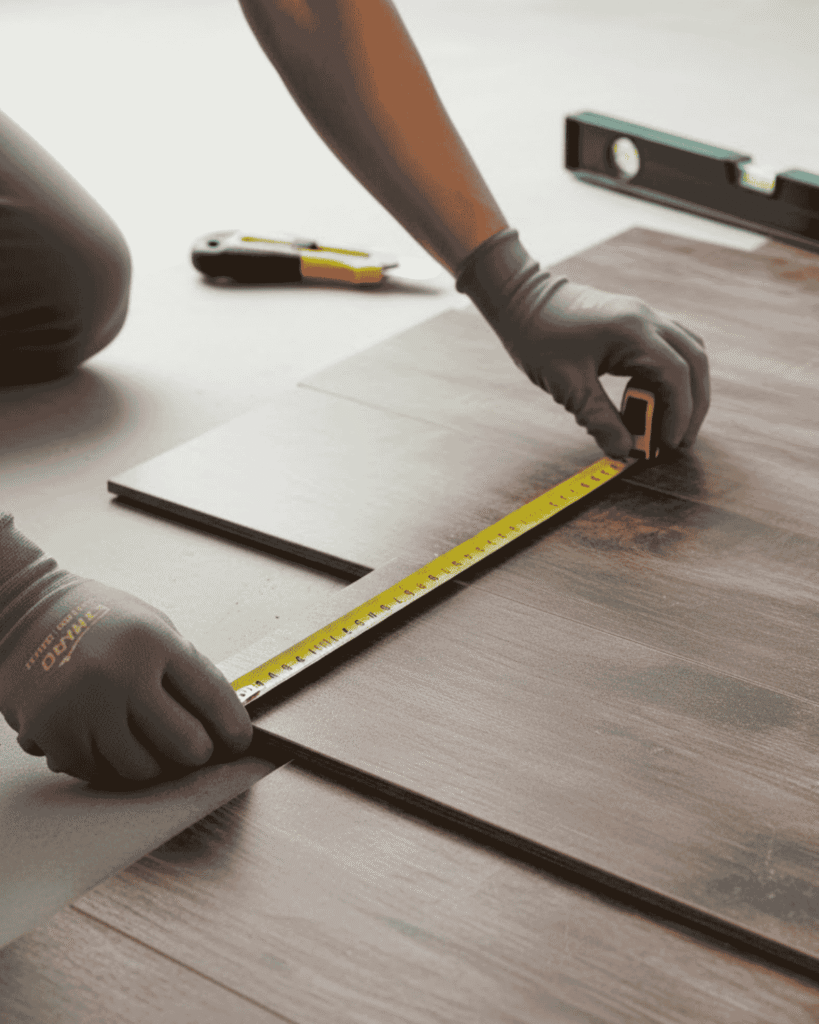
2. Measuring Tape
Accuracy makes or breaks the entire installation. A good measuring tape helps you plan the layout, measure each plank, and cut precisely around cabinets or corners. Before cutting, measure twice, once along the wall and once across the width to avoid gaps later.
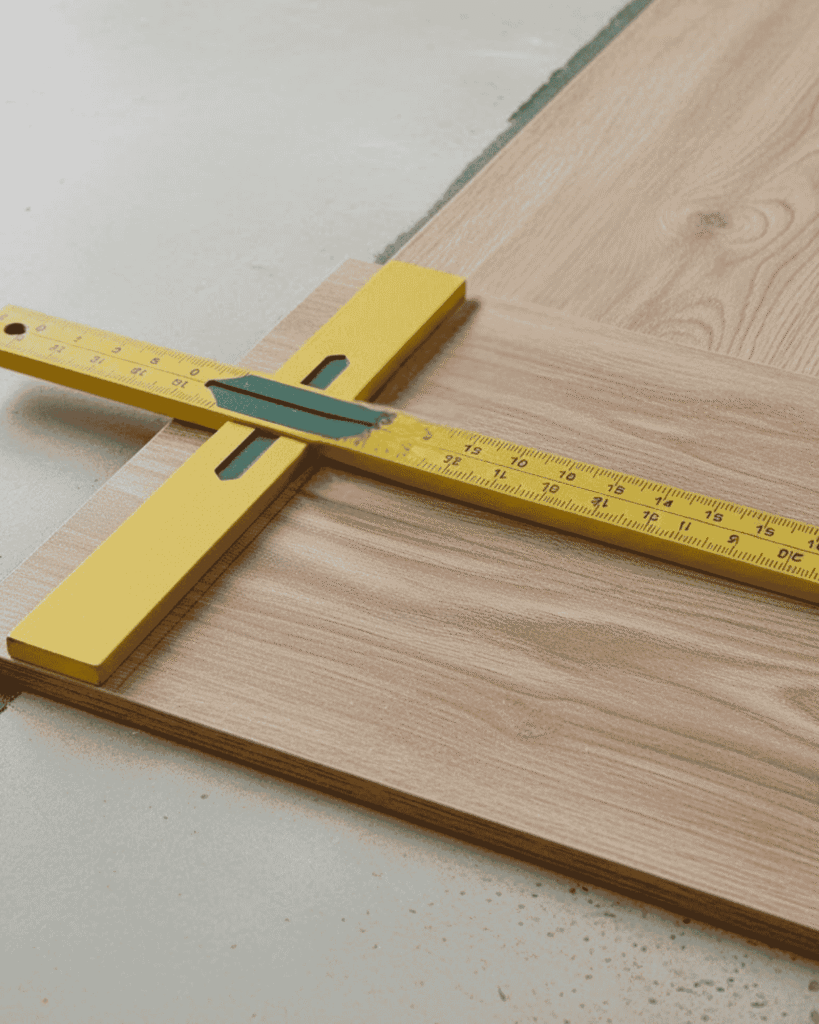
3. T-Square or Straight Edge
A straight edge or T-square is your best friend for getting clean, straight lines when marking cuts. It helps guide your utility knife, keeping the edges perfectly aligned. If you’re working in a larger kitchen, a long aluminium straight edge works great for lining up multiple planks.
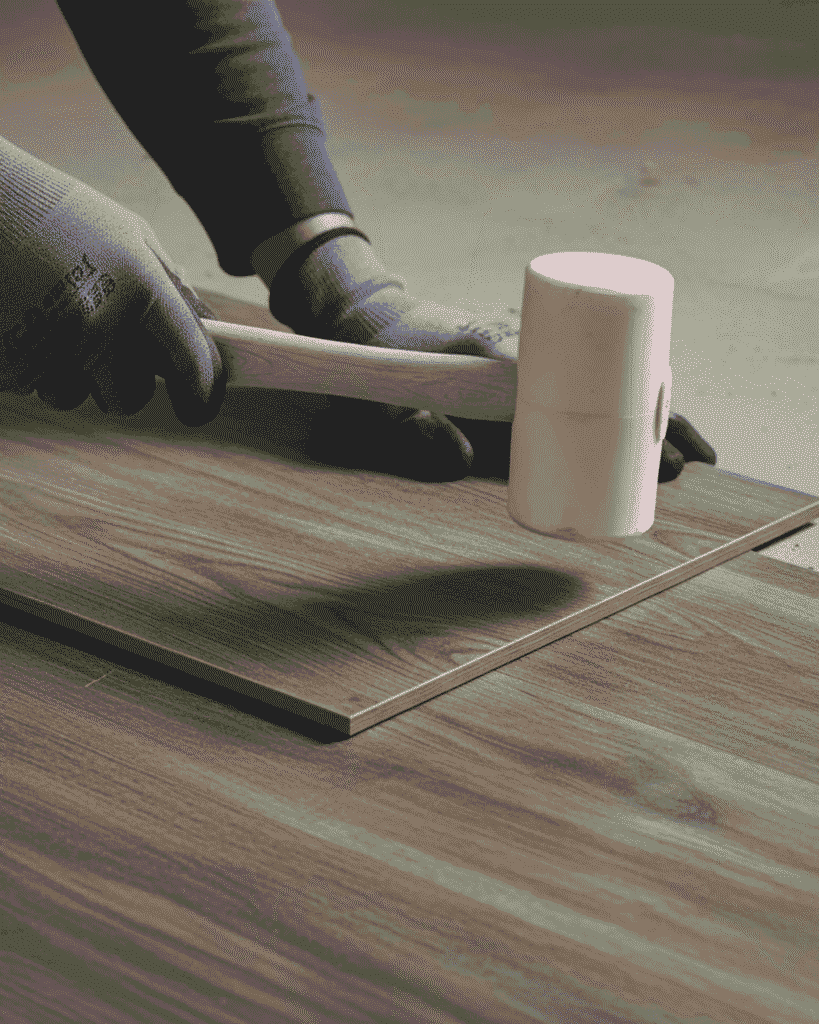
4. Rubber Mallet
A rubber mallet helps you gently tap planks into place without cracking or denting them. Use
light, even pressure to close the joints securely. It’s especially helpful for click-lock flooring, the mallet ensures each plank fits snugly without leaving visible seams.
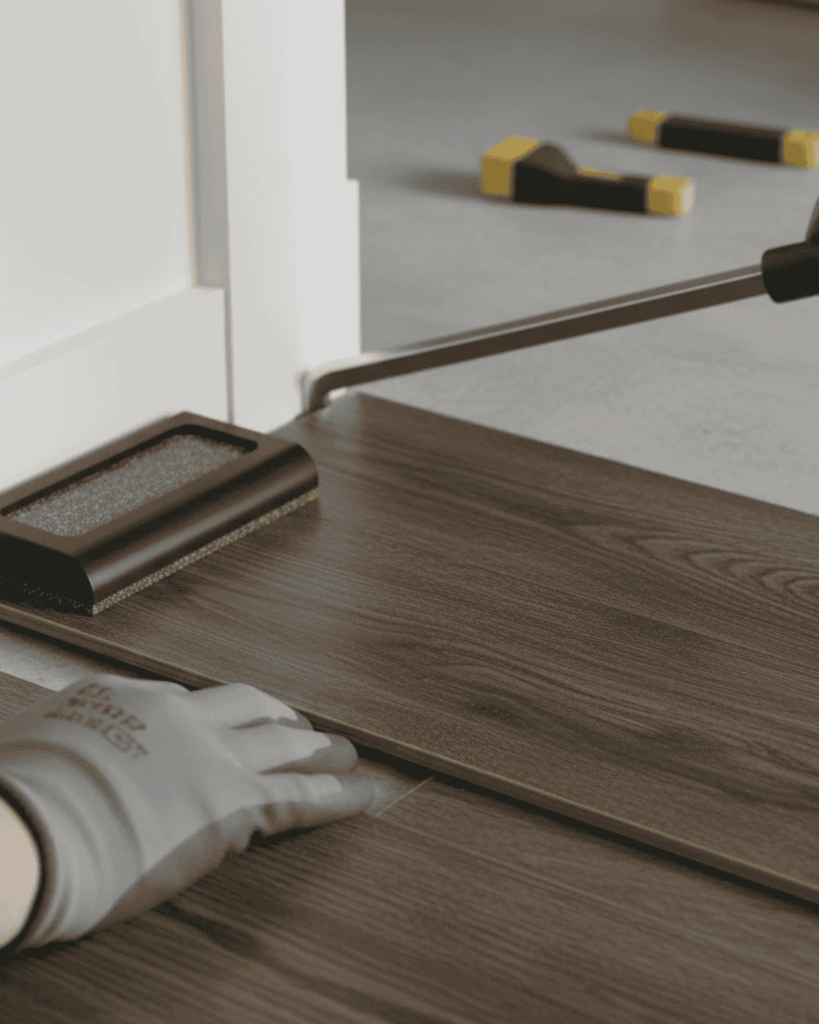
5. Tapping Block and Pull Bar
These two tools make your joints tight and seamless. The tapping block protects the edges
while you tap the planks into place, and the pull bar helps with hard-to-reach spots like near
walls or cabinets. Without them, small gaps may remain between planks, which can ruin the look and let water seep in.
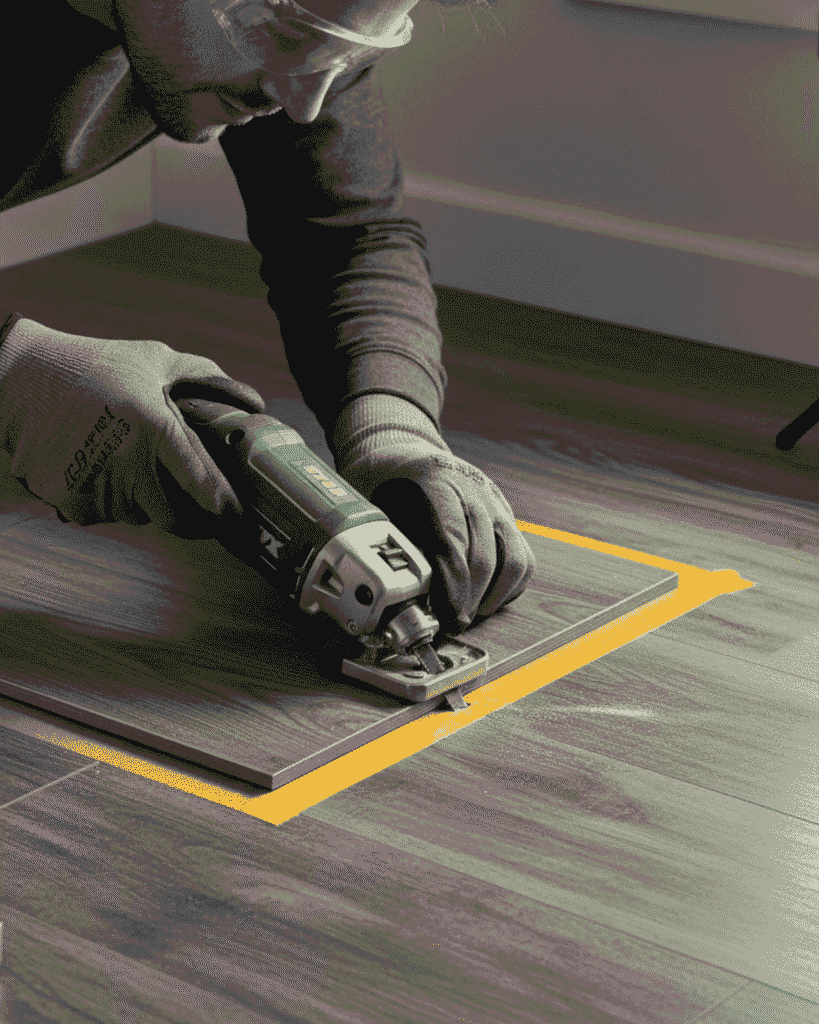
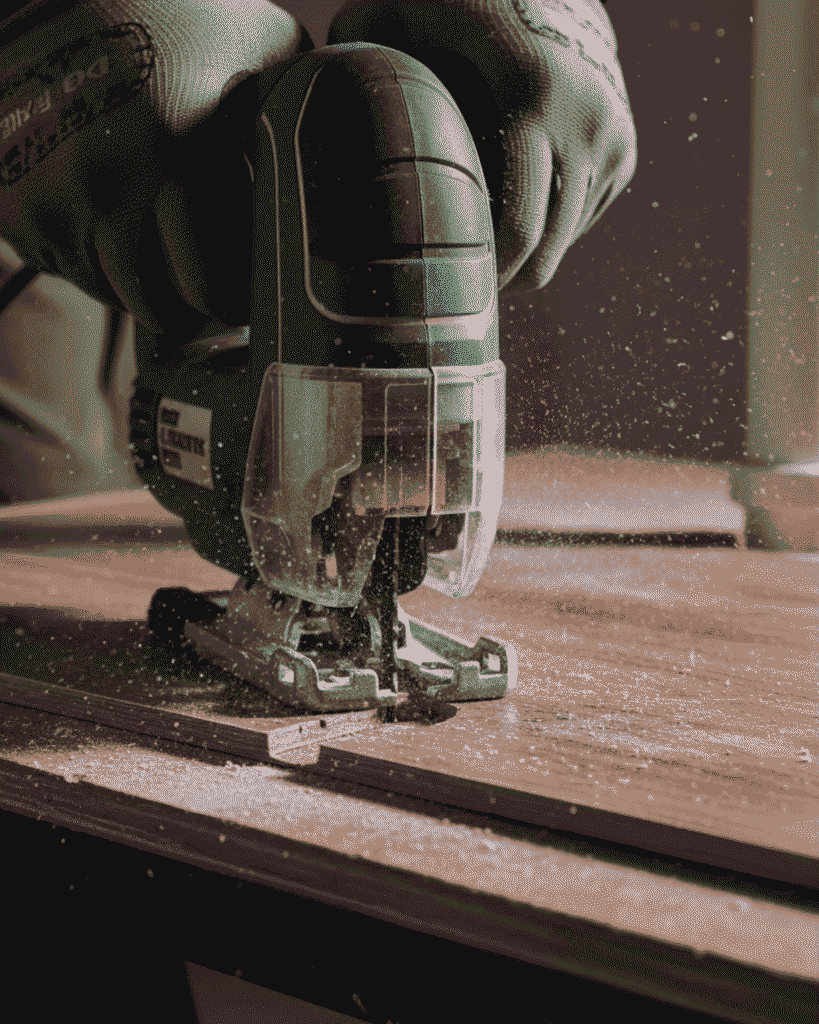
6. Jigsaw or Handsaw
You’ll need a jigsaw or fine-tooth handsaw for tricky areas where a simple score-and-snap
won’t work like cutting around pipes, corners, or door frames.
Use a fine blade to prevent chipping, and always mark your cut line clearly before starting.
For curved shapes, a jigsaw gives smoother control than a straight saw.
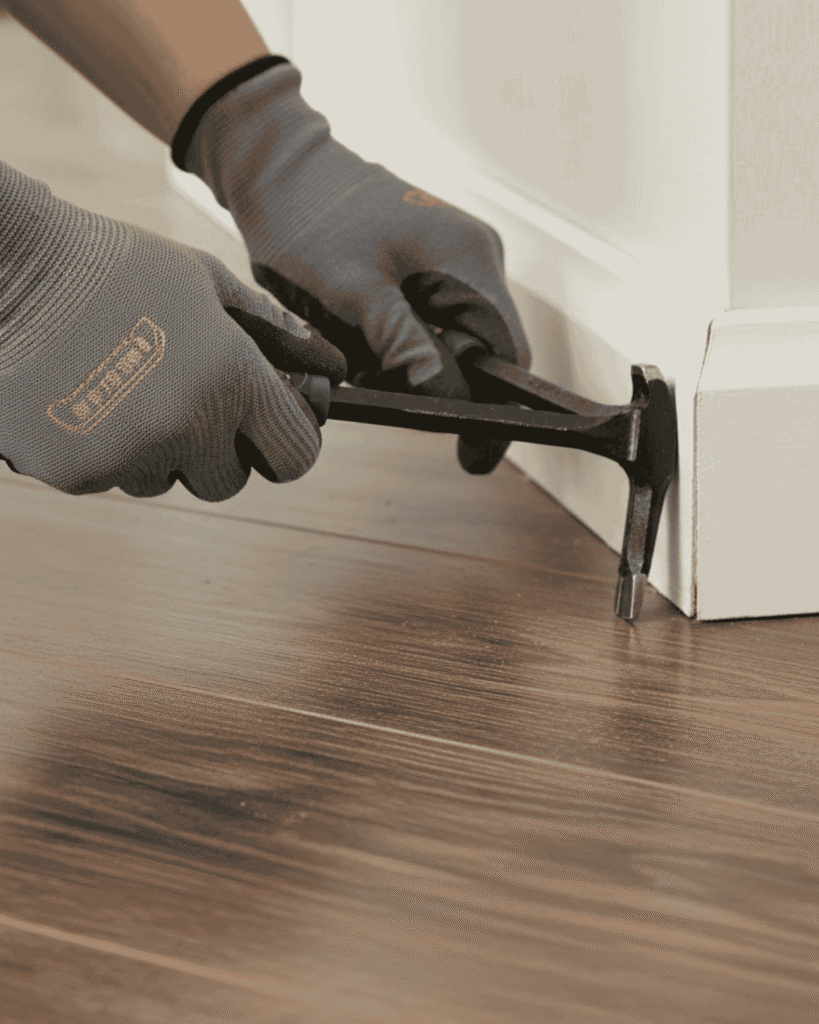
7. Pry Bar
If your kitchen has old flooring or baseboards, a pry bar helps remove them neatly without damaging the walls or subfloor. Slide it gently under the trim and lift slowly to loosen it. This way, you can reuse your baseboards for a clean finish after installation.
8. Safety Gear
Never skip safety gear. Vinyl cutting can release fine dust and small particles. Always wear
safety glasses, gloves, and a dust mask to protect yourself. If you’re using power tools like a saw, ear protection is a smart addition too. Safety isn’t optional it’s part of doing the job right.

Materials You’ll Need
Keep these items ready before starting the installation:
● Vinyl Plank Flooring: Buy about 10% more than your floor area to cover mistakes
and trimming.
● Underlayment (if required): Some vinyl planks have built-in underlayment. If yours
don’t, add a thin foam underlayment for sound reduction and comfort.
● 1/4-Inch Spacers: Maintain a small expansion gap between the planks and the wall.
● Transition Strips or Thresholds: Used where your vinyl floor meets another flooring
type (like tile or carpet).
● Construction Adhesive or Caulk: For securing transition pieces and sealing edges
if needed.
● Painter’s Tape and Pencil: To mark cuts accurately without damaging the planks.
Pro Tip
Lay out your tools and materials in one spot before starting. It keeps the process smooth and lets you focus fully on the installation not on searching for tools halfway through.
Vinyl Plank Flooring Cost for Kitchens Price Breakdown & Comparison
Before starting your kitchen flooring project, it’s important to know what kind of budget to expect. Prices for vinyl plank flooring can vary based on type, thickness, brand, and installation method. Here’s a simple breakdown to help you plan better.
You know what?
If you’re handy, installing vinyl planks yourself can save you $1.50–$3 per sq. ft. in labor costs. However, for larger or uneven kitchens, hiring a pro ensures a smoother, longer-lasting finish.
Preparing Your Kitchen Floor Before Installation
Before you even open a box of vinyl planks, the most important step is preparation. A clean,
level, and dry surface ensures your new kitchen floor looks great and lasts for years.
Skipping this step often leads to uneven flooring, gaps, or lifting later and nobody wants that.
1. Clear Out the Space
Start by removing everything from your kitchen appliances, furniture, rugs, and even baseboards if you can. If you have a gas stove or dishwasher, turn off the connections first for safety. Label wires or pipes if needed so reinstallation becomes easier later.
2. Inspect the Subfloor
Your subfloor is the foundation of the entire installation. Check for:
● Uneven spots: Use a level to find dips or humps. If it’s uneven, use a leveling
compound to smooth it out.
● Moisture: Kitchens see a lot of spills, so make sure the subfloor is dry. Vinyl is
waterproof, but moisture underneath can still cause damage.
● Cracks or loose areas: Repair or tighten these before laying anything on top.
If you’re working on concrete, clean and seal it.
If you’re working on plywood, screw down any loose boards.
3. Remove Old Flooring (If Necessary)
If your existing kitchen floor is damaged, peeling, or uneven, remove it completely.
However, vinyl planks can often be installed over existing floors like tile or linoleum as long
as the surface is flat and in good shape.
To check, run your hand across the floor. If you feel bumps, seams, or loose tiles, it’s better
to remove the old floor instead of layering over it.
4. Clean the Surface Thoroughly
Once the floor is cleared and smooth:
● Vacuum or sweep away all dust and debris.
● Mop lightly and let it dry completely.
● Avoid using wax or oily cleaners they can stop the planks from sticking or locking
properly.
5. Let the Planks Adjust to the Room
Vinyl planks expand or contract depending on temperature and humidity.
To prevent future gaps or lifting, let the boxes sit in your kitchen for at least 24 hours before
installation. This helps them adjust to the room’s environment.
Pro Tip
Keep the boxes flat and unopened during acclimation, which prevents
The planks are not bending.
Choosing the Right Vinyl Plank Flooring for Your Kitchen
When you’re choosing vinyl plank flooring for your kitchen, think beyond looks. Yes, style
matters but what truly makes a floor last in a kitchen is how well it handles water, traffic, and
daily wear. I’ve seen many homeowners pick based on colour alone and regret it later. Let’s
make sure you don’t fall into that trap.
Go for a 100% Waterproof Option
Kitchens are full of surprises spills, splashes, and the occasional plumbing mishap.
That’s why waterproof vinyl plank flooring is non-negotiable here. It won’t warp or swell,
even if water sits on it for a while. When reading product labels, look for “waterproof,” not just
“water-resistant.”
Pay Attention to the Wear Layer
The wear layer is a clear, protective coating on top of the plank. It’s what guards against
scratches, stains, and dents.
For kitchens where there’s constant movement and chair scraping go for at least a 4–6 mm wear layer.
A thicker layer means better durability and fewer signs of ageing, even after years of use.
Choose a Rigid Core for Strength
Vinyl planks with a rigid core (SPC or WPC) feel solid underfoot and stay flat over time. They
don’t bend or buckle easily and can handle temperature changes better an advantage in a
room where ovens and dishwashers heat things up.
- SPC (Stone Plastic Composite): Great for maximum durability and stability.
- WPC (Wood Plastic Composite): Softer underfoot and quieter ideal if you spend long hours cooking.
Don’t Ignore the Warranty
A good warranty tells you a lot about how confident the manufacturer is.
For kitchen use, look for at least a 15–25-year residential warranty.
Some brands even offer lifetime coverage for waterproofing a big plus if you plan to stay in
your home for a while.
A Few Trusted Options
Here are a few brands many homeowners rely on not because they’re fancy, but because they work:
- COREtec: Known for its waterproof core and realistic textures. Easy to clean and very stable.
- Lifeproof: A great DIY-friendly option with a simple click-lock system that doesn’t need glue.
- Mohawk SolidTech Plus: Rigid core planks that passed tough water and stain tests ideal for messy or high-traffic kitchens.
These are just examples you can pick any brand that meets the same durability and waterproof standards.
Step-by-Step Guide to Installing Vinyl Plank Flooring in Your Kitchen
Installing vinyl plank flooring in a kitchen isn’t as hard as it might seem. Once you
understand the process, it becomes a straightforward DIY project that can completely
change the look of your space. Take your time, follow each step carefully, and you’ll end up
with a clean, professional-looking floor.
Step 1 – Clear and Prepare the Area
Start by moving all furniture and appliances out of the kitchen. If you have gas lines, make
sure to shut them off before moving your stove. Clean the area thoroughly and check the
subfloor. It should be flat, dry, and free from debris. Any uneven spots or old adhesive can
cause problems later, so take a few minutes to fix them before moving on.
Step 2 – Remove Old Flooring (If Needed)
If your old floor is damaged, loose, or uneven, remove it completely. Cutting it into smaller
sections makes the job easier. Use a utility knife, pry bar, and hammer to lift the pieces
carefully. Once the old flooring is gone, sweep the surface and make sure the subfloor is dry
and level. A clean and even base ensures your new vinyl planks lock properly and stay in
place for years.
Step 3 – Plan the Layout
Before installing, measure your kitchen and decide the direction of your planks. Most
professionals lay them parallel to the longest wall, as it makes the room look bigger. Leave a
small expansion gap (about a quarter inch) around the walls, cabinets, and other fixed
objects. This allows the floor to expand slightly with temperature changes without lifting or
warping.
Step 4 – Start Installing the First Rows
Begin in one corner of the room and lay your first plank against the wall, using spacers to
maintain the expansion gap. Connect the next plank using the click-lock edges and make
sure the seams fit tightly. Tap gently with a rubber mallet if needed. As you move forward,
check alignment regularly to keep the rows straight.
Step 5 – Cut and Fit Around Cabinets and Corners
When you reach cabinets or tight corners, measure carefully before cutting. Use a jigsaw or
utility knife for precision cuts and follow your markings closely. Keep expansion gaps even
along the edges to avoid any future buckling. If you’re working near pipes or door frames,
create small templates from cardboard to help shape your cuts accurately.
Step 6 – Finish the Last Rows
The final rows might require a little more patience. Use a pull bar to snugly fit the planks into
place where space is tight. Before you move on, check that all seams are locked properly
and there are no visible gaps. This is the time to make any small adjustments before
reinstalling fixtures or trim.
Step 7 – Add Transitions and Baseboards
Once your planks are down, add transition strips in doorways or where the vinyl meets
another flooring type. Then reinstall your baseboards and trim for a clean, finished look. A
thin line of caulk along the edges gives it a polished appearance and seals out dust or
moisture.
After Installation: Clean and Maintain Your New Floor
Once your new vinyl plank flooring is installed, keeping it in good condition is simple. With
just a few easy habits, you can make it look new for years while preventing scratches or dullness.
Sweep or vacuum your kitchen floor regularly to remove dust, crumbs, and grit that can wear
down the surface over time. When spills happen, wipe them up immediately to avoid staining or water seeping into seams.
For deeper cleaning, use a damp mop with a mild cleaner avoiding harsh chemicals, and steam
mops, or abrasive pads, as these can damage the protective layer of your flooring.
To prevent dents or marks, place felt pads under furniture legs and always lift heavy appliances when moving them instead of dragging. Simple, consistent care will keep your vinyl flooring shiny, smooth, and ready to handle everyday kitchen activity.
Common Mistakes to Avoid
Avoiding small errors can save you time and frustration later. Always leave a 1⁄4-inch expansion gap so planks can move naturally. Don’t skip subfloor leveling, an uneven base causes gaps and noise. Let the planks acclimate for a day or two before installing to prevent warping. Stagger the joints for strength and a natural look, and never push planks too tightly against cabinets or walls.
Alternatives to Vinyl Plank Flooring for Kitchens
While vinyl plank flooring is one of the most popular kitchen options, it’s not the only one. Here are a few other materials homeowners often compare, and when vinyl still comes out on top.
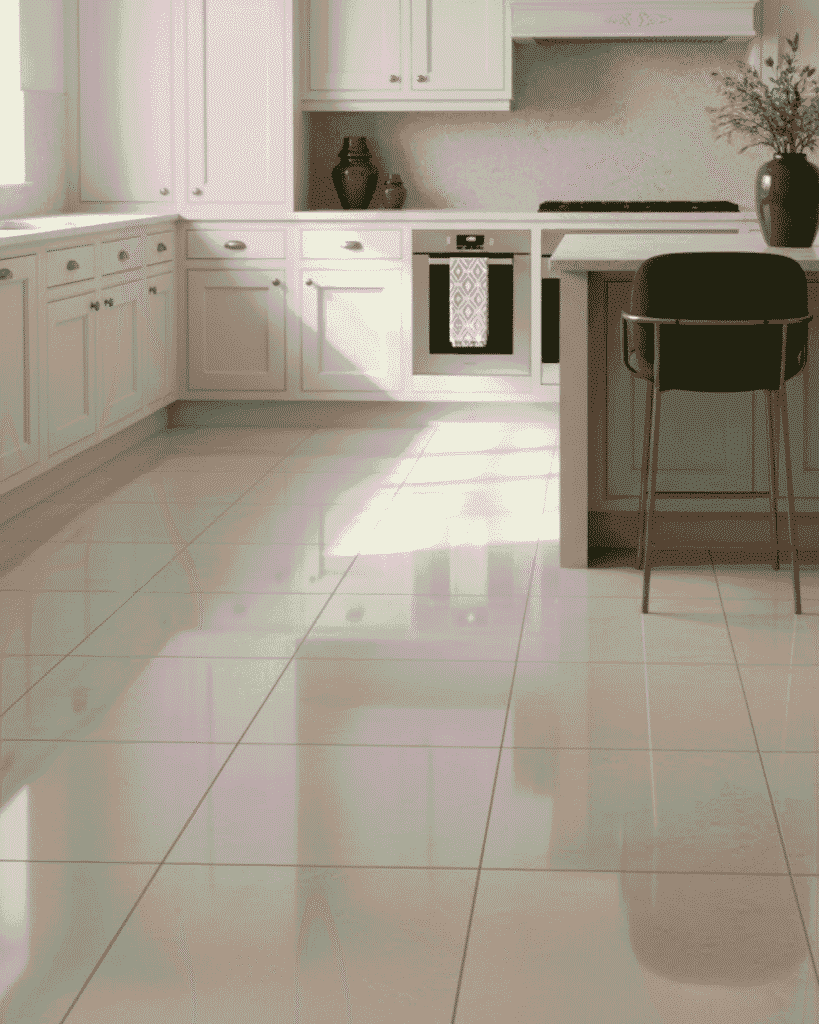
Tile Flooring
Tile is a classic kitchen choice, known for its waterproof surface and timeless style. It’s easy
to clean and handle spills or humidity well.
However, tile installation takes more time and effort, and it can feel cold and hard underfoot.
Best for: Homes where durability and moisture resistance matter most, like busy or open
kitchens.
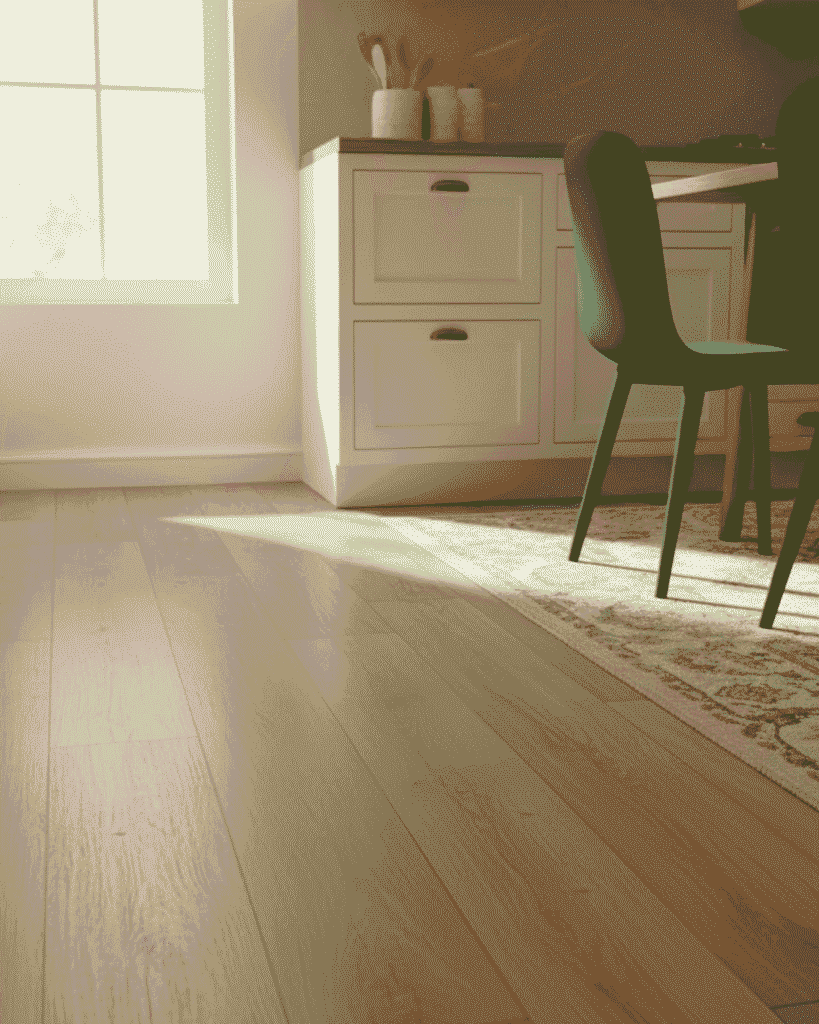
Laminate Flooring
Laminate mimics the look of hardwood at a lower price, and newer versions are quite
durable. But traditional laminate isn’t fully waterproof moisture can seep into the seams and
cause swelling over time.
Best for: Low-traffic kitchens or those who prefer an easy DIY install without a lot of water
exposure.
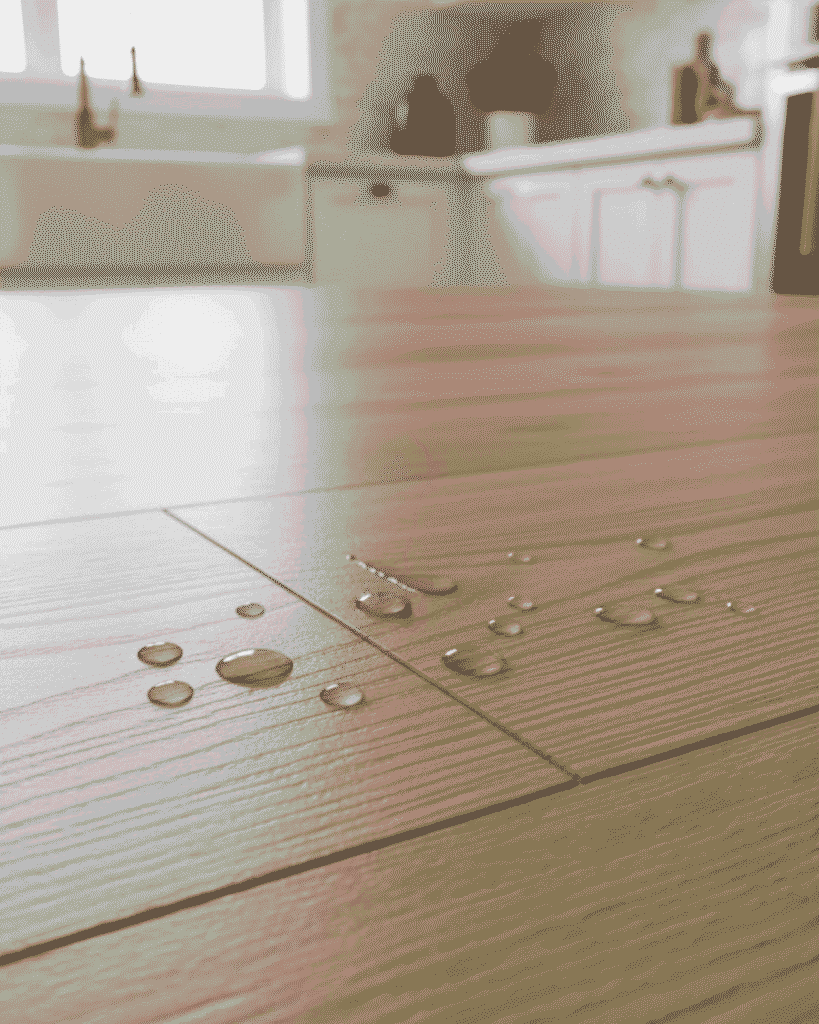
Waterproof Laminate
A newer alternative that combines the look of laminate with improved moisture resistance.
It’s a good middle ground between vinyl and standard laminate, but still not as flexible or
scratch-resistant as vinyl plank.
Best for: Homes wanting a wood-like texture with better water protection.
Why Vinyl Plank Still Wins
Vinyl plank flooring remains the top pick for most kitchens because it offers the perfect
balance of style, water resistance, comfort, and easy installation. It’s more forgiving
underfoot than tile, safer around spills than laminate, and simpler to replace if damaged.

Common Questions Homeowners Ask About Vinyl Plank Kitchen Floors
Yes, you can. Vinyl plank flooring is designed to handle moisture much better than wood
or laminate. Most modern planks are 100% waterproof, so spills and humidity from cooking
or washing dishes won’t damage them.
Just make sure to seal all edges properly and wipe up water right away. If your kitchen gets
very humid, choose a rigid-core vinyl plank (SPC or WPC) it won’t swell or warp.
The cost depends on the size of your kitchen and whether you install it yourself or hire
someone. On average, homeowners spend between $2 to $5 per square foot for materials
and about $3 to $7 per square foot if hiring a professional.
DIY installation can save labor costs, but you’ll still need a few basic tools like a utility knife,
mallet, and spacers.
For kitchens, always go for waterproof rigid-core vinyl. Options like SPC (stone plastic
Composite) or WPC (wood plastic composite) are strong, stable, and resistant to dents.
Look for brands with a thick wear layer (4–6mm) and a durable click-lock system. Some top
Choices include COREtec, Lifeproof, and Mohawk SolidTech Plus all tested for kitchen use.
Not always. If your old floor is flat, clean, and firmly attached, you can install vinyl planks
right over it. However, if tiles are loose or uneven, it’s better to remove or level them first. A
smooth base helps prevent gaps and ensures your new floor locks together tightly. Always
check the manufacturer’s instructions before starting.
You’ll need a bit of patience here. Measure the area carefully, mark your cuts, and use a
jigsaw or utility knife to shape the plank. Leave a 1⁄4-inch expansion gap near cabinets and
walls. This small space lets the floor expand naturally with temperature changes without
buckling or lifting.
Vinyl floors don’t feel as cold as tile because they have a softer, more flexible surface.
Still, if your kitchen tends to stay chilly, you can use underlayment with thermal insulation or add rugs in front of sinks and stoves. Some vinyl products are also compatible with underfloor heating systems, which is a great option for comfort.
If you’re comfortable using basic tools and following instructions, you can absolutely
install it yourself. Click-lock vinyl planks are designed for DIY projects. They snap together easily and don’t require glue. However, if your kitchen layout is complex or has lots of
corners, hiring a pro might save you time and mistakes.
You don’t need much. The essentials include a utility knife, rubber mallet, pull bar, tapping
block, spacers, and a jigsaw for detailed cuts. A measuring tape and level are also useful.
These basic tools help you get clean cuts and tight seams without damaging the planks.
High-quality vinyl plank flooring can last 15 to 25 years when properly installed and
maintained. Its lifespan depends on the wear layer thickness, how often it’s cleaned, and the amount of foot traffic. To make it last longer, clean regularly, avoid dragging heavy items, and use felt pads under furniture.
Vinyl plank floors are very easy to care for. Sweep or vacuum daily to remove crumbs and
dirt. Wipe spills immediately so moisture doesn’t seep into the edges. Mop with warm water and a mild cleaner never use harsh chemicals or steam mops. Adding felt pads under the table and chair legs helps prevent scratches and keeps your floor shiny for years.
Conclusion
Installing vinyl plank flooring in your kitchen isn’t just a weekend project it’s an upgrade that
adds comfort, style, and long-term value to your home. With the right preparation, tools, and
attention to detail, you can achieve a professional-looking finish without hiring help.
Vinyl plank flooring stands out for its waterproof design, easy maintenance, and ability to
handle everyday kitchen messes with ease. Once it’s down, you’ll enjoy a floor that feels
warm underfoot, looks beautiful in any light, and holds up to years of cooking, spills, and
family moments.
So, take your time, follow each step carefully, and enjoy transforming your kitchen into a
space that truly feels like your own.
Ready to give your kitchen a fresh, modern look?
Book our vinyl flooring installation
service today and let our team handle the hard part for you.