
This complete guide explains how to install vinyl plank flooring in a bathroom from
preparation and tools to layout, installation, sealing, and maintenance. It helps
beginners follow each step easily, understand waterproofing methods, avoid
common mistakes, and keep their new vinyl floor clean and durable for years.
If your bathroom floor has started losing its shine or showing signs of water damage, you’re
not alone. Bathrooms take a lot of abuse from moisture, and most floors just can’t handle it
for long.
A few months ago, I decided to replace my old bathroom floor with vinyl plank flooring and
honestly, it turned out to be one of the best upgrades I’ve made. It’s waterproof, strong, and
looks like real wood. The best part? I installed it myself without hiring anyone.
In this guide, I’ll share every step I followed to install vinyl plank flooring in my bathroom.
You’ll learn how to prepare the old floor, handle tricky spots like the toilet area, and seal
everything to keep it dry and clean.
By the end, you’ll know exactly what to do, even if you’ve never done any flooring work
before. It’s easier than you think, and the results make a huge difference.
Understanding Vinyl Plank Flooring
Before you start installing, it helps to understand what vinyl plank flooring is and why it works
so well in bathrooms. Knowing the basics will make it easier to handle during bathroom vinyl installation and
help you choose the right type for your space.
What Is Vinyl Plank Flooring
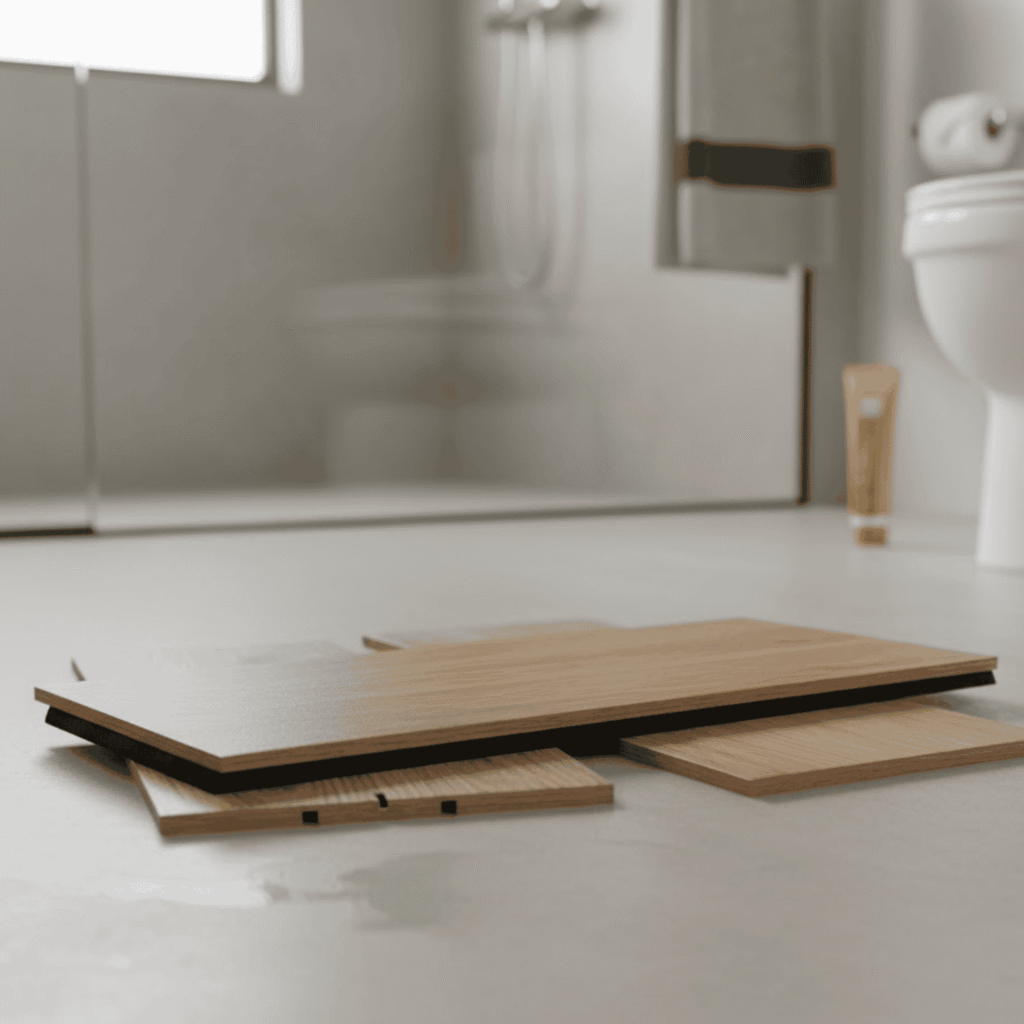
Vinyl plank flooring, also known as Luxury Vinyl Plank (LVP) or Luxury Vinyl Tile (LVT), is
made to look like real wood or stone but with more flexibility and water resistance. It’s built in
layers that give it both strength and style:
• Wear layer protects the surface from scratches and stains.
• Design layer adds realistic wood or tile patterns.
• Vinyl core is a strong, waterproof layer that provides structure.
• Backing layer gives extra support and comfort under your feet.
When it comes to installation, there are two main types:
• Click-lock planks that snap together easily, ideal for DIY work.
• Glue-down planks that stick to the subfloor for a more permanent hold.
For bathrooms, click-lock planks are usually the better choice because they’re simple to
Easy to install and replace if needed.
Why Vinyl Is Suitable for Bathrooms
Bathrooms stay humid most of the time, so your floor needs to handle water, heat, and
constant cleaning. Vinyl plank flooring fits perfectly in such spaces because of these
features:
• Water-resistant and durable for long-term use.
• Slip-resistant surface that keeps you safe when the floor is wet.
• Resistant to mold and mildew, keeping your bathroom clean and fresh.
• Low maintenance, you just need to mop occasionally.
This is why vinyl plank flooring is one of the most practical choices for a busy bathroom.
Limitations or Considerations
While vinyl flooring is strong and waterproof, it still needs proper handling during installation:
• Sudden temperature changes can cause expansion or contraction.
• Moisture trapped under the subfloor can lead to uneven surfaces.
• Gaps between planks should be sealed with silicone to stop water from seeping in.
Keeping these small things in check ensures your vinyl floor stays smooth and lasts for
years without problems.
Tools You’ll Need to Install Vinyl Plank Flooring in a Bathroom
Before you begin installation, gather the right tools. The correct tools make cutting, fitting,
and locking vinyl planks easier and give your bathroom floor a neat, professional finish.
Materials You’ll Need to Install Vinyl Plank Flooring in a Bathroom
Having the right materials ensures your new bathroom floor stays waterproof, durable, and
long-lasting.
Once you have these tools and materials ready, you can move on to preparing the bathroom
floor for installation.
Preparation Steps Before Installation
Good preparation is the secret to a smooth vinyl plank flooring installation. The better your
base surface is, the stronger and cleaner your bathroom floor will look. Take your time with
these steps they make a big difference.
Measure the Bathroom Area
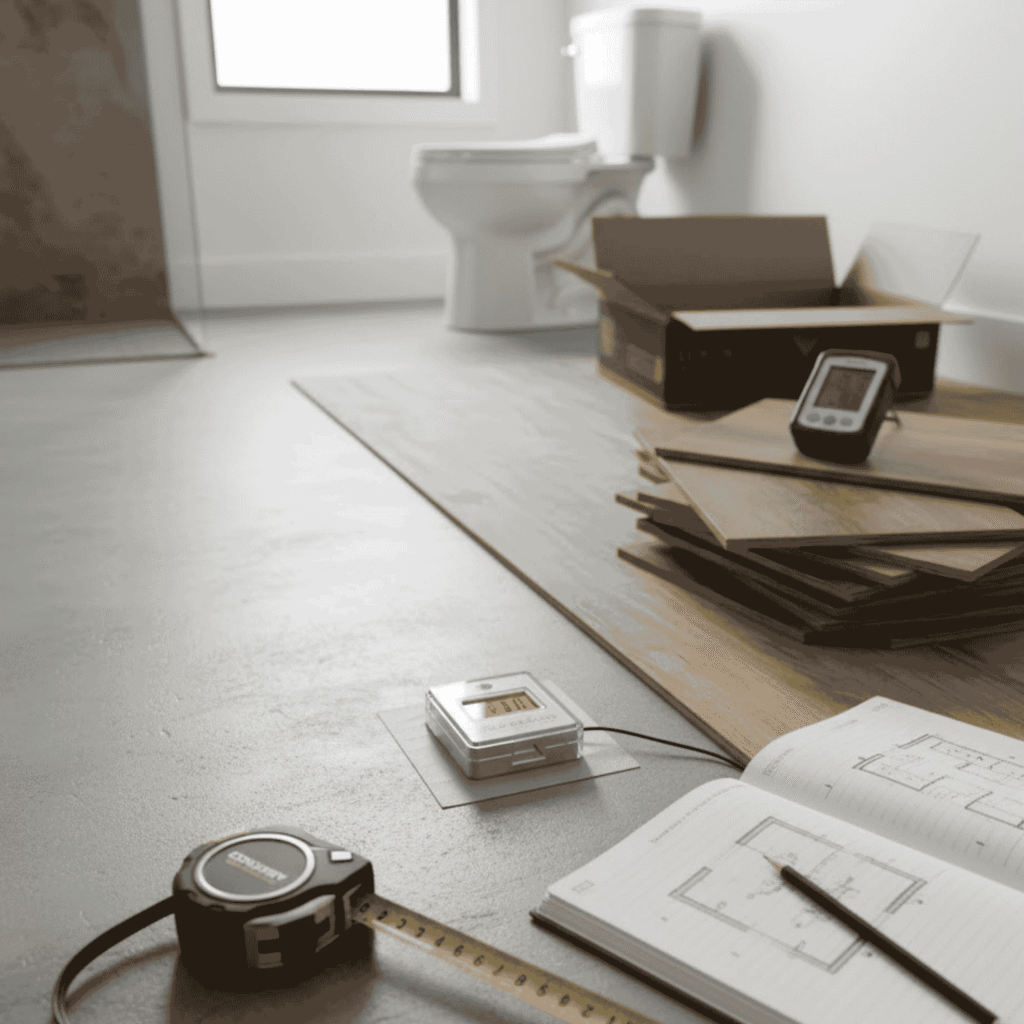
Before buying or cutting planks, measure your bathroom carefully.
1. Measure the length and width of the floor.
2. Multiply both numbers to get the total square footage.
3. Always add about 10% extra for cutting and fitting waste.
Planning your layout now saves effort later. Think about which direction you want the planks
to run lengthwise, usually makes the bathroom look bigger and helps water flow away from
seams.
For concrete:
• Make sure it’s clean, dry, and level.
• Fill any cracks or low spots with levelling compound.
For plywood:
• Screw down any loose boards to stop squeaks.
• Sand raised seams or rough areas for an even surface.
Also remove old flooring, adhesive, nails, and dirt. The cleaner the surface, the tighter your planks will fit.
Acclimate Vinyl Planks
Vinyl needs time to adjust to your bathroom’s temperature and humidity. Leave the boxes of
planks in the room for 24–48 hours before installation.
Ideal conditions:
• Room temperature between 65–85°F (18–29°C).
• Humidity around 40–60%.
This prevents the planks from expanding or shrinking after installation.
Moisture Testing
Since bathrooms are high-moisture areas, always test for hidden dampness before laying planks.
• For concrete subfloors, tape a small piece of plastic on the floor and leave it for 24 hours. If
moisture appears, the surface isn’t fully dry.
• For wood subfloors, use a moisture meter the reading should be below 12%.
If you detect moisture, use a vapor barrier or waterproof underlayment before installation.
This step helps prevent mold, mildew, and warping later on.
Once these checks are done, your bathroom floor will be clean, level, and dry ready for the
vinyl plank installation.
Step-by-Step Guide to Installing Vinyl Flooring in Your Bathroom
Installing vinyl flooring in a bathroom takes patience and a good plan. Once your surface is
clean and level, start slow and work row by row. Pay attention to how each plank locks into
the next; tight seams keep water from sneaking underneath. A smooth rhythm while laying
the first few planks sets the tone for the entire floor.
Planning the Floor Layout Before Installation
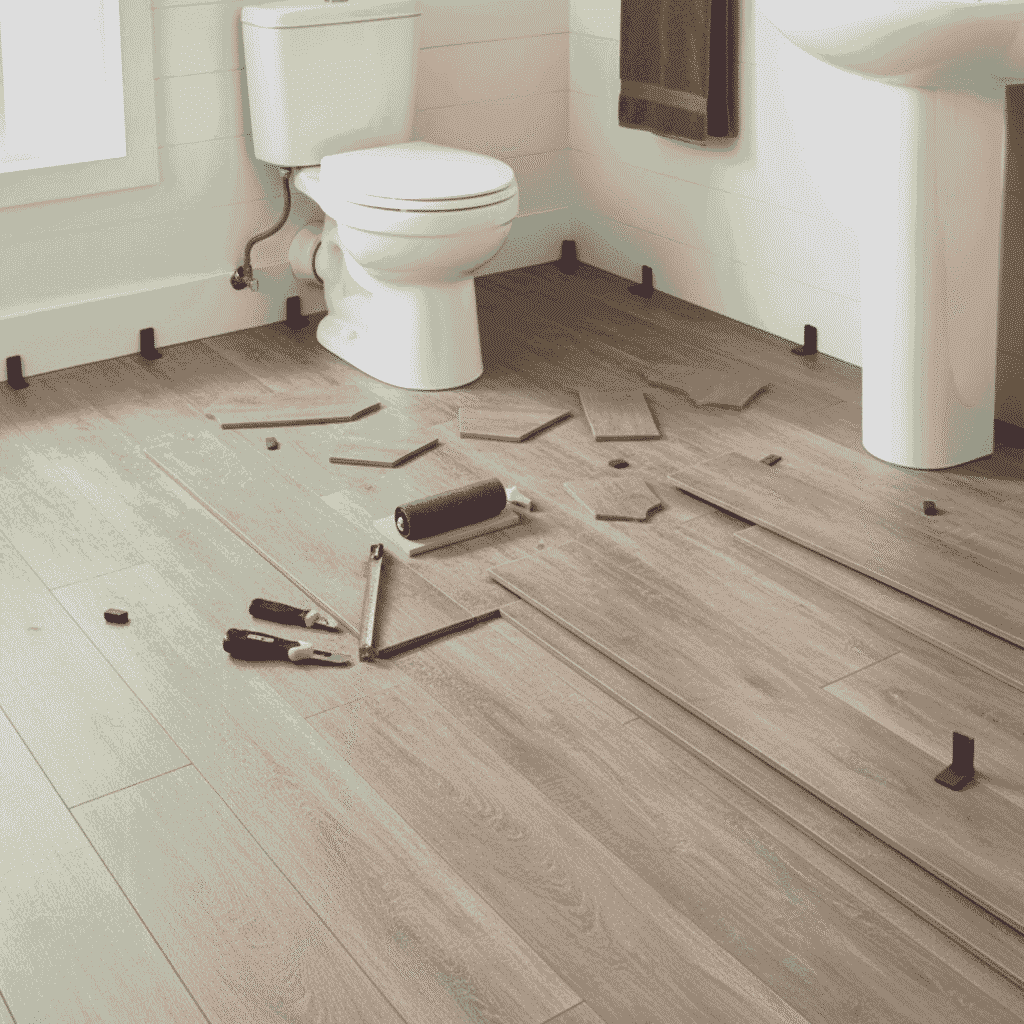
Begin by picturing how the planks will look when you walk into the room. The direction of the
planks affects how big or narrow the space feels. Mark a straight line on the subfloor to use
as your guide. Laying a few planks dry first helps you visualize the pattern and check how
the seams will fall near the walls and bathtub.
Cutting Vinyl Planks for a Perfect Fit
Measure twice and cut once. A sharp utility knife makes clean cuts without tearing the
surface. When you reach corners or fixtures, take your time shaping each piece. Smooth,
accurate cuts create tight joints that make your floor look professional even without
experience.
Setting the First Row of Vinyl Planks
Place spacers along the wall and start your first row carefully. Each plank should click in
smoothly without forcing. Keep the row straight because every other row will follow its line.
This is the stage where patience matters most small errors here can show across the whole
bathroom.
Locking the Rows and Securing the Seams
As you move forward, lock new planks into the previous row at an angle, then press down. If
you hear a crisp click, the seam is sealed correctly. Use a light tap if needed to tighten the
connection. Consistent seams prevent moisture from finding its way through and keep the
surface flat and solid.
Finishing Touches Around Fixtures and Walls
Once the main floor is done, trim planks to fit around the toilet, pipes, and edges. Leave a
small gap near walls for expansion, then seal those areas with waterproof silicone. Clean off
dust and check the surface for any lifted corners. When everything sits flush, your new
bathroom floor is ready to shine.
What to Do After Installing Vinyl Plank Flooring in Your Bathroom
Once your new vinyl plank floor is in place, give it a little time to settle. Avoid walking on it
too much in the first 24 hours so the planks can lock and rest properly. If you used
glue-down planks, allow them to cure fully before reinstalling the toilet or any heavy fixtures.
After that, clean the surface gently with a damp mop to remove any dust from cutting or
tapping. Avoid soaking the floor or using strong cleaners right away. A light wipe is enough to
make it shine.
Check along all seams and corners for small gaps or lifted edges. Press them down if needed or add a touch of sealant where water might collect. This quick inspection keeps your floor safe from early moisture damage.
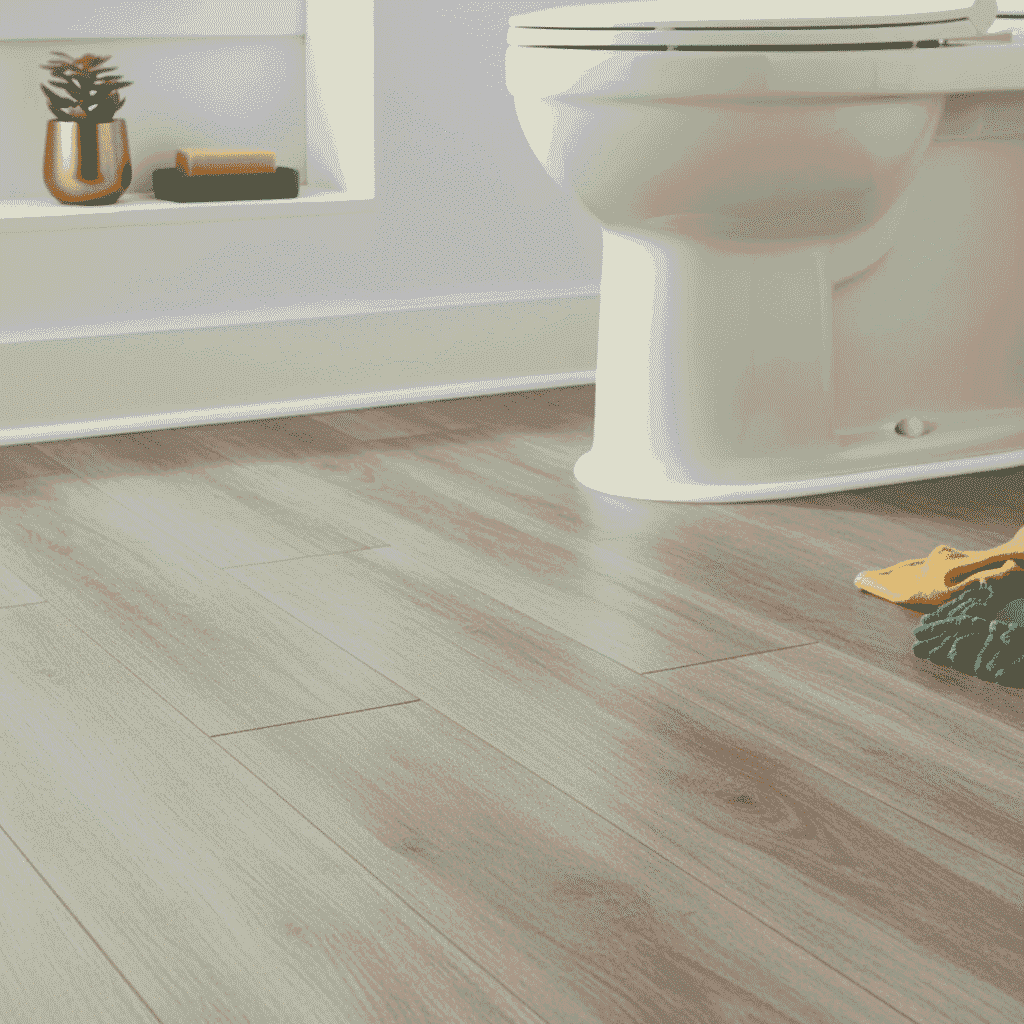
Once everything looks good, reinstall the toilet and trim pieces carefully. Use silicone around
the base to keep water from slipping under. These finishing touches make the bathroom look
complete and protect your hard work for years.
Finally, step back and admire your new bathroom floor. It’s clean, modern, and built to last a
small project that brings a big improvement.
Simple Maintenance and Care Tips for Vinyl Plank Bathroom Floors
Your new vinyl bathroom floor doesn’t need much care, but a few small habits will keep it
looking fresh and lasting longer. Think of it as light maintenance that protects your effort.
Keep it clean
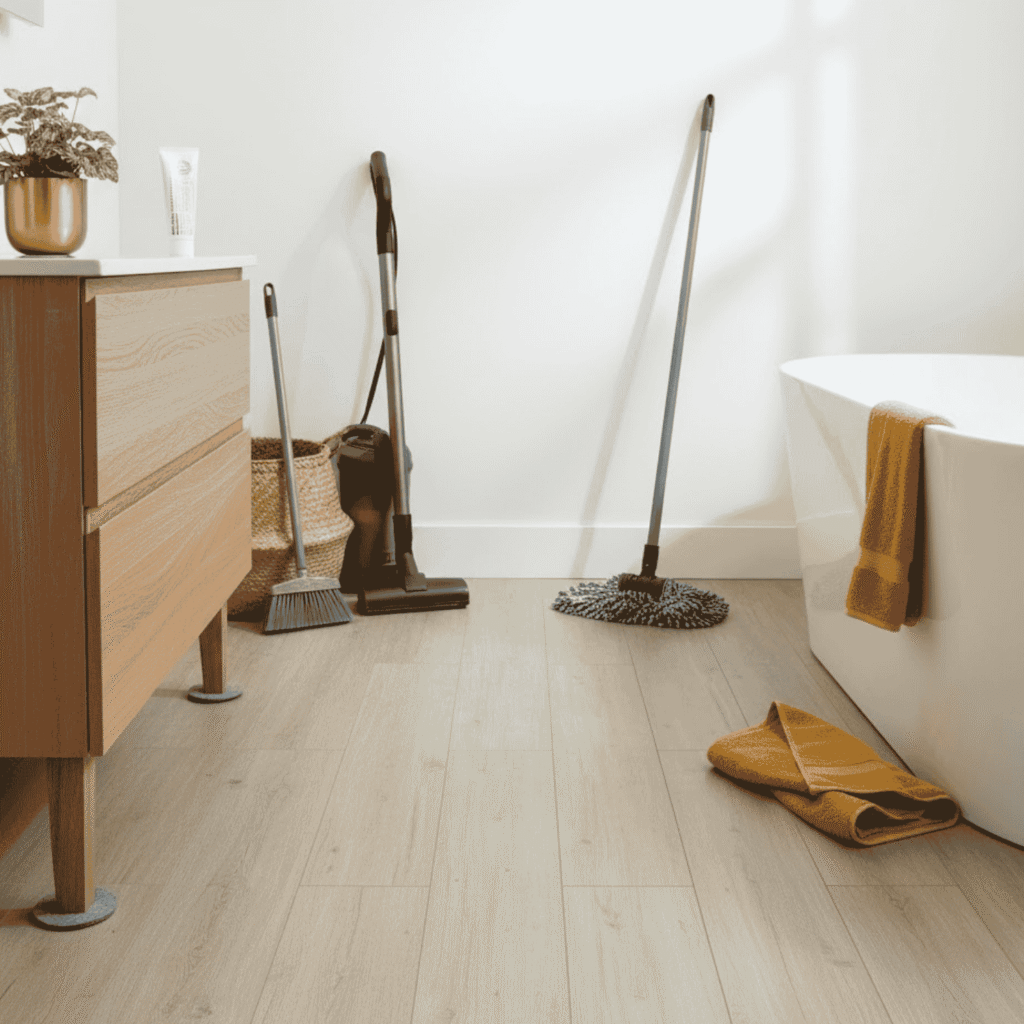
Sweep or vacuum regularly to remove hair, dust, and small debris that can cause scratches.
Mop the right way
Use a damp mop with mild cleaner or warm water. Avoid harsh chemicals or bleach that can dull the surface.
Watch for moisture
Wipe water spills immediately, especially near the bathtub and toilet. Standing water can
sneak into seams.
Protect from dents
Add felt pads under vanity legs and laundry baskets to avoid marks on the surface.
Check the seal
Inspect silicone edges every few months. Reapply if it starts to peel or crack to keep water out.
Following these small steps takes just minutes but keeps your floor shiny, smooth, and
waterproof for years.
Common Mistakes to Avoid When Installing Vinyl Flooring in a Bathroom
Even simple projects can go wrong if you miss small details. Avoiding these mistakes will
save you from repairs and frustration later.
1. Skipping the acclimation period.
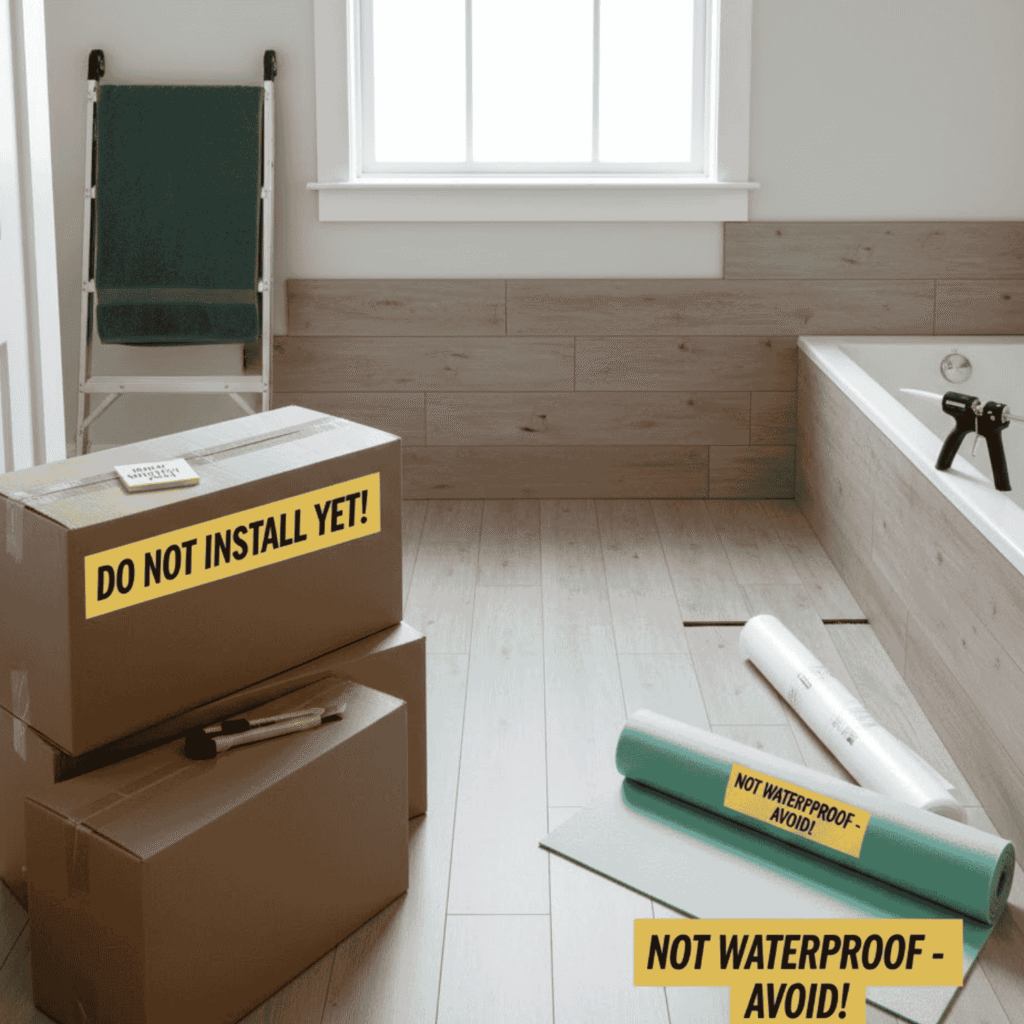
Vinyl planks need time to adjust to your bathroom’s temperature and humidity. If you skip
this step, gaps or lifting edges can appear after a few days.
2. Ignoring expansion gaps.
Every floor expands slightly with heat and moisture. Always leave a small gap along the
walls tight planks can buckle when the bathroom gets humid.
3. Forgetting to seal edges.
The planks may be waterproof, but the seams are not. A small line of silicone around the
bathtub, toilet, and walls keeps water from slipping underneath.
4. Using the wrong underlayment.
Bathrooms need moisture protection. Choose a waterproof underlayment or vapor barrier to
keep the subfloor dry.
5. Rushing installation.
Take your time lining up each plank. Misaligned seams or uneven cuts will stand out once
the floor is complete.
Pro Tip
Keep these points in mind and double-check your work as you go. A little extra
care during installation makes your floor last much longer.
Cost and Time Estimation for Installing Vinyl Plank Flooring in a Bathroom
Before starting your bathroom flooring project, it helps to know how much it might cost and
how long it usually takes. Prices can vary depending on the size of your bathroom, the type
of vinyl you choose, and whether you do it yourself or hire a professional.
Here’s a clear comparison to help you plan better:
Time Estimation
For a small bathroom (about 40–60 sq. ft.):
• DIY installation: 4–6 hours, depending on your skill level.
• Professional installation: 2–3 hours with proper equipment.
If you’re doing it yourself, take your time during layout and cutting that’s where most people
spend extra time. The actual clicking and locking of planks goes faster once your setup is ready. Having a clear budget and time plan helps you avoid surprises and enjoy a smoother installation experience.
FAQs About Bathroom Vinyl Plank Flooring
Yes, you can install vinyl plank flooring over existing ceramic or porcelain tile if the tile is
flat, stable, and firmly attached. Clean the tile thoroughly, remove loose grout, and fill deep
grout lines or cracks with a levelling compound so the surface is smooth. If the tile surface is
very uneven or loose, remove it first. For glue-down vinyl choose the right adhesive for tile.
For click-lock vinyl, a thin underlayment or floor patch may be needed to prevent the tile
pattern from telegraphing through the planks. Always test for moisture under tile; if the
subfloor shows dampness, use a vapor barrier.
It depends on the product. Some vinyl planks come with built-in underlayment, so no
extra layer is required. For other planks, a waterproof underlayment or vapor barrier is
recommended in bathrooms to protect the subfloor and improve comfort underfoot. If your
subfloor is concrete, a vapor barrier is often a good idea. If you choose an underlayment,
pick one rated for wet areas. Avoid underlayments that trap moisture or are not
water-resistant. Check the manufacturer's instructions first; using the wrong underlayment
can void warranties.
Many modern vinyl plank floors are fully waterproof, meaning the plank core and surface
do not absorb water. However, waterproof planks do not make the entire floor system
waterproof. Water can still enter at seams, around fixtures, or under edges. To protect the
subfloor, seal perimeter edges with silicone, use proper transition strips, and keep seams
tight. If you have high humidity or frequent standing water, choose a plank explicitly labelled
waterproof and follow the installation steps that block water entry.
First leave the recommended expansion gap between the planks and the toilet flange
area. After installing the planks, reinstall the toilet and use a water-resistant wax ring or a
modern flange seal as recommended. Apply a thin bead of kitchen-and-bath silicone around
the base of the toilet where it meets the vinyl to stop surface water from seeping under the floor. Do not run a heavy seal under the toilet that prevents the toilet from being removed
later if needed. The goal is to seal the seam, not glue the toilet to the floor.
Yes, in many cases, you can install vinyl planks without removing the toilet, but removing
the toilet makes the job easier and gives a neater finish. If you keep the toilet in place, fit
planks tightly around the base and use a jigsaw or hole saw to cut out the shape. Expect a
slightly rougher edge and the need for careful caulking. For the cleanest long-term result and
best waterproofing, remove the toilet, install the flooring fully, then reinstall the toilet with a
new wax ring or seal.
If you installed click-lock planks, you can usually walk on the floor lightly after a few
hours, but avoid heavy furniture, rolling loads, or showering for 24 hours to allow the planks
to settle. For glue-down installations, follow the adhesive manufacturer’s cure time which is
typically 24 to 72 hours before heavy use. If you sealed edges with silicone, let it dry for at
least 24 hours before exposing the seams to heavy water or steam.
Regular simple care keeps vinyl looking great. Sweep or vacuum to remove grit and hair.
Mop with warm water or a mild cleaner formulated for vinyl; avoid bleach, ammonia, or
abrasive scrubs. Wipe spills quickly, especially around fixtures. Place felt pads under
furniture or heavy items to avoid dents. Inspect silicone seals and edges every few months
and reapply when cracks or gaps appear. Avoid dragging heavy objects across the floor to
prevent gouges.
You can install click-lock vinyl over stable, smooth linoleum if the existing material is
firmly bonded and level. Clean the surface thoroughly and repair any soft spots. If the
linoleum has a lot of texture, sand or level it so the new planks sit flat. For glue-down vinyl,
adhesives may not stick well to old linoleum so it is usually better to remove it first. Always
check manufacturer recommendations. When in doubt, removing the linoleum gives you a
fresh subfloor and reduces the risk of telegraphing or adhesive failure.
Usually lay planks lengthwise along the longest wall or toward the bathroom entry. This
visually lengthens the room and makes the space feel larger. Another option is to run the
planks toward your main line of sight when you enter the bathroom. Avoid patterns that
create many short end cuts near the door or vanity, because narrow rows at the edges can
look crowded. Dry-lay a row before cutting to confirm the look.
Make a cardboard or paper template first by tracing the obstacle shape and transferring it
to the plank. For round pipes or toilet flanges, mark the centre and use a hole saw or jigsaw
to cut neat holes. Score-and-snap cuts work well for straight lines with a utility knife and a
straight edge. Trim slowly and test-fit each piece before locking it down. Clean cuts make
seams tighter and reduce the need for visible trim.