Flooring for healthcare facilities in Richmond must be seamless, hygienic, slip-resistant, durable, and easy to disinfect. The best options include sheet vinyl, luxury vinyl tile (LVT), rubber, linoleum, epoxy terrazzo, and porcelain tile. Vinyl and epoxy help control infections, rubber gives staff comfort, linoleum is eco-friendly, and porcelain suits busy lobbies. Key factors to consider are hygiene, air quality (low VOC), slip resistance, and long-term costs. With proper installation and cove bases, these floors keep patients safe and meet healthcare standards.
The CDC reports that 1 in 31 hospital patients gets a healthcare-associated infection (HAI). One hidden reason is flooring that is hard to clean, slippery, or prone to wear out. Bad flooring choices can spread germs, cause falls, tire out staff, and cost hospitals more in repairs. That’s why Healthcare Flooring in Richmond is not just about looks, but it is also about safety and health.
Healthcare Flooring in Richmond can benefit from solutions that combine safety, sustainability, and long-term performance. The right floor should be smooth, slip-resistant, and strong enough to handle wheelchairs, stretchers, and nonstop cleaning.
Materials like vinyl, epoxy, rubber, linoleum, and LVT keep spaces hygienic, safe, and long-lasting. Choosing the right flooring makes hospitals cleaner, safer, and more comfortable for patients and staff.
Here are some quick flooring solutions for health care if you are in a hurry:
What makes flooring suitable for healthcare facilities in Richmond?
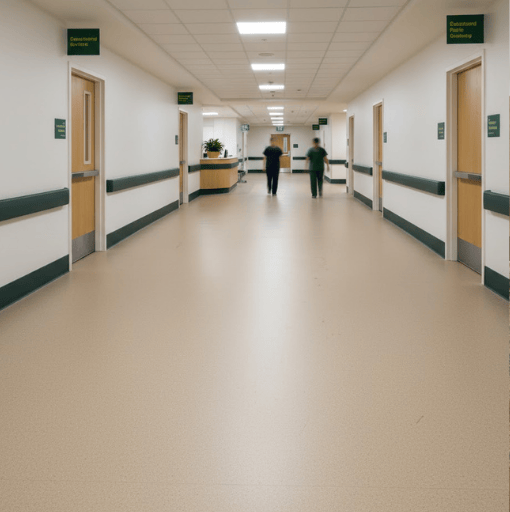
Healthcare Flooring in Richmond must meet strict standards for safety, hygiene, comfort, and durability. The right choice improves patient outcomes, staff efficiency, and long-term cost savings.
When choosing flooring for healthcare, several critical attributes must be considered to ensure safety, hygiene, and comfort. The following key factors define whether a flooring solution is truly suitable for medical and care facilities.
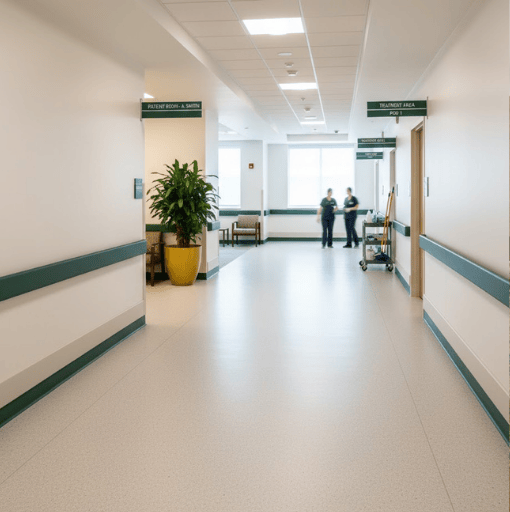
Seamless and non-porous surfaces
- Prevents bacteria and moisture from entering gaps.
- Reduces infection risk in operating rooms, ICUs, and patient wards.
- Supports sterile environments by resisting mold and pathogens.
Slip resistance under wet conditions
- Essential in hallways, bathrooms, and surgical areas.
- Reduces fall-related injuries for patients and staff.
- Tested under healthcare safety regulations for wet traction.
Durability against heavy traffic and equipment
- Handles rolling hospital beds, stretchers, and medical machinery.
- Maintains integrity in high-traffic corridors and waiting areas.
- Reduces repair and replacement costs over time.
Easy cleaning and disinfection
- Compatible with hospital-grade cleaners and disinfectants.
- Smooth finish ensures quick mop or machine cleaning.
- Supports infection control protocols and hygiene standards.
Acoustic comfort and noise reduction
- Absorbs sound to create a calmer healing environment.
- Reduces stress for patients recovering in sensitive care areas.
- Supports communication clarity for doctors and nurses.
Underfoot comfort for staff and patients
- Cushioned layers reduce fatigue for nurses on long shifts.
- A comfortable walking surface improves patient mobility.
- Supports ergonomic wellness and daily comfort
Aesthetic and biophilic design elements
- Soft colors and natural textures improve patient mood.
- Biophilic patterns reduce anxiety and support recovery.
- Enhances visual appeal while maintaining medical-grade performance.
Which flooring materials work best in healthcare environments in Richmond?
Healthcare spaces in Richmond require flooring that balances hygiene, durability, comfort, and aesthetics. Each material comes with specific benefits that make it suitable for certain hospital zones. Choosing the right option depends on performance needs, infection control, and overall patient experience.
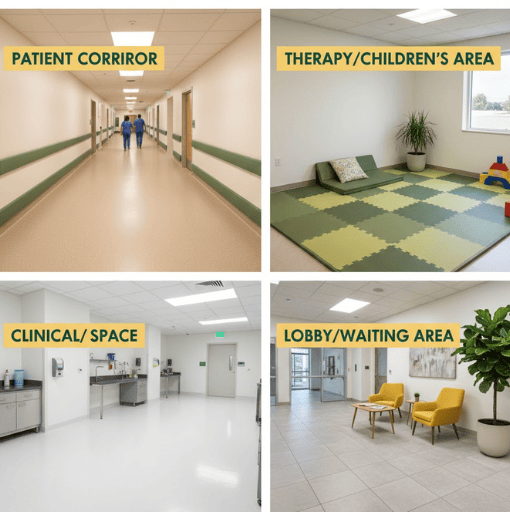
Is vinyl flooring (sheet & LVT) ideal for hospitals?
Vinyl is one of the most widely used materials in hospitals due to its resilience and hygiene standards.
- Sheet vinyl → seamless installation with fewer joints, excellent for infection control in operating rooms and ICUs.
- Luxury Vinyl Tile (LVT) → durable, slip-resistant, and offers design flexibility while maintaining easy maintenance.
- Works well in patient rooms, corridors, and treatment areas.
Why is rubber flooring used in medical facilities?
Rubber flooring provides resilience, noise absorption, and staff comfort.
- Reduces fatigue during long shifts for nurses and doctors.
- Naturally slip-resistant and cushioned underfoot.
- Commonly installed in therapy rooms, corridors, and children’s hospitals for safety and comfort.
How does linoleum benefit healthcare spaces?
Linoleum is a natural and eco-friendly material with antimicrobial properties.
- Made from renewable resources like linseed oil and jute.
- Inherently antimicrobial, supporting infection control.
- Best suited for patient rooms, hallways, and rehab centers.
When should epoxy terrazzo and resinous coatings be used?
These seamless coatings offer maximum durability and chemical resistance.
- Highly suitable for labs, surgical suites, and ICUs.
- Easy to disinfect with hospital-grade cleaners.
- Long life cycle with minimal maintenance.
Is porcelain tile good for healthcare lobbies and waiting areas?
Porcelain tile combines aesthetics with durability but has limited comfort.
- Excellent for high-traffic areas like entrances and lobbies.
- Stain-resistant and easy to clean.
- Less forgiving underfoot, so not ideal for clinical or staff-intensive spaces.
Can carpet tiles be used in healthcare settings?
Carpet tiles have a role in non-clinical spaces where comfort and acoustics matter.
- Improves sound absorption in offices, admin areas, and waiting zones.
- Provides a warm, welcoming feel for visitors.
- Not suitable for surgical or patient care areas due to hygiene concerns.
Little History
Hospitals in the early 1900s relied on wood and stone floors, which were hard to clean and carried infection risks. The shift to vinyl and rubber in the mid-20th century transformed healthcare design, setting today’s standard for hygiene and resilience.
What flooring materials should be avoided in hospitals in Richmond?
Some flooring options look appealing but fail to meet healthcare standards. In hospitals, infection control, durability, and sanitation are non-negotiable. That’s why materials like wood, bare concrete, and high-pile carpet are strongly discouraged. They are porous, trap contaminants, and make cleaning more difficult, all of which compromise patient safety.
Common Questions Around Unsuitable Hospital Flooring
Why is wood flooring unsafe in hospitals?
Wood absorbs liquids and stains easily. Once moisture penetrates, bacteria and mold can grow inside, making it impossible to disinfect properly.
Can bare concrete be used in healthcare facilities?
Concrete is porous, cracks over time, and stains easily. Even polished concrete requires sealing, but it still doesn’t meet the strict hygiene needs of hospitals.
Is carpet flooring allowed in hospitals?
High-pile carpet holds dust, allergens, and harmful microbes. Even with deep cleaning, it cannot achieve the sterile environment required in patient care areas.
Which materials fail infection control standards?
Anything porous, absorbent, or fiber-based, such as untreated wood, thick carpets, and raw concrete, should be avoided because they can harbor pathogens.
Common Questions Around Unsuitable Hospital Flooring
- Wood flooring → Porous, absorbs spills, encourages bacterial growth.
- Bare concrete → Stain-prone, cracks easily, hard to sanitize.
- High-pile carpet → Traps allergens, dust, and pathogens.
- Laminate with weak sealing → Edges lift over time, allowing dirt and moisture inside.
- Cork flooring → Eco-friendly but highly absorbent, making it unsuitable for sterile areas.
Here are some trusted choices you can explore:
Pro Tip
Always prioritize seamless, non-porous flooring systems such as vinyl sheet or healthcare-grade rubber. They reduce infection risks, are easier to maintain, and ensure compliance with medical facility standards.
Which flooring is best for specific hospital and clinic areas?
Different zones in a healthcare facility require different flooring types. The right choice depends on hygiene standards, traffic levels, patient comfort, and maintenance needs. No single material works everywhere, so matching flooring to the function of each area is critical for both safety and efficiency.
What is best for high-acuity areas (ORs, ICUs, labs)?
In high-acuity spaces such as operating rooms, intensive care units, and laboratories, flooring must be seamless, non-porous, and chemical-resistant. Sheet vinyl is widely used because it offers a smooth, joint-free surface that prevents dirt and bacteria buildup. Epoxy terrazzo is another strong option, providing extreme durability and resistance to stains, while linoleum supports sustainability and can handle heavy cleaning schedules.
- Sheet Vinyl → Best for infection control, easy to disinfect, slip-resistant.
- Epoxy Terrazzo → Long-lasting, stain-resistant, excellent for labs and surgical suites.
- Linoleum → Eco-friendly, durable, and naturally antimicrobial.
Which flooring works for patient rooms and hallways?
Patient rooms and hallways see constant traffic, so flooring should be resilient, quiet, and comfortable for both patients and staff. Sheet vinyl remains a top choice due to its low maintenance, while LVT (Luxury Vinyl Tile) provides a modern look with durability and easier repairs. Linoleum works well too, offering a natural and sustainable alternative that holds up in busy corridors.
- Sheet Vinyl → Reliable, seamless, and durable.
- LVT → Easy to replace damaged tiles, adds warmth and style.
- Linoleum → Natural choice with excellent resilience.
What flooring is ideal for waiting areas and lobbies?
Public areas such as lobbies and waiting rooms must balance aesthetic appeal with durability. Porcelain tile is highly recommended because it is elegant, stain-resistant, and can handle heavy foot traffic. Resilient flooring is another strong choice since it delivers a softer feel underfoot while still being durable and easy to maintain.
- Porcelain Tile → Stylish, strong, and easy to clean.
- Resilient Flooring → Comfortable and versatile for busy areas.
Which flooring is recommended for offices & administrative spaces?
Hospital offices and admin areas don’t have the same infection-control requirements as clinical zones. This allows for more flexibility. Carpet tile is often used here to create a quiet, professional environment while also being easy to replace if damaged. Resilient flooring remains an option, too, especially when ease of cleaning is a priority.
- Carpet Tile → Reduces noise, adds warmth, and is easy to replace.
- Resilient Flooring → Durable, simple to maintain, cost-effective.
What are the costs and life-cycle considerations of healthcare flooring?
When planning flooring for hospitals and clinics, cost is more than just the price tag at installation. Facilities need to evaluate upfront expenses, maintenance demands, durability, and long-term value. As Healthcare Design Magazine mentions, a well-chosen floor may be more expensive at first, but it will save you a lot of money over its lifespan.
Upfront vs. maintenance cost
Some flooring types, such as sheet vinyl or epoxy, may require a higher initial investment. However, their ease of cleaning and long-term resilience reduce overall maintenance expenses. On the other hand, cheaper materials like carpet or low-grade laminate often cost less at installation but result in higher upkeep and replacement costs.
Life-cycle cost analysis
Hospitals must look beyond upfront prices and consider life-cycle costs, which include cleaning supplies, routine maintenance, repair schedules, and potential downtime during replacements. For example, LVT (Luxury Vinyl Tile) is cost-efficient to repair since only damaged tiles need replacement, while porcelain tile, though durable, can be expensive if cracked sections require professional repair.
Durability is the biggest cost saver
Durability is the single most important factor in controlling long-term expenses. Epoxy terrazzo, sheet vinyl, and rubber flooring last for decades when properly installed, lowering both replacement frequency and disruption in critical hospital zones. That is why Healthcare Flooring in Richmond chooses these facilities to secure both durability and compliance in one investment.
Hidden costs of poor installation
Even the best flooring can fail if not installed correctly. Adhesive failure, moisture infiltration, and improper subfloor preparation are common causes of early replacement. These hidden costs can exceed initial savings when hospitals choose cheaper contractors or skip professional moisture testing. Investing in proper installation safeguards both performance and budget.
Myth Buster
It is said, “Cheap floors save money.” But the reality is, they often cost more long-term due to repairs, maintenance, and early replacements
How does flooring affect staff wellbeing and patient outcomes?
Flooring in hospitals is not only about looks and durability. It also affects how comfortable staff feel during long shifts and how quickly patients recover. A well-chosen surface can improve comfort, lower stress, and even raise patient satisfaction scores.
Underfoot comfort reduces staff fatigue
Hospital staff spend hours walking and standing. Hard surfaces like porcelain or untreated concrete increase leg strain and tiredness. Softer flooring such as rubber and resilient vinyl provides better cushioning, which helps reduce fatigue, supports joint health, and improves staff productivity.
Acoustic flooring supports patient recovery
After a thorough survey conducted by PubMed Central, it was found that Noise is one of the biggest challenges in healthcare environments. Constant sounds from machines, footsteps, or rolling carts can disturb patients’ rest. Acoustic flooring materials such as rubber or cushioned vinyl help absorb sound, creating a quieter and calmer atmosphere. Quieter rooms improve sleep quality and support faster healing.
Biophilic design improves patient mood and orientation
Patients often feel stressed in clinical environments. Flooring with natural colors, wood-like patterns, or organic textures creates a soothing setting. Materials like linoleum and LVT with wood visuals bring warmth to patient areas, improve mood, reduce anxiety, and help elderly patients with better orientation.
Direct impact on HCAHPS scores
The Hospital Consumer Assessment of Healthcare Providers and Systems (HCAHPS) survey measures patient satisfaction. Flooring indirectly affects these scores by improving comfort, reducing noise, and creating a welcoming design. Hospitals that invest in ergonomic, hygienic, and attractive flooring often see higher patient satisfaction levels.
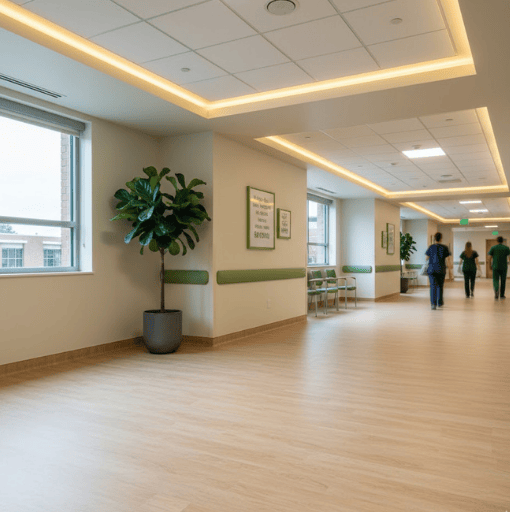
What standards and regulations guide healthcare flooring in Richmond?
Flooring in healthcare facilities in Richmond must meet strict standards to protect patients, staff, and visitors. These rules cover safety, infection control, and environmental health. Choosing the right materials requires understanding key regulations that apply across hospitals, clinics, and long-term care centers.
FGI Guidelines for seamless flooring in high-acuity areas
- The Facility Guidelines Institute (FGI) sets design requirements for hospitals and surgical spaces.
- In high-acuity areas such as operating rooms, procedure suites, and ICUs, FGI calls for seamless, non-porous flooring.
- This reduces joints where dirt and bacteria can collect, improving infection control and cleaning efficiency.
OSHA rules on slip and fall prevention
- The Occupational Safety and Health Administration (OSHA) focuses on worker safety.
- Flooring must provide slip resistance, especially in wet areas like kitchens, labs, and patient bathrooms.
- OSHA guidelines encourage using textured vinyl, rubber, or slip-resistant coatings to lower accident risks and keep staff safe during long shifts.
LEED requirements for sustainability & VOC limits
- The Leadership in Energy and Environmental Design (LEED) certification rewards hospitals for using sustainable materials.
- Flooring should meet VOC (volatile organic compound) emission limits, which help maintain healthy indoor air.
- Eco-friendly materials like linoleum, rubber, or PVC-free flooring support green building standards and help healthcare facilities earn LEED credits.
Indoor air quality standards
- Poor indoor air quality can worsen patient conditions and trigger staff health issues.
- Standards require healthcare flooring to be low-VOC and PVC-free to minimize chemical emissions.
- Materials certified by programs like FloorScore or GREENGUARD ensure compliance, making the environment healthier for sensitive patients, including children and the elderly.
Pro Tip
Always check flooring certifications such as FGI compliance, OSHA safety, and FloorScore for air quality before installation. This ensures long-term durability and patient safety while also supporting sustainability goals.
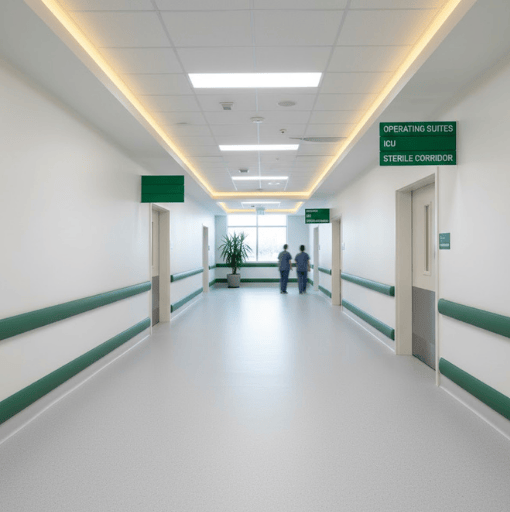
What are the latest flooring trends in healthcare design?
Modern healthcare flooring is shifting toward sustainability, safety, and patient-centered design. These trends support infection control, staff comfort, and better healing outcomes.
- PVC-Free & Bio-Based Materials
Hospitals are adopting linoleum, rubber, and bio-based composites to reduce plastic use and improve sustainability.
- Low-VOC Adhesives & Finishes
Safer adhesives and coatings improve indoor air quality, protecting patients with respiratory issues and staff working long shifts.
- Smart Flooring with IoT Sensors
Flooring systems now integrate sensors that monitor patient movement, track falls, and detect moisture to prevent safety risks.
- Modular Flooring Systems
Carpet tiles, LVT, and rubber tiles allow sections to be replaced easily without disrupting entire hospital areas, saving downtime and cost.
- Biophilic Design in Healthcare
Natural colors, textures, and wood-like flooring help create healing environments that reduce stress and improve patient orientation.
Why Does Flooring Matter in Healthcare Facilities in Richmond?
Flooring for healthcare facilities in Richmond is not just a design choice. It is an essential foundation for safety, hygiene, and enrichment in care spaces. The right flooring reduces infection risks, prevents slips, and creates a clean, compliant environment that supports both staff and patients.
Beyond health and safety, flooring directly enriches daily experiences. Resilient, quiet surfaces ease staff fatigue, while calming, nature-inspired designs reduce patient stress and aid recovery. Hospitals that invest wisely see better patient outcomes, improved staff performance, and lasting cost savings.
In modern healthcare design, flooring is more than durability. It is a long-term strategy for enrichment, compliance, and sustainable care. By aligning hygiene, comfort, and performance, the right flooring choice transforms healthcare spaces into healing environments.
So, if you are exploring Healthcare Flooring in Richmond, these tailored solutions below will guide you toward the best options.
FAQs about flooring for healthcare facilities
Sheet vinyl, linoleum, and rubber flooring are widely used because they are seamless, hygienic, durable, and easy to maintain.
Yes, sheet vinyl is preferred in high-acuity areas like ICUs and labs because it has fewer seams and resists infection spread. LVT works well in patient rooms and hallways for comfort and design flexibility.
Carpet tile is sometimes used in offices and waiting areas for acoustic comfort, but it is not suitable for clinical zones due to dust and pathogen trapping.
Operating rooms in Richmond typically use epoxy resin, sheet vinyl, or terrazzo flooring because these materials are seamless, chemical-resistant, and easy to disinfect.
Flooring must follow FGI guidelines for seamless surfaces, OSHA slip resistance standards, and indoor air quality requirements with low-VOC products.
Costs vary from $20 to $80 per square meter, depending on the material. Sheet vinyl and LVT are on the lower end, while epoxy and terrazzo are higher due to installation and durability.