The best flooring for commercial spaces depends on durability, safety, maintenance, and budget. Epoxy is strongest for warehouses, vinyl is cost-effective for offices and retail, tile is waterproof for kitchens and bathrooms, and rubber adds cushioning and safety in gyms or healthcare. Choosing the right option ensures long-lasting performance and value for any business.
According to EPA research, flooring choices directly affect safety, maintenance costs, and even indoor air quality in commercial spaces. Businesses that overlook these factors often face higher repair bills, safety risks, and premature flooring replacement.
The right flooring solves these challenges. By focusing on durability, slip resistance, ease of cleaning, and design flexibility, businesses can create safe environments while protecting long-term value.
For Richmond and other high-traffic areas, humidity and constant use demand flooring that resists moisture and daily wear. The most reliable solutions today are epoxy, vinyl, tile, and rubber flooring, each tailored to specific commercial needs.
If you’re looking for quick answers, here’s a simple comparison to guide your decision.
What Are the Durability Factors for Commercial Flooring?
Durability is the foundation of any commercial flooring decision. Businesses deal with constant foot traffic, rolling equipment, and regular cleaning cycles, so the right choice must balance wear resistance, scratch protection, and lifespan. According to the ASTM International standards for flooring durability, materials are rated on abrasion resistance, impact strength, and overall performance, making these factors critical in commercial settings.
To understand how different flooring types perform, let’s look at the leading options and their durability factors:
Epoxy Flooring for Industrial Strength
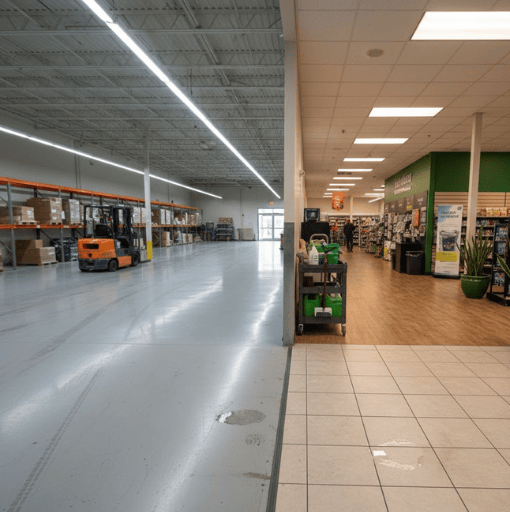
- Handles heavy loads like forklifts and machinery
- Chemical- and impact-resistant for factories and warehouses
- Lifespan: 15–20+ years with minimal repairs
Tile Flooring for Long-Term Reliability
- Scratch- and stain-resistant surface for high-traffic areas
- Performs well in wet and humid conditions (kitchens, bathrooms)
- It can last decades when installed and sealed properly
Vinyl Flooring (LVT, SPC, WPC) for Balanced Durability
- Protective wear layers (20–30 mil) shield against scratches and dents
- Resilient yet flexible, ideal for retail and office use
- Lifespan: 10–15 years with regular maintenance
Things to Remember
For industrial and manufacturing spaces, epoxy provides unmatched strength. For retail and office environments, vinyl offers durability with design flexibility, while tile remains the go-to for long-lasting performance in wet areas.
Why Is Moisture Resistance Essential in Commercial Flooring?
In high-traffic spaces, spills, humidity, and cleaning cycles can cause warping, mold growth, or surface damage if the wrong material is chosen. Flooring with strong moisture resistance not only extends lifespan but also protects indoor air quality and reduces costly repairs.
Here’s how leading flooring options perform against moisture:
Epoxy Flooring for Complete Waterproofing
- Creates a seamless, non-porous surface that blocks water and chemicals.
- Ideal for warehouses, kitchens, and facilities with frequent liquid spills.
- Resistant to mold and mildew, making it low-maintenance in damp conditions.
Vinyl Flooring (LVT, SPC, WPC) for Humidity Control
- 100% waterproof core in SPC and WPC types.
- Works well in offices, retail, and restrooms where occasional spills occur.
- Requires proper subfloor prep to prevent moisture seeping from below.
Tile Flooring (Ceramic, Porcelain, Stone) for Long-Lasting Protection
- Naturally waterproof and impervious to most spills.
- Excellent for bathrooms, kitchens, and entryways.
- Needs proper grout sealing to avoid water absorption and stains over time.
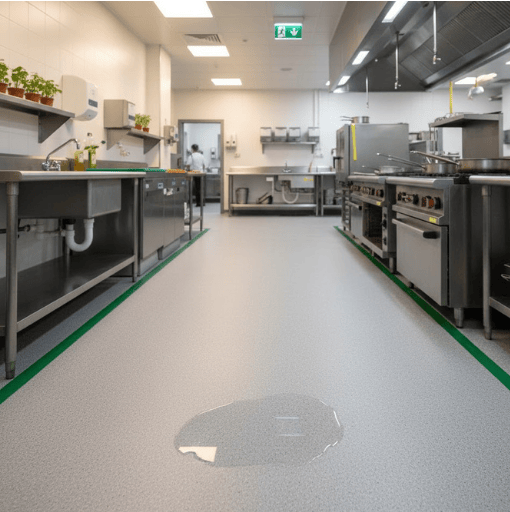
How Does Slip Resistance Improve Safety in Commercial Spaces?
Floors with poor traction increase the risk of slips, falls, and workplace injuries, leading to liability issues and higher insurance costs. According to OSHA safety guidelines, commercial spaces must use flooring with adequate slip resistance to protect employees and customers.
Here’s how flooring types contribute to safer environments:
Rubber Flooring for Maximum Traction
- Naturally slip-resistant, even when wet.
- Cushioned surface reduces injury severity in case of falls.
- Widely used in gyms, healthcare centers, and schools where safety is critical.
Epoxy Flooring with Safety Additives
- High-strength surface can be customized with anti-slip aggregates.
- Resistant to oils, chemicals, and spills common in industrial environments.
- Glossy finishes may be slippery; textured or grit finishes are recommended for compliance.
How Does Maintenance Affect Commercial Flooring Lifespan?
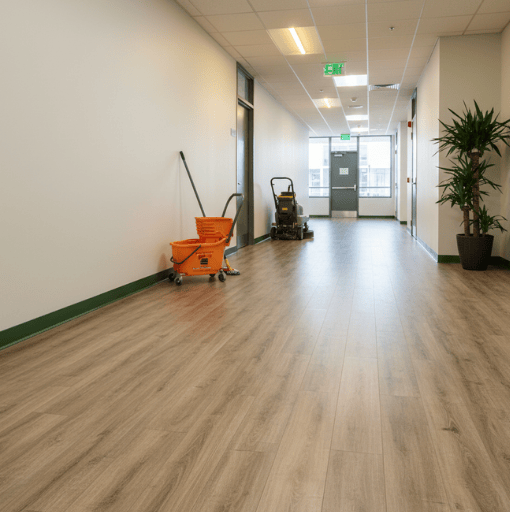
Maintenance is a key factor that directly impacts how long commercial flooring lasts. Even the most durable material will wear out quickly if not properly cleaned or maintained. Flooring that is easy to clean not only reduces labor costs but also ensures long-term performance and appearance.
Here’s how leading options compare
Vinyl Flooring for Easy Upkeep
- Requires only routine sweeping and mopping.
- Resistant to stains and scuffs, making it ideal for offices and retail.
- Low-cost maintenance over 10–15 years.
Epoxy Flooring for Minimal Maintenance
- Seamless, non-porous surface prevents dirt buildup.
- Withstands harsh cleaning chemicals without damage.
- Long lifespan (15–20+ years) with little upkeep.
- Waterproof and easy to disinfect, especially in kitchens and bathrooms.
- Requires periodic grout sealing to prevent stains and mold.
- It can last decades with proper care.
What Are the Most Cost-Effective Flooring Options for Businesses??
Epoxy Flooring for Long-Term Value
- Higher upfront cost than vinyl, but lasts much longer.
- Resistant to heavy loads and chemicals, lowering repair expenses.
- Best ROI in warehouses, factories, and industrial facilities.
- Lower initial cost compared to tile or epoxy.
- Easy installation and minimal upkeep lower lifetime costs.
- Ideal ROI for offices, retail, and small businesses.
Vinyl Flooring for Budget-Friendly Flexibility
The most cost-effective flooring balances upfront investment with long-term savings, reducing replacement and repair costs. Let’s have a closer look:
How Does Aesthetic Appeal Influence Flooring Decisions?
Beyond durability and cost, flooring also shapes brand image. Clients and customers notice the look of a space immediately, so businesses often prioritize design flexibility and style when choosing flooring.
LVT (Luxury Vinyl Tile) for Design Flexibility
- Mimics wood, stone, or custom patterns at a lower cost.
- A wide range of styles suits offices, retail, and hospitality.
- Offers both aesthetics and practicality.
Tile Flooring for Timeless Elegance
- Available in porcelain, ceramic, and natural stone.
- Classic look adds value and durability to high-traffic areas.
- Ideal for restaurants, showrooms, and lobbies.
Terrazzo Flooring for Customization
- High-end, premium choice with endless design possibilities.
- Can incorporate brand colors, patterns, and logos.
- Long-lasting and durable, but higher in upfront cost.
You may look at the table below for additional flooring options that work best in specific commercial settings:
Things to Avoid
Avoid installing epoxy without slip-resistant additives, leaving tile grout unsealed, or using thin vinyl layers that wear out quickly. Skipping proper installation and protection often shortens the lifespan and raises long-term costs.
What Are the Benefits of Epoxy Flooring for Commercial Spaces?
- Durability: Withstands forklifts, machinery, and high foot traffic.
- Chemical Resistance: Protects against oils, solvents, and harsh cleaning agents.
- Moisture Protection: Seamless surface prevents water damage and mold growth.
Many industrial facilities face the challenge of cracked floors or corrosion from chemical spills. Epoxy flooring stands out as one of the most durable and protective surfaces for industrial and commercial facilities. Its ability to handle extreme conditions makes it a reliable long-term investment. Here’s what makes it highly effective:
Why Is Vinyl Flooring a Top Choice for Commercial Spaces?
- Cost-Effective: Lower upfront cost and easy maintenance save money over time.
- Versatile Design: Available in wood, stone, or modern patterns to match brand aesthetics.
- Easy Installation: Click-lock and glue-down options make setup quick with minimal downtime.
Retail stores and offices often deal with high replacement costs when flooring wears out too soon. Vinyl addresses this by offering durable wear layers and versatile designs, helping businesses maintain a professional look while avoiding frequent renovations.
Vinyl flooring, especially LVT, offers the perfect balance of style, affordability, and performance. Businesses prefer it because it adapts well to different commercial settings while keeping costs low. The key benefits include:
What Makes Tile Flooring Ideal for Commercial Kitchens & Bathrooms?
- Waterproof: Impervious to spills, humidity, and standing water.
- Hygienic: Easy to disinfect, making it perfect for food prep and restrooms.
- Stain-Resistant: Resistant to chemicals, grease, and heavy foot traffic.
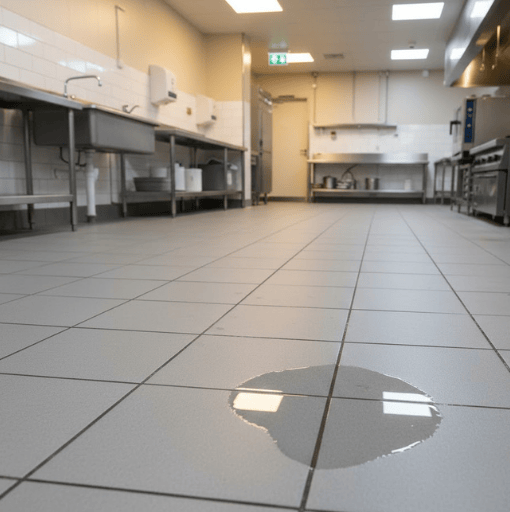
Tile flooring has been trusted for decades in high-moisture and heavy-use areas. Its waterproof nature and hygienic qualities make it a top choice where cleanliness and durability matter most. Here are its standout features:
How Does Rubber Flooring Perform in Gyms & Healthcare Settings?
Rubber flooring is designed for people-focused environments where safety, comfort, and noise reduction are priorities. Its performance stands out in busy and active spaces. The main advantages are:
- Cushioned Surface: Reduces strain on joints and minimizes injury risks.
- Noise-Reducing: Absorbs impact and sound, perfect for gyms and busy healthcare centers.
- Safe & Slip-Resistant: Provides traction, even in wet conditions.
FAQs About Flooring For Commercial Spaces
The most durable flooring options for high-traffic areas are epoxy and tile. Epoxy withstands heavy machinery, forklifts, and continuous foot traffic, while tile resists scratches, stains, and moisture, making both reliable for long-term use.
For offices and retail stores, vinyl, LVT (luxury vinyl tile), and tile are the top choices. Vinyl and LVT offer affordability, easy maintenance, and modern designs, while tile provides durability and a polished appearance for busy spaces.
Healthcare facilities require flooring that is hygienic, safe, and easy to clean. The best options are rubber, which offers cushioning and slip resistance, vinyl, which is seamless and disinfectant-friendly, and epoxy, known for its antibacterial and chemical-resistant properties.
Yes, epoxy flooring is an excellent choice for restaurants. It is durable, hygienic, moisture-resistant, and easy to clean, making it ideal for kitchens, dining areas, and storage zones that face constant spills and heavy use.
How Can the Right Flooring Improve Your Business Environment?
Choosing the right commercial flooring is not only about a design decision; it directly impacts durability, safety, and long-term performance. From epoxy that withstands heavy machinery to vinyl that balances cost and style, the right choice ensures your space is built to last.
Flooring also plays a key role in creating a safe and welcoming environment. Rubber reduces injury risks in gyms and healthcare spaces, while tile keeps kitchens and bathrooms hygienic and moisture-free. When chosen carefully, flooring becomes a silent partner in your business success.
For businesses in Richmond and beyond, investing in professional flooring means better aesthetics, reduced maintenance costs, and improved brand image. It’s about combining function with design to create spaces that truly support your goals.
Looking to upgrade your space? Explore our recommended options below: