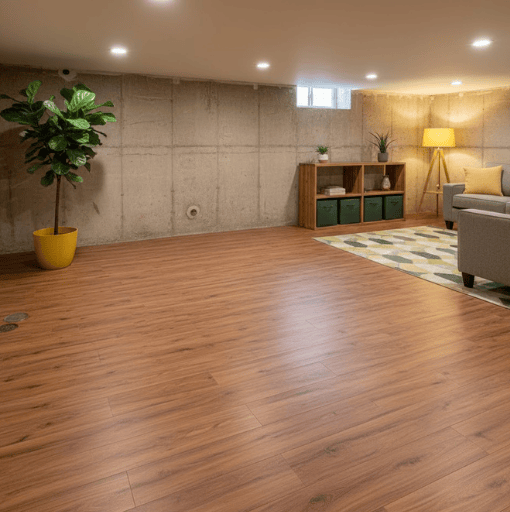
Top choices for the best basement flooring in Richmond include vinyl plank, tile, rubber, and epoxy. Vinyl plank is waterproof, durable, and provides a warm, wood-like appearance. Tile is strong, long-lasting, and resistant to moisture. Rubber adds cushioning and is ideal for gyms or play areas. Epoxy creates a seamless, moisture-proof surface that resists stains. These floors protect against flooding, mold, and dampness while making your basement comfortable and functional for living, work, or play.
Basements are prone to moisture, flooding, and mold, making flooring choices critical for comfort, safety, and long-term durability. Many homeowners in Richmond struggle with damp, cold, and uneven basement floors, which can damage furniture, create odors, and affect indoor air quality. Choosing the right basement flooring ensures a waterproof, durable, and comfortable surface that fits your lifestyle, whether it’s a home gym, office, theater, or kids’ play area.
The best options combine moisture resistance, durability, and style. Luxury Vinyl Plank (LVP) and Luxury Vinyl Tile (LVT) provide a waterproof, scratch-resistant surface that mimics wood or stone. Ceramic and porcelain tiles offer long-lasting, waterproof durability. Engineered hardwood adds natural warmth with water-resistant cores.
Rubber and epoxy floors provide cushioning, stain resistance, and easy cleaning for high-traffic or activity-heavy areas. Installing a subfloor or vapor barrier further protects your basement from damp concrete slabs and potential flooding.
For readers in a rush, here are the 3 top basement flooring picks in Richmond:
Why Is Waterproof Flooring Essential for Basements in Richmond?
Basements in Richmond face high humidity, frequent rainfall, and occasional flooding, making moisture one of the biggest threats to any home. Concrete slabs can leak or sweat, and even small water seepages can lead to mold growth, warped flooring, and unpleasant odors.
Common basement problems include:
- Moisture seepage: Water can penetrate through cracks or joints in slabs, affecting flooring and walls.
- Mold and mildew: Damp environments create the perfect conditions for mold, which can harm your family’s health and damage finishes.
- Uneven slabs: Concrete can crack or settle over time, causing instability for some flooring types.
Installing waterproof flooring acts as a protective barrier between your basement and these issues. It prevents water from reaching the subfloor, safeguards the home’s foundation, and reduces the risk of airborne mold spores, improving indoor air quality. Whether it’s luxury vinyl plank, porcelain tiles, or epoxy coatings, waterproof floors provide durability, comfort, and peace of mind, even in Richmond’s dampest conditions.
Pro Tip
Pair waterproof flooring with a vapor barrier or raised subfloor system to maximize protection and extend the life of your basement floor.
What Are the Best Basement Flooring Options in Richmond?
Selecting basement flooring in Richmond requires balancing waterproof performance, durability, and comfort. High humidity, occasional flooding, and concrete slab issues make it essential to choose flooring that protects your home’s foundation, improves indoor air quality, and remains stylish for living or recreational spaces.
Most people get puzzled when choosing the right flooring for a basement, so let’s answer their queries and discover the best options that combine practicality, durability, and design.
Is Vinyl Plank (SPC & WPC) the Most Reliable Choice for Damp Basements?
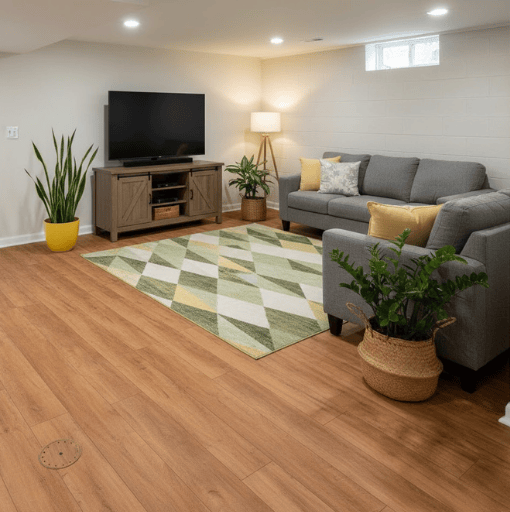
Vinyl planks, including SPC (Stone Plastic Composite) and WPC (Wood Plastic Composite), are highly resistant to moisture and everyday wear. Their click-lock installation and 20-mil+ wear layers make them durable and easy to maintain. Vinyl planks are warm underfoot, budget-friendly, and ideal for family-friendly basements or entertainment areas.
Key Features:
- Waterproof core that prevents water penetration
- Scratch and dent resistance for long-lasting use
- Comfortable surface suitable for play or casual living
- Quick and simple installation
Pro Tip
Use a vapor barrier underlayment to maximize moisture protection.
Can Tile Flooring Withstand Moisture and Heavy Traffic?
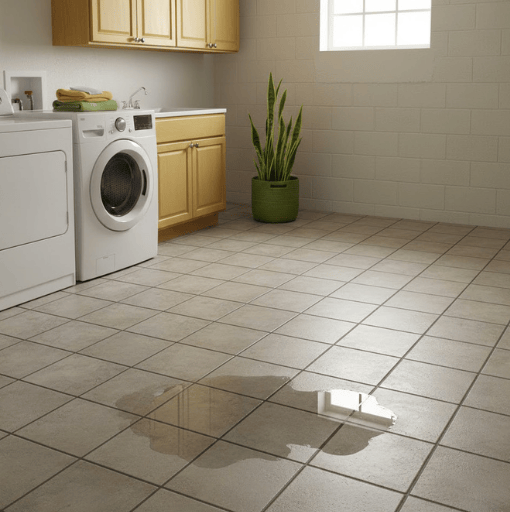
Porcelain and ceramic tiles provide a fully waterproof surface that handles high-moisture conditions. Sealed grout ensures water does not penetrate the joints, keeping mold and mildew at bay. Tiles are perfect for laundry rooms, bathrooms, and areas prone to occasional flooding.
Key Features:
- 100% waterproof and highly durable
- Sleek, customizable appearance for modern basement designs
- Low-maintenance surface, easy to clean with mild cleaners
- Ideal for high-traffic or wet areas
Pro Tip
Reseal grout lines periodically to maintain long-term moisture protection.
Why Is Rubber Flooring Ideal for Playrooms and Home Gyms?
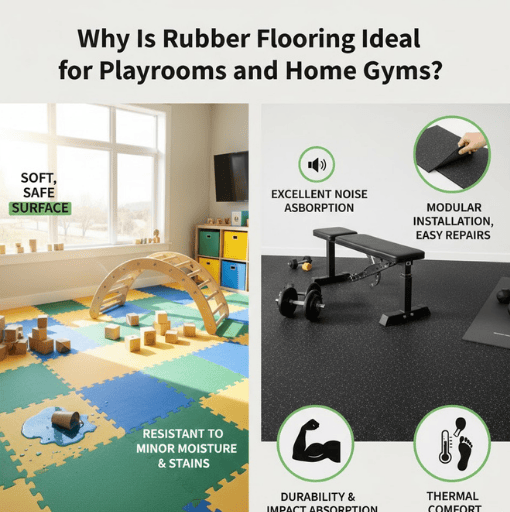
Rubber flooring offers a cushioned, slip-resistant surface that absorbs impact and reduces noise. Its thermal comfort and durability make it suitable for exercise areas, kids’ playrooms, or wellness spaces. Rubber tiles are easy to replace if damaged.
Key Features:
- Soft, safe surface for children and active spaces
- Excellent noise absorption for multi-purpose basements
- Resistant to minor moisture, stains, and wear
- Modular installation allows easy repairs
Pro Tip
Opt for commercial-grade rubber for added durability and moisture resistance.
How Does Epoxy Flooring Protect Basements From Water Damage?
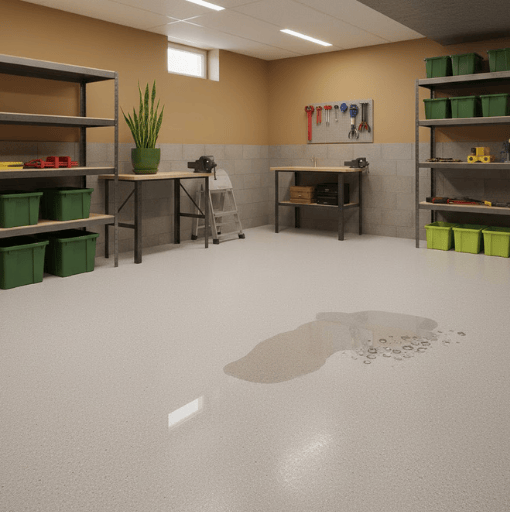
Epoxy creates a seamless, industrial-grade coating that is both moisture- and chemical-resistant. Its continuous surface prevents water infiltration and is easy to clean, making it ideal for utility basements, workshops, or garages. Epoxy can also be customized with colors or flakes for a modern look.
Key Features:
- Seamless, waterproof coating for full floor coverage
- High durability against stains, chemicals, and heavy traffic
- Easy maintenance with a smooth, non-porous surface
- Can be customized with decorative effects
Pro Tip
Always prep the concrete surface properly to avoid peeling or bubbling.
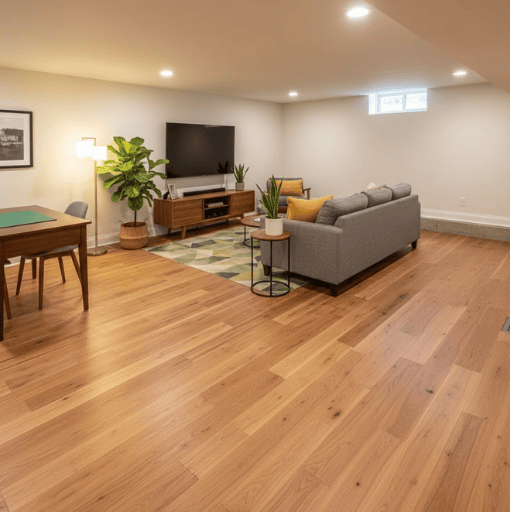
Is Engineered Hardwood Suitable for Basements With Controlled Humidity?
Engineered hardwood provides layered wood construction that resists moisture better than solid hardwood, while offering warmth and elegance. It is ideal for finished basements with stable humidity but requires a vapor barrier and occasional dehumidifier use to prevent warping.
Key Features:
- Multi-layered construction resists moisture and swelling
- Adds natural warmth and style to living spaces
- Suitable for home offices, media rooms, or cozy areas
- Performs best under controlled humidity conditions
- Multi-layered construction resists moisture and swelling
Pro Tip
Maintain indoor humidity between 40% to 60% to extend the life of engineered hardwood.
What Factors Should You Consider Before Choosing Basement Flooring?
Choosing the right basement flooring in Richmond requires careful attention to moisture, durability, comfort, and aesthetics. Basements often face high humidity, occasional flooding, and uneven concrete slabs, making these attributes critical for long-lasting, safe, and comfortable flooring.
Key Factors to Consider:
- Moisture Resistance: Protects against water seepage, mold growth, and structural damage.
- Durability & Maintenance: Flooring must withstand foot traffic, furniture movement, and spills while being easy to clean.
- Comfort & Insulation: Cushioned or insulated flooring increases warmth and usability for living or activity spaces.
- Aesthetics & Budget: Balances visual appeal with cost, ensuring style without sacrificing durability.
Let’s discover the basement flooring options that best match these factors.
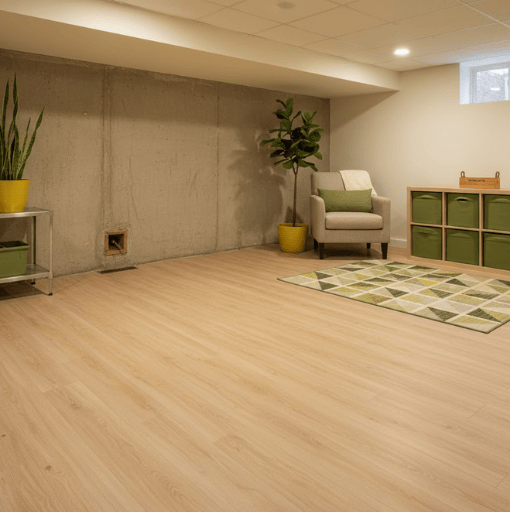
Vinyl Plank (SPC & WPC)
Vinyl planks, including SPC (Stone Plastic Composite) and WPC (Wood Plastic Composite), are highly resistant to moisture and everyday wear.
Why it works:
- Waterproof core prevents water damage
- Click-lock installation ensures easy setup
- Thick wear layers (20-mil+) resist scratches and dents
- Warm underfoot, comfortable for play or living spaces
- Budget-friendly without compromising style
- Using a vapor barrier underlayment maximizes moisture protection
- Ideal for family basements, entertainment zones, and kids’ play areas
Porcelain and Ceramic Tiles
Porcelain and ceramic tiles offer a fully waterproof, durable, and easy-to-clean surface.
Why it works:
- 100% moisture-resistant surface protects against leaks
- Sealed grout prevents mold and mildew growth
- Long-lasting durability withstands heavy traffic
- Sleek, modern aesthetic for versatile basement designs
- Resealing grout lines periodically ensures long-term performance
- Perfect for laundry rooms, bathrooms, or high-moisture basement areas
Rubber Flooring
Rubber flooring provides a cushioned, slip-resistant surface with excellent thermal comfort.
Why it works:
- Absorbs impact and reduces noise
- Resistant to minor moisture, spills, and wear
- Modular tiles allow easy replacement
- Comfortable for exercise areas and kids’ playrooms
- Commercial-grade rubber ensures maximum durability
- Ideal for wellness spaces, gyms, or high-activity basements
Epoxy Flooring
Epoxy creates a seamless, moisture-resistant coating for utility basements, workshops, or garages.
Why it works:
- Continuous surface prevents water infiltration
- Industrial-grade durability against chemicals, stains, and heavy traffic
- Smooth, non-porous surface for easy cleaning
- Customizable with colors, flakes, or textures
- Proper surface preparation prevents peeling or bubbling
Best for garages, workshops, or utility areas
Engineered Hardwood
Engineered hardwood features layered wood construction with better moisture resistance than solid hardwood.
Why it works:
- Resists swelling or warping in controlled humidity
- Adds natural warmth and elegance
- Suitable for finished basements like offices, media rooms, or cozy living spaces
- Installing a vapor barrier and maintaining 40–60% humidity protects the flooring
- Pairing with rugs or underlayment increases warmth and comfort
You Know what ?
Not all flooring can handle moisture, humidity, or temperature fluctuations. Choosing waterproof options like vinyl plank, tile, rubber, or epoxy ensures durability, comfort, and protection against mold.
Before moving forward, you may explore these amazing basement flooring options to find the perfect fit for your home:
Which Flooring Types Should Be Avoided in Basements?
Not all flooring is suitable for basement conditions. High humidity, occasional water seepage, and cold concrete can damage certain materials over time. Choosing the wrong flooring can lead to mold growth, unpleasant odors, and costly replacements.
Key Attributes to Avoid:
- Poor Moisture Resistance: Flooring that absorbs water or swells easily
- Low Durability in Damp Conditions: Materials that warp, rot, or lose structural integrity
- Difficult Maintenance: Surfaces that trap moisture or stains, making cleaning hard
Let’s look at the common flooring types you should avoid in basements.
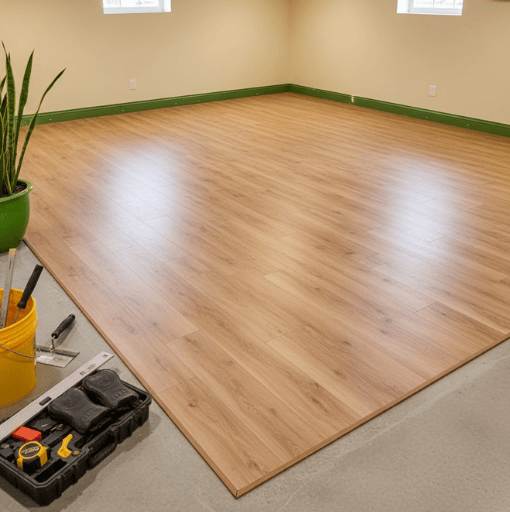
Solid Hardwood
- Prone to warping and swelling in humid or damp basements
- Sensitive to temperature and moisture fluctuations
- Requires constant humidity control to prevent damage
- Prone to warping and swelling in humid or damp basements
Why Avoid:
Despite its beauty, solid hardwood is not waterproof and can quickly deteriorate in basement environments.
Carpet
- Absorbs moisture easily, creating mold and mildew risk
- Traps dust, dirt, and odors, impacting indoor air quality
- Difficult to dry after spills or flooding
- Absorbs moisture easily, creating mold and mildew risk
Why Avoid:
Carpet is not suitable for basements prone to dampness, as it can harbor allergens and bacteria.
Laminate Flooring
- Susceptible to swelling or delamination when exposed to water
- Edges may curl or lift on damp concrete slabs
- Limited lifespan if water exposure is frequent
- Susceptible to swelling or delamination when exposed to water
Why Avoid:
Laminate may appear durable, but even small leaks can compromise its integrity, making it unsuitable for most basement spaces.
How to Install & Maintain Basement Flooring in Richmond Homes?
Proper installation and maintenance are essential to ensure your basement flooring lasts for years and performs well under Richmond’s humid conditions. It is important to consider
- Subfloor Preparation: Level, dry, and moisture-protected surfaces extend flooring life.
- Installation Quality: Professional or well-informed DIY installation ensures durability and fit.
- Cleaning & Maintenance: Flooring-specific routines preserve appearance and prevent damage.
Let’s explore how different flooring types should be installed and maintained.
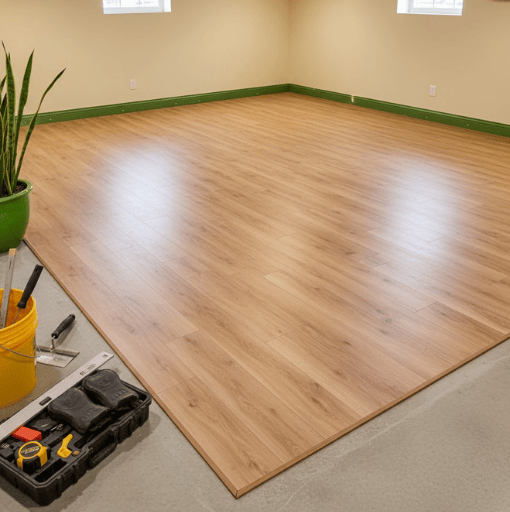
How to install and maintain Vinyl Plank (SPC & WPC)
Installation Tips:
- Install over a dry, level subfloor with a vapor barrier for added moisture protection
- Click-lock planks allow easy DIY installation without adhesives
Maintenance Tips:
- Sweep or vacuum regularly to remove dust and debris
- Clean with a damp mop and mild cleaner; avoid soaking the floor
Inspect seams periodically for any lifting or gaps
How to install and maintain Porcelain & Ceramic Tiles
Installation Tips:
- Use a self-leveling compound on uneven concrete for smooth installation
- Seal grout lines after installation to maintain waterproof integrity
Maintenance Tips:
- Sweep and mop regularly to remove dirt
- Reapply grout sealer every 6–12 months to prevent mold growth
- Address cracks or chips promptly to avoid water infiltration
How to install and maintain Rubber Flooring
Installation Tips:
- Interlocking rubber tiles can be installed over clean, dry concrete
- Commercial-grade rubber may require adhesive for a more permanent setup
Maintenance Tips:
- Sweep or vacuum to remove dust and debris
- Mop with mild detergent; avoid harsh chemicals that can damage the surface
- Replace individual tiles if damaged, keeping the rest intact
How to install and maintain Rubber Flooring
Installation Tips:
- Interlocking rubber tiles can be installed over clean, dry concrete
- Commercial-grade rubber may require adhesive for a more permanent setup
Maintenance Tips:
- Sweep or vacuum to remove dust and debris
- Mop with mild detergent; avoid harsh chemicals that can damage the surface
- Replace individual tiles if damaged, keeping the rest intact
How to install and maintain Epoxy Flooring
Installation Tips:
- Prepare the concrete surface by cleaning, etching, and priming to ensure adhesion
- Apply epoxy in thin, even coats for a smooth, seamless finish
Maintenance Tips:
- Clean spills immediately to avoid staining
- Sweep and mop with neutral cleaners
- Avoid abrasive tools that may scratch the epoxy surface
How to install and maintain Engineered Hardwood
Installation Tips:
- Install over a vapor barrier to control moisture exposure
- Maintain 40–60% indoor humidity to prevent swelling or warping
Maintenance Tips:
- Dust and sweep regularly to prevent scratches
- Use a damp mop with a hardwood-safe cleaner
- Avoid excess water during cleaning and protect high-traffic areas with rugs
How to Choose the Best Flooring for Basements for a Dry, Comfortable Basement
Tired of battling with moisture and cold floors in your basement? The right flooring can solve these problems and turn your basement into a comfortable, usable space. Vinyl plank, porcelain tile, rubber flooring, and epoxy are the top choices for Richmond basements, offering waterproof protection, durability, and comfort.
Don’t let dampness or mold take over. Choose the right flooring to protect your basement and create a space you can enjoy year-round.
What are you waiting for? Click the links below and protect your basement with the best waterproof flooring options available!
Frequently Asked Questions About Basement Flooring in Richmond
When it comes to basement flooring, vinyl plank (SPC & WPC), porcelain tile, and rubber flooring are among the top options that are 100% waterproof. These materials create a seamless barrier against moisture, preventing water damage and mold growth, which is crucial for basements prone to humidity and flooding.
Yes, vinyl plank flooring can be installed directly on concrete. However, it's essential to ensure that the concrete is clean, dry, and level before installation. Consider using a moisture barrier underlayment to protect the vinyl from excess moisture that could seep through the concrete over time.
To prevent mold growth under basement flooring, ensure proper moisture control by installing a vapor barrier and ensuring the space is well-ventilated. Additionally, choose waterproof flooring options like vinyl or porcelain that don’t allow water to seep through, and keep the humidity levels low with a dehumidifier.
While carpet may seem cozy, it’s generally not the best choice for basements. Carpets are prone to mold and mildew growth in damp conditions. If you do choose carpet, make sure it’s specifically designed for basements with a moisture-resistant backing, and use it in dry, well-ventilated areas.
The most budget-friendly waterproof flooring options include sheet vinyl and luxury vinyl tile (LVT). Both are affordable, durable, and come in a wide range of designs. These options also offer easy maintenance and long-term protection against water damage.