when done with the right preparation and adhesive. Clean and level each step, cut planks to fit individually, and secure them using a glue-down method for lasting results. Installing vinyl plank flooring on stairs. Always include stair nosing for safety and a polished look. With proper tools and care, even curved or open stairs can be upgraded to match your home’s flooring seamlessly
If you’ve ever looked at your stairs and thought they don’t match the rest of your beautiful new floor, you’re not alone.
Most homeowners update their rooms with vinyl plank flooring, but stop at the staircase because it feels too complicated or risky.
The truth? It’s completely doable.
Installing vinyl plank flooring on stairs takes patience and planning, not professional tools or years of experience.
Whether your stairs are straight, curved, or have spindles, the process follows the same steps: prepare, measure, cut, and secure.
But here’s where most people go wrong: skipping surface prep, using the wrong adhesive, or ignoring stair nosing.
Those small details can make the difference between a sturdy, flawless finish and planks that shift or lift after a few weeks.
This guide walks you through every part of the job, from picking the right vinyl type to finishing the nosing.
So you can get safe, durable, and professional-looking stairs that tie your whole home together.
Installing Vinyl Plank Flooring on Stairs: What to Know Before You Start
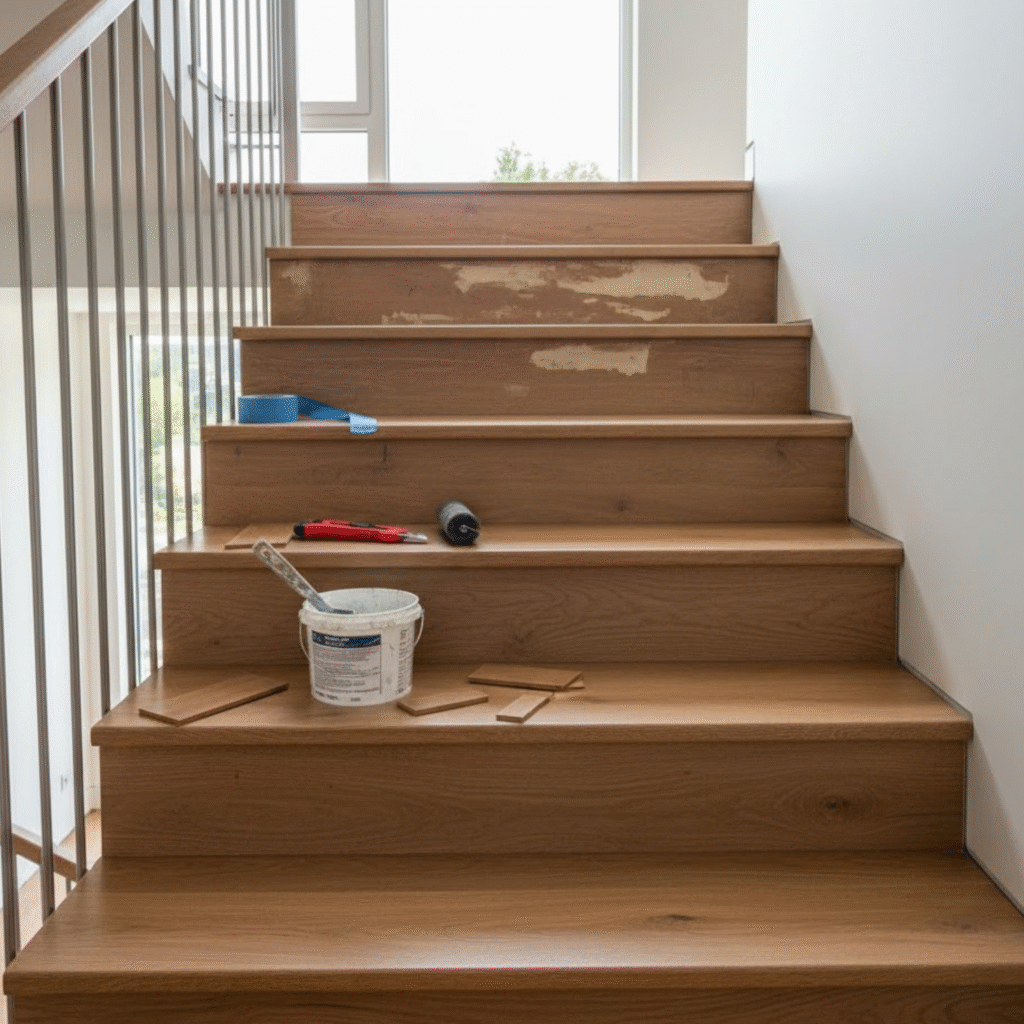
Vinyl plank flooring works beautifully on stairs when the surface is clean, solid, and level. It can instantly update old steps and make your whole home look consistent and modern.
Stairs, however, are tougher than flat floors. Each step takes direct impact and daily wear, so proper preparation matters more here than anywhere else. The planks must be glued securely, and stair nosing is essential for both safety and a finished look.
Before installing, check if your stairs are ready. If the surface is firm, smooth, and dry, you can move forward. If you find cracks, loose boards, or uneven spots, fix those first to avoid future problems.

Your stairs are ready if:
- The steps feel solid without movement or squeaks.
- The surface is smooth and dry.
- The risers and treads are even and well attached.
There’s space for stair nosing at the edges.
Hold off on installing if:
- The surface is cracked, soft, or damaged.
- Moisture or mould is present.
- The tiles or wood underneath are lifting.
Pro Tip
Lightly tap each step with a screwdriver handle. A hollow sound means the board underneath isn’t stable yet. Secure it first for a longer-lasting result.
Benefits of Installing Vinyl Plank Flooring on Stairs
Updating your stairs with vinyl planks is more than just a design choice. It’s a smart move that combines style, comfort, and durability in one simple upgrade.
Let’s look at why many homeowners choose vinyl planks for their stairs:
1. A clean, modern look
Vinyl planks bring the same finish from your floors to your stairs, creating a smooth, continuous look throughout the home.
2. Easy to keep clean
Dust and scuff marks wipe away in seconds. A quick sweep or light mop is all it takes to keep stairs looking fresh.
3. Safe and slip-resistant
Most modern vinyl planks have a textured surface that adds grip and reduces slipping, even for kids or pets.
4. Strong enough for heavy use
Stairs take a lot of foot traffic every day, but vinyl planks are built to handle it. The wear layer keeps them from scratching or denting easily.
5. Warm and quiet underfoot
Unlike tile or hardwood, vinyl feels softer and doesn’t echo with every step. It’s a small change that makes your space more comfortable.
You know what?
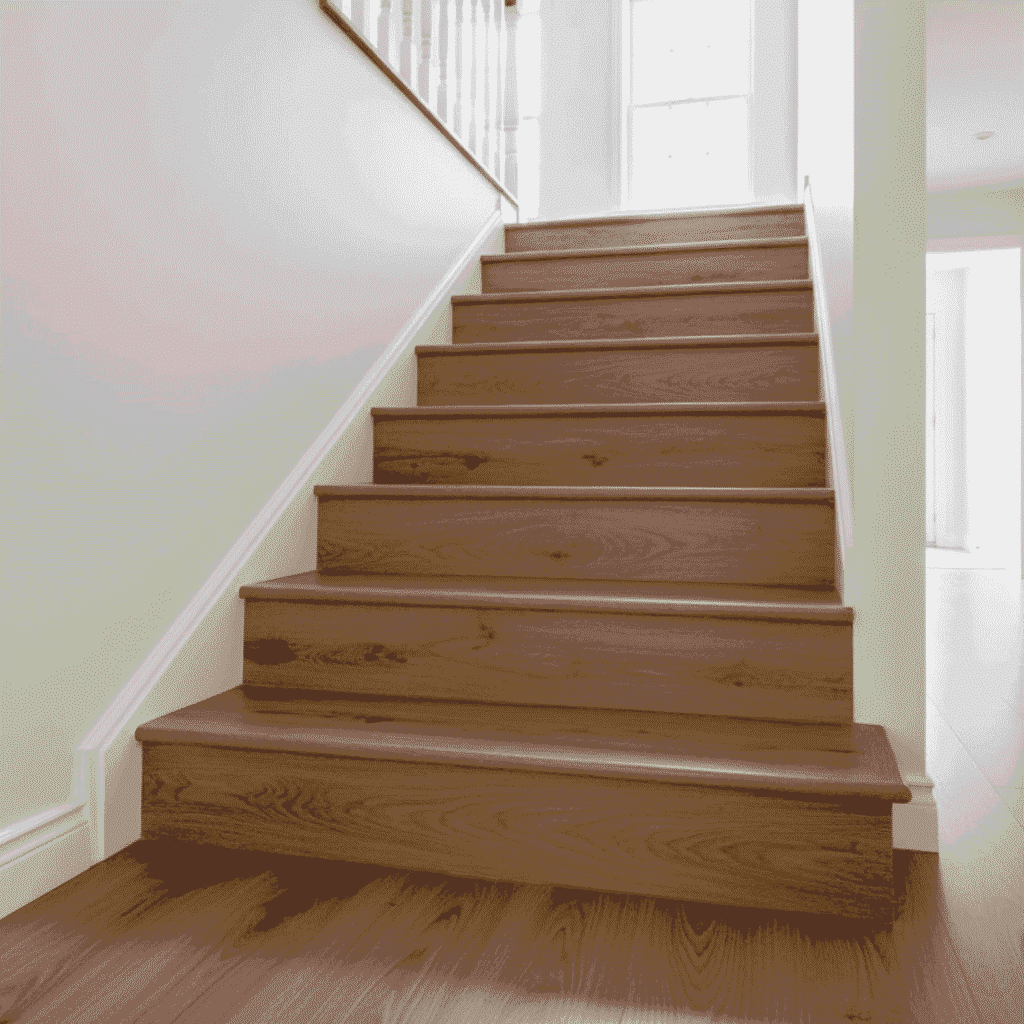
Even an older staircase can look completely new with vinyl planks. It’s one of those upgrades that instantly changes how your whole home feels clean, warm, and fresh.
Before You Start: Make Sure Your Stairs Are Ready
Before you jump into installing vinyl planks, take a moment to really look at your stairs.
This step might not seem exciting, but it’s what separates a quick weekend project from a floor that lasts for years.
Start by checking each tread and riser.
If any step creaks, feels soft, or moves slightly when you press down, tighten or replace it before installing anything. Vinyl needs a solid, steady base otherwise, it’ll shift, lift, or come loose over time.
Next, clean the stairs well.
Use a vacuum and a damp cloth to remove dust, dirt, or paint spots. Even a little debris can keep the adhesive from sticking properly.
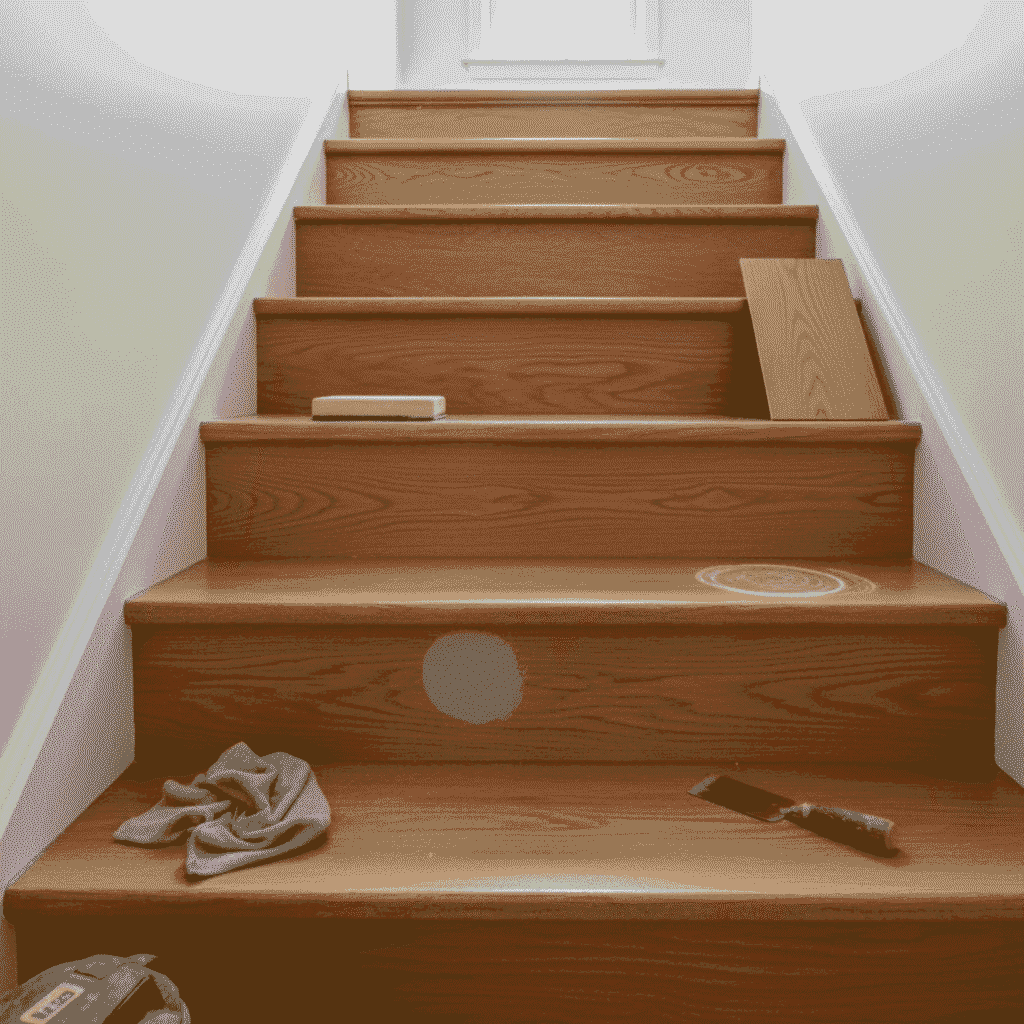
If your stairs are uneven, sand down high spots and fill gaps with a leveling compound.
Smoothness matters more here than on flat floors because every edge will show once the planks are in place.
Also, plan for stair nosing the edge piece that finishes each step and keeps it safe.
Make sure the front edge of each tread has enough room for the nosing to fit cleanly.
Pro Tip
Run your hand across each step before installing.
If it feels bumpy or rough, your vinyl planks will look the same way once they’re glued down. A little prep here saves you from uneven edges later.
Tools You’ll Need for Installing Vinyl Plank Flooring on Stairs
Having the right tools from the start makes the job smoother, faster, and far less stressful.
Each tool plays a small but important role in getting a clean, long-lasting finish.
Pro Tip
Keep all your tools in a small box or tray beside the stairs.
It saves you from running up and down between every step literally.
Materials You’ll Need for Installing Vinyl Plank Flooring on Stairs
Having the right materials on hand makes your installation smooth and your results last longer.
Each material adds strength, style, or safety to your stairs. Don’t skip the details here.
Pro Tip
Buy 10–15% more planks than you think you’ll need.
It covers mistakes, miscuts, and ensures colour consistency across every step.
Step-by-Step Guide to Installing Vinyl Plank Flooring on Stairs
Once your tools and materials are ready, it’s time to get hands-on.
Installing vinyl planks on stairs takes precision, but it’s easy to follow if you go one step at a time literally.
Step 1: Measure Each Stair Carefully
Start by measuring the width and depth of each tread (the flat step) and riser (the vertical part).
Stairs can vary slightly in size, so write down individual measurements for accuracy.
Use a pencil to label which plank goes where before cutting. This saves a lot of rework later.
Step 2: Cut Your Planks to Fit
Cut planks for each tread and riser using a sharp utility knife or jigsaw.
Always cut slightly larger than your measurement first it’s easier to trim than replace.
Dry-fit each piece on the stair to check alignment before applying adhesive.
Step 3: Prep and Clean the Surface
Wipe the entire stair with a damp cloth or vacuum it well.
Any dust, glue residue, or bumps can affect how firmly the vinyl sticks.
Make sure the surface is dry and smooth before moving forward.
Step 4: Apply the Adhesive
Use a flooring adhesive made for vinyl planks.
Spread it evenly with a trowel or adhesive spreader across the tread, working one stair at a time.
Avoid spreading glue too far ahead it can dry out before you place the plank.
Step 5: Install the Plank on the Tread
Press the tread plank firmly into the adhesive, starting from the back edge and working toward the nosing.
Smooth it out with a roller or by hand to remove air bubbles and ensure solid contact.
Step 6: Add the Riser
After finishing the tread, attach the riser plank (the vertical part).
Apply adhesive to the back, press it in place, and check that it’s aligned evenly with the tread edge.
A small roller helps you push out any trapped air for a tight bond.
Step 7: Attach the Stair Nosing
The stair nosing gives your steps that clean, finished edge.
Apply a thin layer of adhesive, position it along the front edge of the tread, and press firmly.
Use finishing nails if needed to secure it in place, but keep them discreet.
Step 8: Clean and Let It Cure
Wipe away extra glue immediately with a damp cloth.
Let the adhesive set for at least 24 hours before using the stairs.
Avoid heavy foot traffic during this time it allows everything to bond properly.
Installing Vinyl Plank Flooring on Curved or Open Stairs
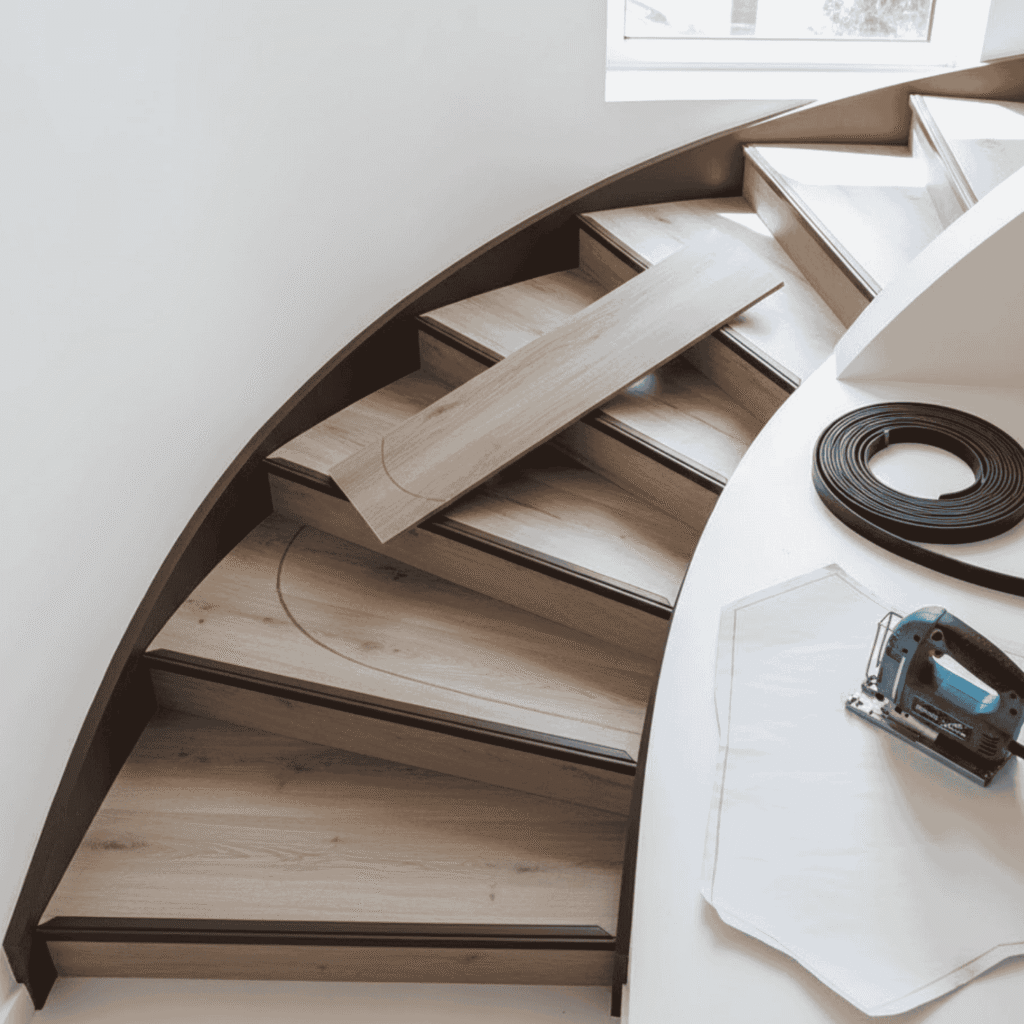
Curved and open stairs need more planning, but they can look great when done right. For curved steps, scribe the plank edge to match the curve before cutting. Hold the plank against the curve and mark the line slowly, then trim with a jigsaw for a clean fit.
Use flexible stair nosing where the curve is tight. Flexible nosing bends to the shape and gives a neat, safe edge. On open or floating stair designs, plan each cut so the pattern lines up from step to step. Take your time with layouts here, small mistakes show quickly on open stairs.
Vinyl Stair Nosing Explained
Stair nosing is the finished edge at the front of each tread. It protects the plank edge and gives the step a safe, neat edge.
Why nosing matters
- It protects corners from wear.
- It helps prevent slips by giving a defined front edge.
- It makes the steps look finished and professional.
- It protects corners from wear.
Common nosing types
- Flush-fit nosing: sits level with the plank for a clean look.
- Overlap nosing: wraps over the front of the tread for extra protection.
- Aluminum nosing: very durable and great for heavy use.
- Flush-fit nosing: sits level with the plank for a clean look.
How to choose
- Pick flush-fit or overlap for a soft, finished edge that matches your planks.
- Choose aluminum if the stairs will see very heavy foot traffic or outdoor exposure.
- Match the nosing width to your plank thickness and the look you want.
- Make sure the nosing has a secure fixing method for long-term safety.
- Pick flush-fit or overlap for a soft, finished edge that matches your planks.
- Quick note: Always dry-fit the nosing before gluing or nailing. Check alignment on every step.
Cost and Time Estimate
Short intro: here’s a quick, real-world guide to how long the job takes and what it costs. Use it to plan time and budget.
A simple stair set with solid treads and no repairs is quick and cheap. If you need to level treads, replace damaged wood, or fit custom nosing, allow extra time and budget.
Common Mistakes to Avoid
- Not cleaning the surface properly
Any dust, paint, or old glue stops the new adhesive from bonding. Clean and dry every step before you lay a plank.
- Using the wrong installation method
Click-lock systems often do not hold well on stairs. Use a glue-down method that is designed for vinyl on vertical and edge areas.
- Copying one template for all steps
Each tread can vary slightly. Measure every step and cut each plank to fit rather than relying on a single template.
- Skipping acclimation
Let planks sit in the room for at least 48 hours. Installing cold or hot planks can lead to gaps or buckling later.
- Rushing the nosing fit
Poorly fitted nosing lifts become a trip hazard. Dry-fit, glue, and secure the nosing carefully for each step.
- Not checking for bounce or movement
If a tread moves underfoot, repair the structure first. Vinyl over a weak base will fail quickly.
Maintenance Tips for Vinyl Plank Stairs
- Keep them clean
Sweep or vacuum regularly to remove grit that scratches the wear layer. Wipe spills quickly with a damp cloth.
- Avoid harsh cleaners
Use only mild, vinyl-safe cleaners. Do not use bleach, strong solvents, or steam cleaning.
- Protect the edges
Place a non-slip mat at the top and bottom landings and use felt pads on heavy items that may be moved on the stairs.
- Check the nosing and joints
Every few months, look for loose nosing or gaps and re-seal or re-glue small areas before they get worse.
- Annual check
Once a year, inspect adhesive joints and tighten any loose fixing on the nosing if needed.
FAQs About Installing Vinyl Plank Flooring on Stairs
Yes, you can. Curved stairs need careful measuring and shaping. Start by making a paper template of the curved area. Hold the paper against the curve and trim it until the fit is perfect. Transfer that shape to the vinyl plank and cut with a jigsaw or a sharp utility knife.
Use flexible stair nosing that can bend with the curve. Take your time when fitting. Small adjustments and dry-fitting save material and give a clean result.
Yes, stair nosing is essential. It protects the front edge of each step from wear and gives a clear, safe edge to step on. Nosing also hides the cut edge of the plank and keeps the plank from lifting at the front. Choose a nosing style that matches your plank thickness and the look you want.
Make sure the nosing is fixed securely with adhesive and, if needed, small finishing nails.
Not usually. Click-lock systems are great on flat floors, but they do not hold as well on stairs because stairs face direct pressure at the front edge and on the riser. For stairs, a glue-down method provides a much stronger, long-lasting bond.
If you must use a click system, check with the manufacturer and use additional adhesive or mechanical fixing at the nosing, but glue-down is the safer, recommended option.
Make a paper or cardboard template of the corner first. Fit the template in place and mark any obstacles. Transfer the template outline to the plank and cut slowly with a jigsaw or a sharp utility knife. For inside curves, score the plank and snap where possible, then clean the edge with the knife.
Always test-fit the cut piece before gluing it down. Working this way reduces mistakes and keeps the edges neat.
Use a high-quality adhesive designed for vinyl plank flooring. Two common types work well on stairs: pressure-sensitive adhesive and a full-spread construction adhesive. Pressure-sensitive adhesive works well for sheet and some plank installations.
Full-spread adhesive gives a very strong bond and is a good choice for high-traffic stairs. Read the adhesive instructions and choose one recommended for your plank type and stair substrate.
Yes, you can leave the risers plain, but you still need to secure the front edge of the tread properly. If you skip fitting planks on the risers, plan how you will finish the front edge with nosing and make sure the edge is well-bonded. Leaving risers blank can be a design choice, but it does not remove the need for a strong edge detail and secure adhesive.
Start with a clean, dry, and stable stair surface. Use the right adhesive and spread it evenly so there is full contact between the plank and the substrate. Press the plank down firmly and roll it or press with a hand roller to remove air pockets. Secure the nosing correctly.
Avoid installing over weak or bouncy treads. Check every step for a tight bond before moving on. Regularly inspect and fix small lifts before they grow.
Vinyl can be slip-resistant when you choose the right product. Look for planks that list a slip rating or textured wear layer.
Nosing also improves grip by giving a defined edge. Avoid very glossy planks on stairs because they can be slippery when wet. For extra safety, you can add non-slip strips or a textured nosing designed to improve traction.
With the right materials and installation, vinyl on stairs can last 10 to 20 years or more. Lifespan depends on the wear layer thickness, plank quality, how much traffic the stairs get, and how well you maintain them. Using a good adhesive, proper nosing, and following care tips will extend life. If you see wear or lifting, repair early to avoid larger replacement work.
Wait for the adhesive to cure according to the glue maker’s instructions. Most flooring adhesives set enough to walk on in 24 hours, but a full cure can take longer. If you must walk on them sooner, step gently and avoid heavy traffic. Give the adhesive the recommended time to reach its full strength to avoid any shifting or lifting.